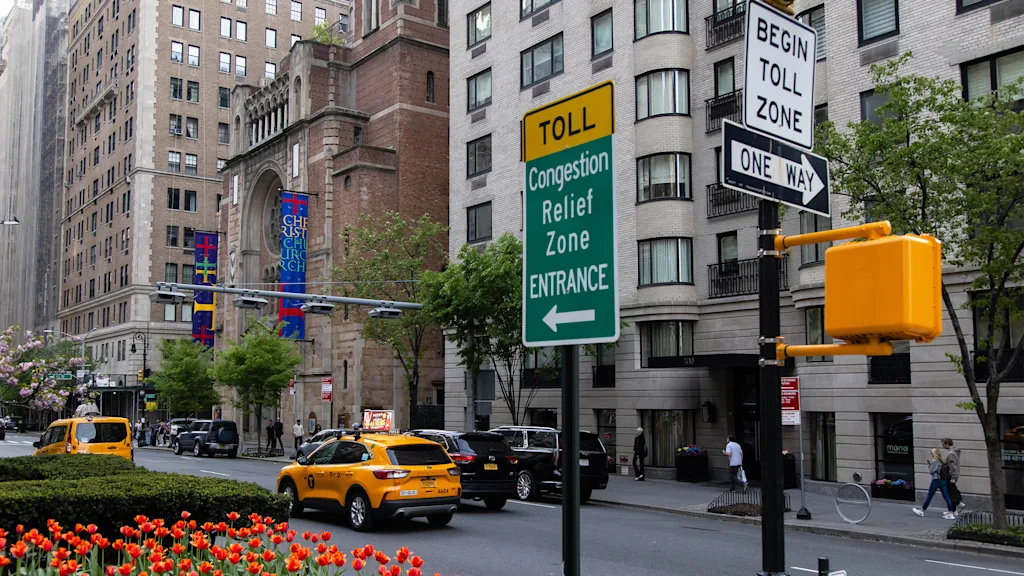
"If you feel like you spent more time sitting in traffic this year than last, you're not alone. Across the United States, drivers lost 49 hours to traffic congestion in 2025, a six-hour increase from the year prior, according to a new report from transportation analytics company INRIX. From Chicago to Philadelphia and Boston to Tampa, congestion increased in 254 of the 290 cities INRIX analyzed. But in New York, a city practically synonymous with gridlock, congestion stayed flat."
"INRIX says the anomaly is likely due to congestion pricing, a program that charges drivers tolls when they enter certain, often gridlocked, areas of Manhattan. New York's congestion pricing program went into effect January 5. Just one month later, a million fewer vehicles entered the congestion zone than they would have without the toll, according to the city's Metropolitan Transportation Authority."
"That mitigation effort likely contributed to New York losing its top spot on NRIX's 2025 Global Traffic Scorecard. This year, New York City ranked as the second most congested U.S. city, down from number one in 2024. In 2024, five New York City roads made INRIX's top 25 busiest corridors list. In 2025, just one remained: a section of I-278, also called the Brooklyn Queens Expressway (which is not in the city's congestion pricing zone)."
Drivers across the United States lost an average of 49 hours to traffic congestion in 2025, a six-hour increase from the previous year. Congestion increased in 254 of 290 analyzed cities, while New York's delays remained flat. New York implemented congestion pricing on January 5, and one month later one million fewer vehicles entered the pricing zone. New York fell to the second most congested U.S. city but still registered 102 hours lost per driver. Chicago became the most congested U.S. city with 112 hours lost, a 10% increase. Delays rose 13% in Atlanta, 18% in Austin, and 31% in both Baltimore and Philadelphia.
Read at Fast Company
Unable to calculate read time
Collection
[
|
...
]