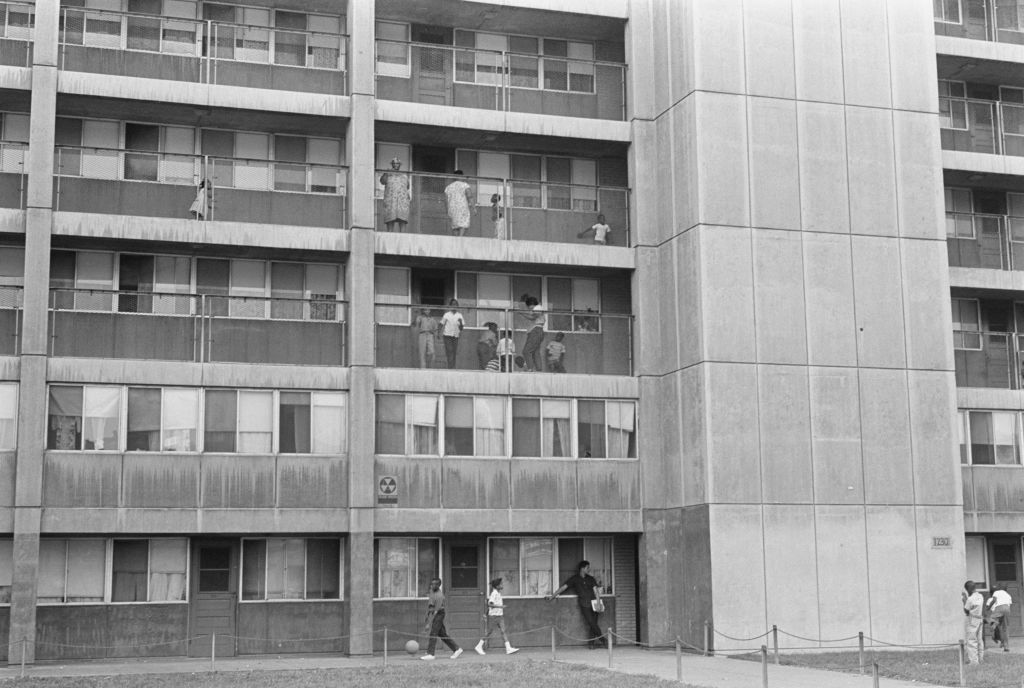
""You had these big towers that were in the middle of large courtyards, spaced far away from other residents," said Matthew Staiger, a research scientist with Harvard's Opportunity Insights. "It was extremely obvious where the public housing started and ended.""
""We find that kids who moved into these revitalized units, and spent some portion of their childhoods there, ended up earning about 16 percent more," explained Staiger, one of the paper's seven co-authors. "We also see increases in college attendance as well as reduced incarceration rates for boys.""
""A core finding from that earlier work is that a neighborhood's influence is proportional to the amount of time spent there during childhood.""
Public housing high-rises often isolated residents from surrounding communities. The HOPE VI program replaced architectural islands with mixed public and market-rate housing integrated into the urban grid. New analysis finds those redevelopments did not change adult incomes for public-housing residents. Children who lived in revitalized units for part of their childhoods earned about 16 percent more as adults. The children also showed higher college attendance and lower incarceration rates for boys. Prior large-scale studies show a neighborhood’s influence on long-term outcomes is proportional to the time spent there during childhood.
Read at Harvard Gazette
Unable to calculate read time
Collection
[
|
...
]