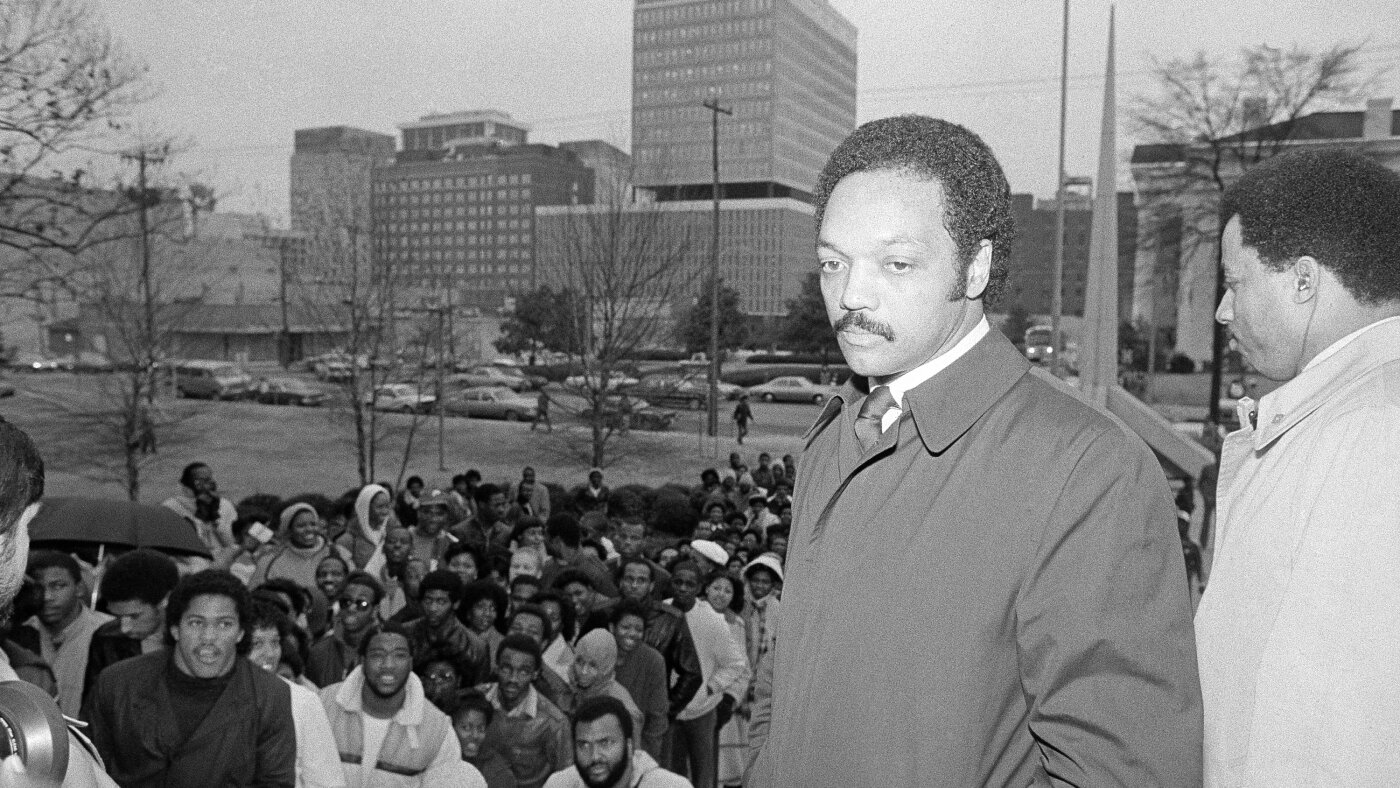
"At a press conference at a school in Jackson, another reporter from Chicago and I noticed the watch on Jackson's wrist. It was gold, thick, and bejeweled. We asked, "What can you tell us about your watch, Reverend Jackson?" He glanced down with disdain. It was a gift from an African head of state, he told us, who appreciated his work for social justice."
"We asked, "Would this expensive gift make you support his policies if you became president? Should presidential candidates take valuable personal gifts from foreign leaders?" The reverend fumed. As we filed out of the classroom, Jackson took us both in his strong grip to ask, "You boys fly down from The Big Windy just to give me junk about a watch?" And he didn't say junk."
"I covered the Rev. Jesse Jackson from the mid 1970's, when I was a scruffy underground press reporter, and he was the young minister who had marched with Martin Luther King Jr. and was there when Dr. King was assassinated. He was matchlessly eloquent and compelling, but he had his critics, both political and personal. Politics in Chicago can be fierce and fractious."
Rev. Jesse Jackson emerged in the mid-1970s as a young, eloquent minister who marched with Martin Luther King Jr. and was present at King's assassination. He carried a commanding public presence but attracted political and personal criticism. During his 1984 presidential campaign he visited Mississippi towns central to the Civil Rights Movement and urged registration of unregistered Black voters. Reporters confronted him about an expensive gold watch he said was a gift from an African head of state. Jackson combined fiery rhetoric and spiritual appeals, declaring that 'hands that once picked cotton can now pick presidents,' eliciting emotional responses from crowds.
Read at www.npr.org
Unable to calculate read time
Collection
[
|
...
]