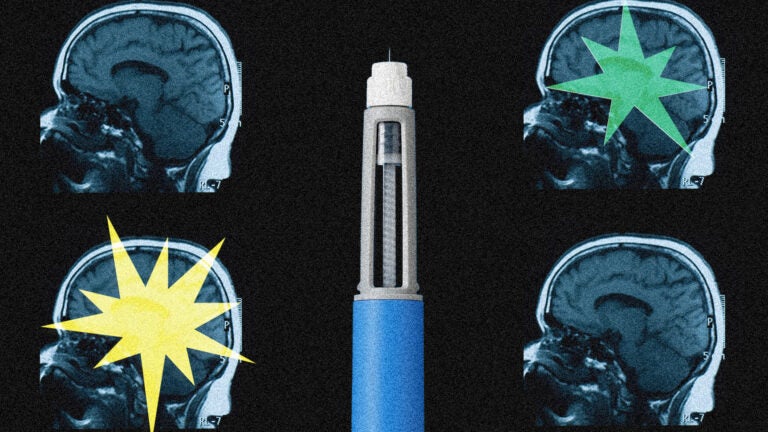
GLP-1 medications, originally developed to control hunger, blood sugar, and weight, may also reshape brain circuits. Brain scans from 13 teens and young women with a hormonal disorder affecting the ovaries showed extensive neural changes after starting GLP-1 drugs. Connections in the salience network, which helps target attention, multiplied within only a few months. Researchers are now investigating whether GLP-1 drugs influence addiction, cognition, neurodegeneration, and motivation and pleasure. The drugs include older diabetes medications and newer treatments such as semaglutide and tirzepatide, which also targets GIP. The widespread use of these drugs has created large-scale, unplanned neuroscience research opportunities.
"Within only a few months, the brain connections in the salience network, which helps target attention, had multiplied. "We didn't expect to see this effect, and we really don't know what it means," Shapiro said."
"Ozempic and other GLP-1 drugs were initially understood as a metabolism breakthrough: medicines that act like hormones to control hunger, blood sugar and weight. But as researchers probe deeper into how the drugs work, early evidence suggests that GLP-1s may also be reshaping parts of the brain."
"Scientists are studying GLP-1 drugs - medications that mimic the hormones involved in appetite, blood sugar and digestion - for how they affect not only eating behavior, but also addiction, cognition, neurodegeneration and even motivation and pleasure."
"The category includes older diabetes drugs that researchers have studied for decades; newer medications such as Ozempic and Wegovy, which contain semaglutide; and Mounjaro and Zepbound, which contain tirzepatide - a newer compound that targets both GLP-1 and a second metabolic hormone known as GIP, a distinction some scientists believe may matter neurologically."
Read at Boston.com
Unable to calculate read time
Collection
[
|
...
]