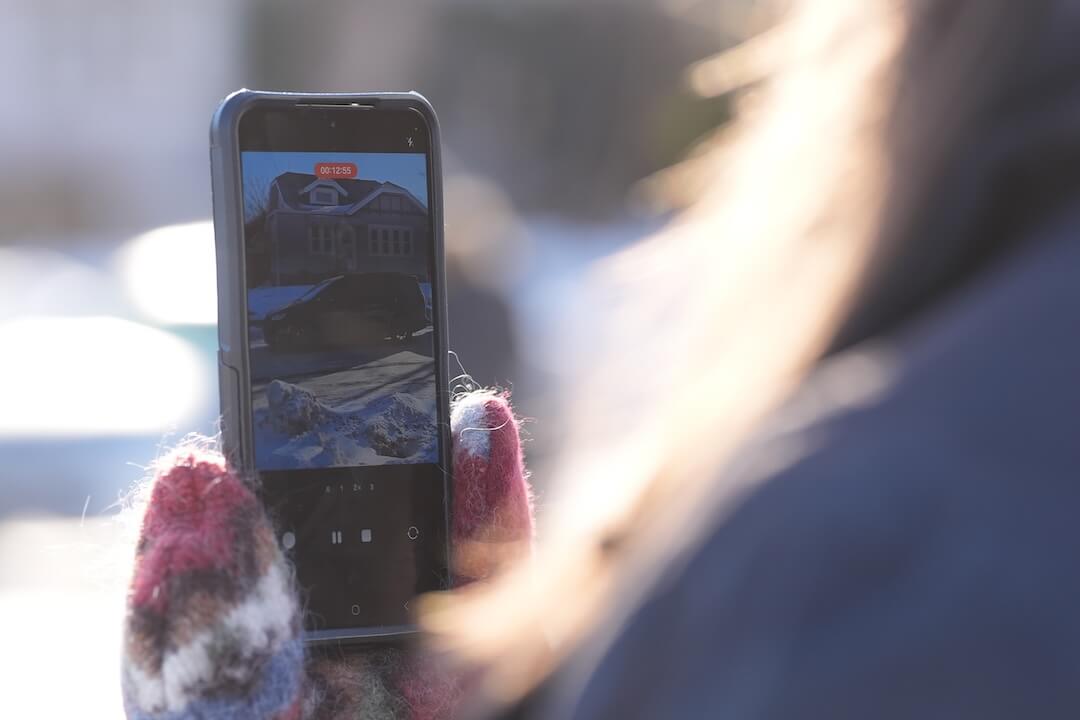
Federal immigration agents in multiple states confronted and sometimes seized civilians' phones while the civilians recorded agent activity, including incidents in Minnesota and Maine and a dash-cam recording of agents drawing guns. State leaders encouraged residents to record agents to preserve evidence after fatal encounters, including the killings of Alex Pretti and Renee Good. Homeland Security leadership characterized on-duty recording as violent and called videoing officers "doxing" and a federal crime. Bystander video from multiple angles challenged claims that a victim brandished a gun. A federal judge ruled that journalists plausibly showed DHS maintained a policy treating filming immigration enforcement as problematic, highlighting tensions between First Amendment protections and alleged law enforcement obstruction.
"A federal agent in Minnesota grabbed a woman's phone as it recorded him approaching her Jan. 9, two days after a federal agent shot a U.S. citizen. "Have y'all not learned from the past couple of days?" the agent asked the woman. Weeks later in Maine, a woman let her phone camera roll as an agent filmed her license plate and told her her name would be added to a database and she was now considered a domestic terrorist."
"Homeland Security Secretary Kristi Noem, who is overseeing the Trump administration's immigration enforcement tactics, said recording on-duty immigration agents is an act of violence. The department's spokesperson also called videoing officers "doxing," a "federal crime and a felony." After immigration agents fatally shot Pretti, bystander video from multiple angles challenged Noem's statements that Pretti had brandished his gun at immigration agents before he was killed."
Read at Poynter
Unable to calculate read time
Collection
[
|
...
]