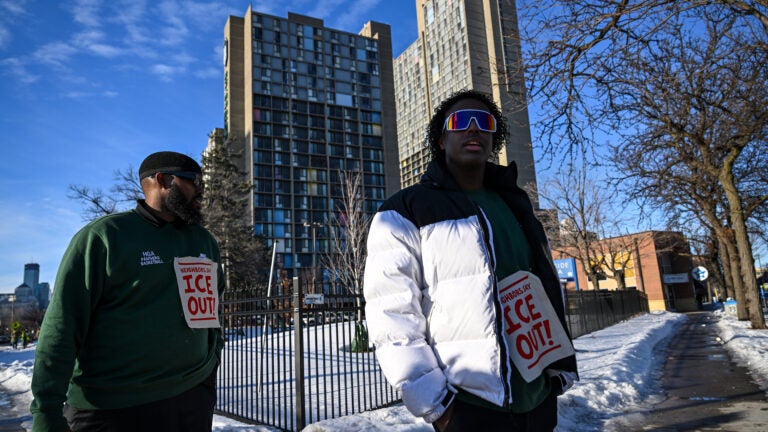
Volunteer groups monitor federal immigration officers' movements using text chats, whistles, and recordings to alert neighborhoods and follow officers. Volunteers often observe and record activity in public, citing First Amendment protections. The fatal shooting of Renée Good during a confrontation with ICE brought attention to monitoring efforts and raised questions about safety and tactics. Observers believe recordings reduce the likelihood of force and provide community notice of enforcement activity. Activist tactics vary from passive observation to tailing officers, while federal deployments and aggressive law-enforcement approaches have intensified tensions and legal concerns.
"While patrolling for Immigration and Customs Enforcement with other volunteers, two days after an officer from the federal agency fatally shot a woman in her car in this city, Sagal Ali repeated a mantra: "We will not obstruct their path. We are not escalating." A text chat alerted her group while driving on Friday that ICE was near Soma Grill and Deli. They drove over to find officers circling the restaurant, masked, in an unmarked SUV. Blowing whistles from open car windows to notify the neighborhood, the group made eye contact with the officers in their vehicle, then tailed them until they left."
"As the Trump administration deploys thousands of federal immigration officers and agents around the nation, a loose-knit but increasingly organized network of activists is tracking their whereabouts and documenting arrests. The fatal shooting of Renée Good last week, as ICE officers and residents faced off on a residential street here, has brought new attention to these activities. Good's wife has said the couple came out with whistles that morning to support their neighbors; video shows both women exchanging words with ICE officers before Renée Good starts to move her car and one officer fires."
"Federal court rulings say citizens can observe and record police activity in public areas as part of their First Amendment rights, and many of the observers are doing nothing more than that. They say that they believe authorities are less likely to use force if someone is recording and that they are providing a public service by letting their communities know when federal immigration officers are nearby."
Read at Boston.com
Unable to calculate read time
Collection
[
|
...
]