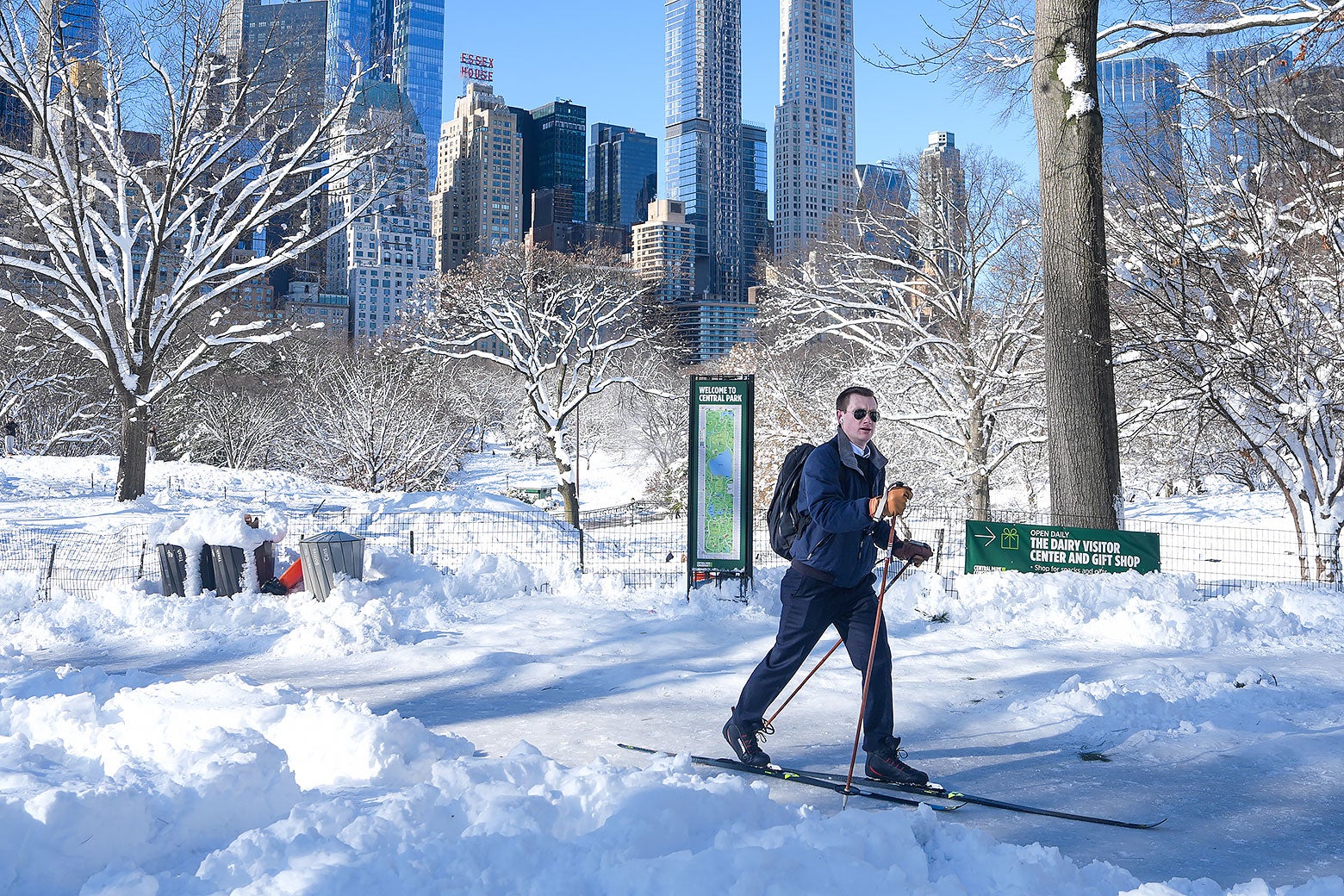
The 2024-2025 winter has been exceptionally abnormal across the United States, with stark regional contrasts. The Northeast and mid-Atlantic have experienced their coldest winter in more than two decades, featuring historic snowstorms with hurricane-force winds and record snowfall. Meanwhile, western regions like Denver have seen temperatures in the 60s. The polar vortex, a ring of frigid air typically confined above the North Pole, stretched unusually early in November, pushing extreme cold southward. This stretching occurs when atmospheric disturbances disrupt the vortex's circular shape, allowing Arctic air to migrate to lower latitudes. While polar vortex stretching is not uncommon, the early timing this season was notable, with some climate scientists suggesting increased Arctic warming from climate change may be intensifying these disturbances.
"The polar vortex, a ring of frigid air that typically sits high up in the atmosphere above the North Pole. It tends to be circular, keeping the cold air in the Arctic, explains Judah Cohen, a climate scientist at Massachusetts Institute of Technology who writes a seasonal forecasting blog. But sometimes a disturbance can cause the polar vortex to stretch like a rubber band."
"As it stretches, its very cold air moves along with it, leading to periods of extreme cold in the regions below it. This stretching of the polar vortex isn't uncommon (though some experts hypothesize that the disturbances are increasing due to rapid warming in the Arctic caused by climate change)."
"What was unusual this year, though, is that the stretching happened so early. It was in November that a disturbance first knocked cold air southward and sent weather patterns into a tailspin."
Read at Slate Magazine
Unable to calculate read time
Collection
[
|
...
]