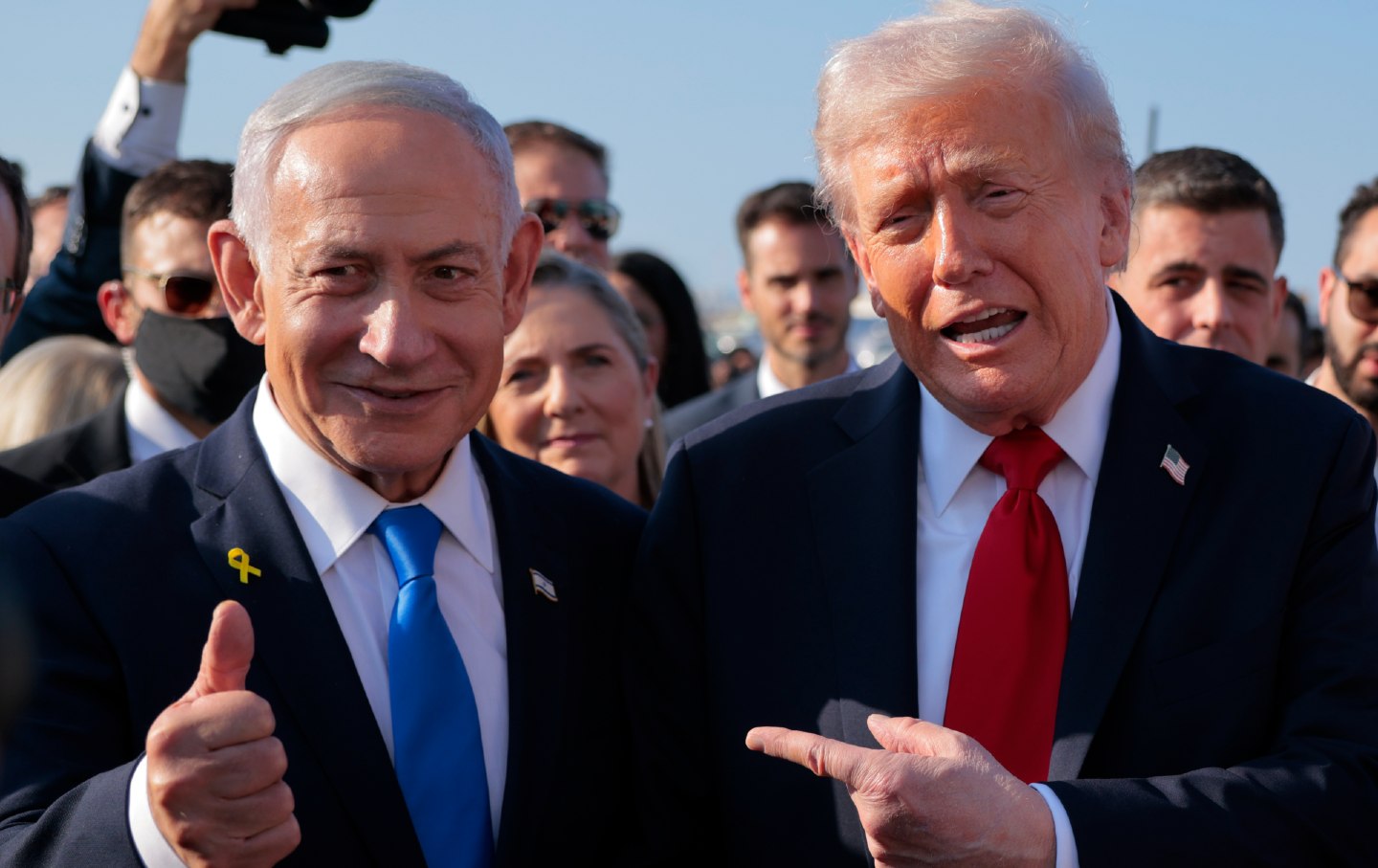
Benjamin Netanyahu has met President Trump repeatedly, securing unusually close access and describing Trump as Israel's "greatest friend." During Trump's first term, US policy shifted strongly toward Israel: the US embassy moved to Jerusalem, US recognition of Israeli sovereignty over the Golan Heights, and funding to UNRWA was cut. In Trump's second term, differences have grown as the administration shifts focus toward the Western Hemisphere, reallocating military assets away from Europe and the Middle East. The National Security Strategy frames the Middle East as "emerging as a place of partnership, friendship and investment." Proposed US plans seek to downsize on-site military presence while encouraging Arab-Israeli integration and a new Gaza government.
"No foreign leader has easier access to President Donald Trump than Israeli Prime Minister Benjamin Netanyahu, whose scheduled meeting today at Mar-a-Lago will be the fifth time he's hobnobbed with the US president in the past 10 months. In February, Netanyahu was the first overseas dignitary to visit the White House in Trump's second term, and now the year ends with another meeting. Few foreign leaders have buttered up Trump with the aplomb of Netanyahu, who describes Trump as Israel's "greatest friend.""
"In Trump's first four years in office, these enthusiastic words were more than earned. As Al Jazeera noted, "During his first term, Trump pushed US policy further in favour of Israel's right-wing government. He moved the US embassy to Jerusalem, recognised and claimed Israeli sovereignty over Syria's occupied Golan Heights and cut off funding to the United Nations agency for Palestinian refugees (UNRWA).""
"The situation in Trump's second term is more complicated. Small but significant disagreements have opened up between Israel and the United States. Trump's push for a foreign policy more focused on the Western Hemisphere-which includes bombing putative drug boats and threatening regime change in Venezuela-depends on shifting military resources away from Europe and the Middle East. In the National Security Strategy release in November, the Trump administration argued that the Middle East is "emerging as a place of partnership, friendship and investment." Ironically, Trump's pursuit of a pivot away from the Middle East is a continuation of unsuccessful efforts for a lighter US footprint in the region pursued by his predecessors Barack Obama and Joe Biden."
Read at The Nation
Unable to calculate read time
Collection
[
|
...
]