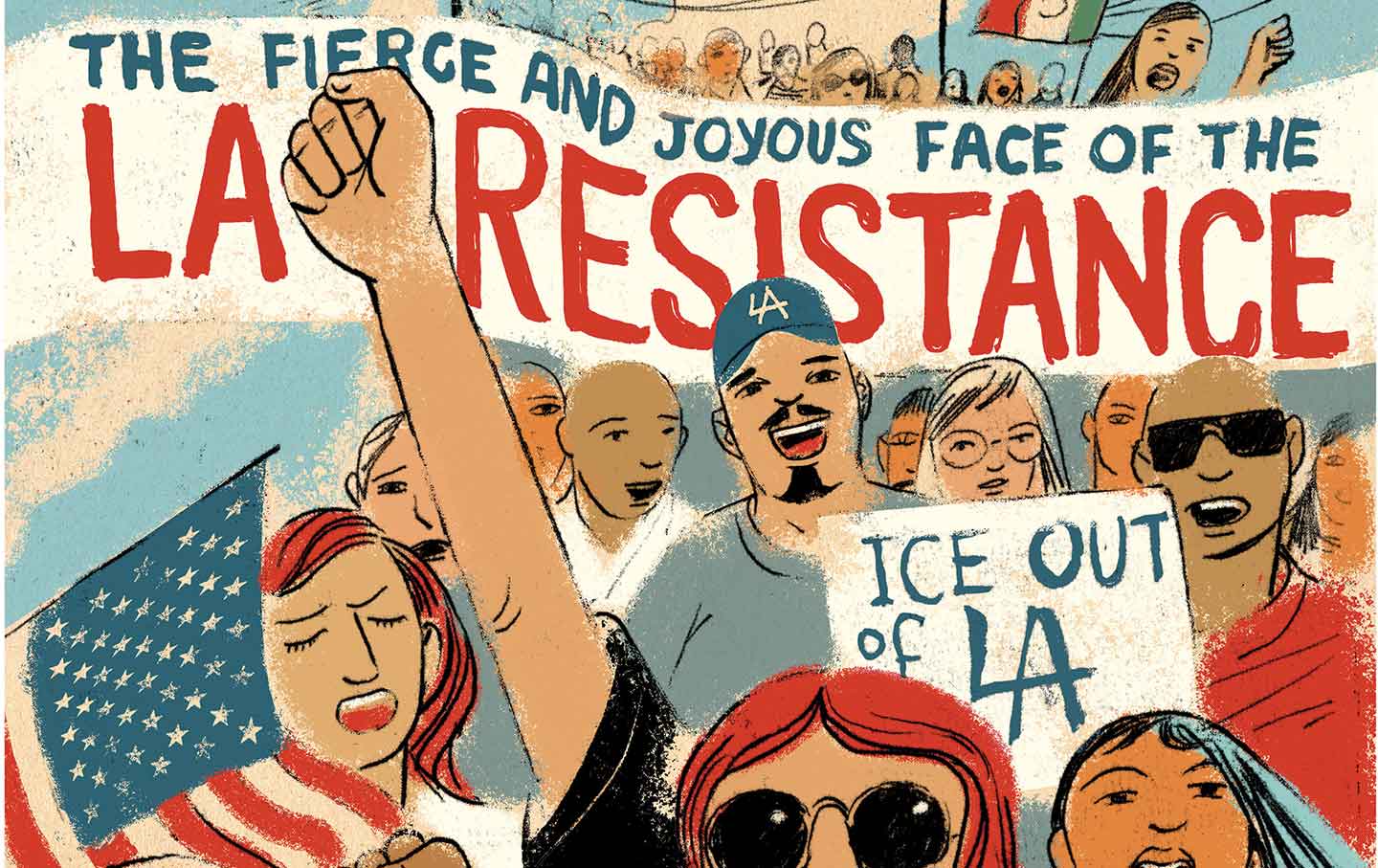
"The New York Nation, as some called this magazine in its early years, has always kept one eye on Los Angeles. Even if the magazine suggested in an 1869 essay on "The New West" that "not everything is lovely there," our writers have over the past century and a half been drawn to the sprawling city-with all its energy and possibility, along with its share of sordid realities and inequalities-and the broader story of what would come to be known as the Left Coast."
"We return again with this issue, which features a multifaceted examination of LA's bold resistance to the Trump administration's assault on the city itself, and on the rich diversity and democratic promise that Los Angeles represents. Bill Gallegos, a veteran Chicano activist who is a member of The Nation's editorial board, sets the stage with his examination of the remarkable coalitions that pushed back against Trump's decision to send federal troops to the city last spring."
"This package begins an expanded focus by The Nation on Donald Trump's assault on the blue zones of a nation he is bent on tearing apart. Beginning with the resistance in California makes sense because The Nation has so frequently turned to the state for political inspiration. In 1934, when the socialist novelist Upton Sinclair ran as the Democratic nominee for governor there-under the slogan "End Poverty in California, or EPIC- The Nation 's editor and publisher, Oswald Garrison Villard, hailed him for building a gras"
Los Angeles mounted multifaceted resistance to the Trump administration's efforts to impose federal power on the city and undermine its diversity and democratic promise. Broad coalitions mobilized to push back against a decision to deploy federal troops to the city last spring. Local leaders articulated strategies for resisting Trumpism while activists connected current struggles to earlier racial-justice protests. The focus on California underscores the strategic importance of blue zones in contesting national assaults. Historical political movements, including Upton Sinclair's 1934 EPIC campaign, are evoked as part of a longer lineage of progressive organizing in the state. The narrative links past and present resistance, emphasizing coalition-building, civic leadership, and cultural solidarity as central to defending urban democratic life.
#los-angeles-resistance #federal-intervention #diversity-and-democracy #california-political-history
Read at The Nation
Unable to calculate read time
Collection
[
|
...
]