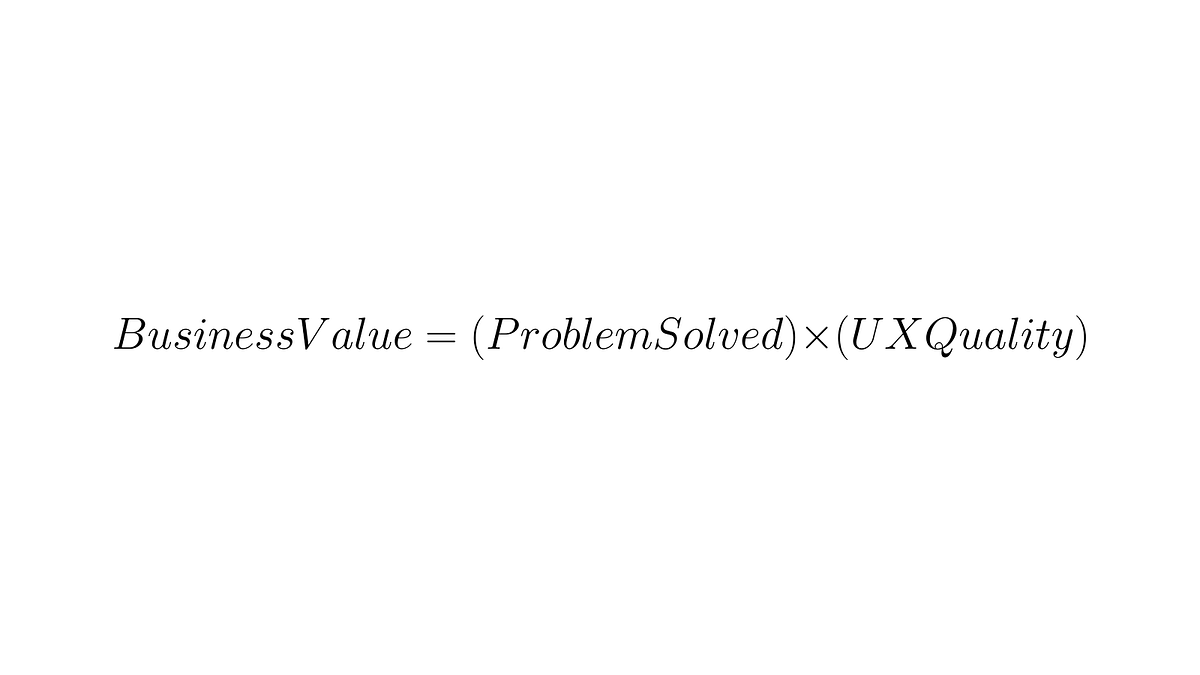
"In some cases, early-adopters, adventurers who need your product so much that they'll be willing to go through a bad user experience to access the value a product delivers. This is usually a positive because the fact that a user is willing to go through a painful UX signals that the solution solves their problem well-enough. When this is the case, improving the UX will increase the efficiency of the solution (reducing friction) and increase customer satisfaction."
"In other cases bad UX can truly be a barrier to adoption, it totally comes in the way and blocks users from benefiting from any of the value a product aims to deliver. Don Norman calls this The Gulf of execution: the difference between what a user wants to do with a product and how the product allows them to do it. If the gap is too big, the user stops trying and the product fails, the business fails."
Design-driven investment is often the hardest business case to build despite UX directly affecting P&L. Early adopters may tolerate poor UX when a product solves a critical problem; improving UX in that context increases efficiency and customer satisfaction, accelerating growth. Conversely, poor UX can create a Gulf of execution that blocks adoption and destroys product value, causing business failure. Discoverability and understanding are central to good design. UX acts as a value multiplier, especially for accessibility-focused products, but also matters for technically oriented developer tools where assumed tolerance for poor UX can still harm outcomes.
Read at Medium
Unable to calculate read time
Collection
[
|
...
]