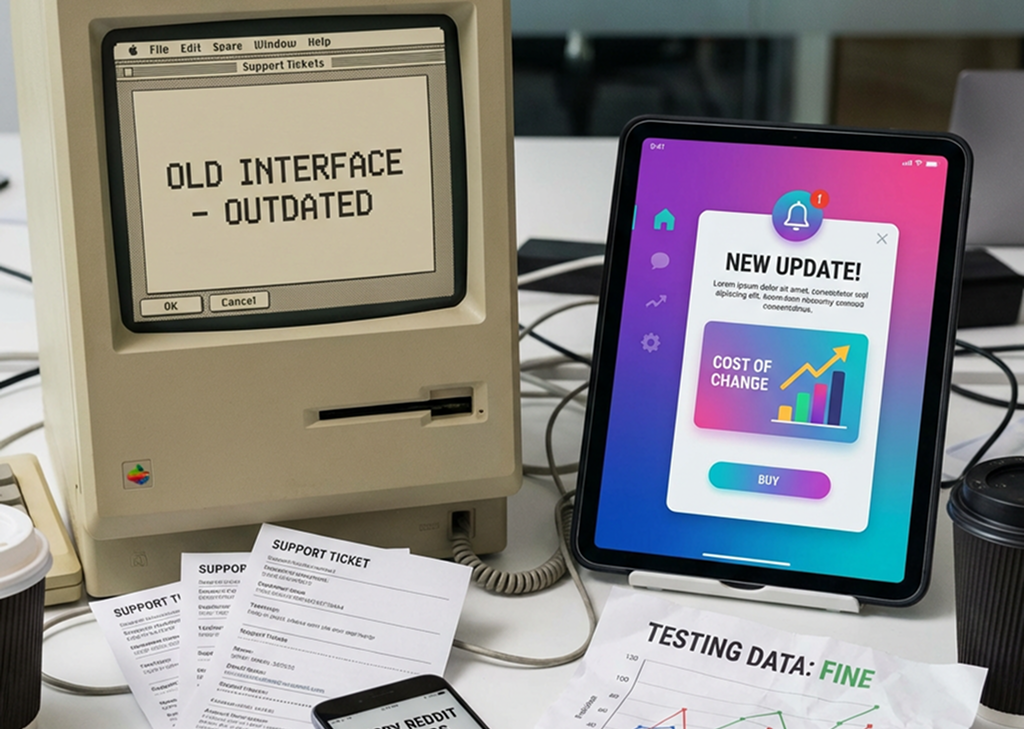
"When Sonos released its redesigned app in May 2024, the backlash was immediate and brutal. Users couldn't access basic features like volume control and alarms. Systems became unusable. The company's stock plummeted 25%. Eventually, the CEO was replaced, and lawsuits claimed over $5 million in damages from customers who'd lost functionality they'd paid for."
"Even something as small as Google Photos changing its crop tool from square corners to rounded ones in July 2025 triggered enough complaints that Google eventually reversed the change. Netflix faced similar fury when it rolled out its TV app redesign later that year. They claimed months of testing showed improved user satisfaction. Yet Reddit threads exploded with users reporting the new layout as a bug, convinced something had gone catastrophically wrong."
"Every time you open an app you use regularly, your brain isn't really thinking about what you're doing. You've developed what cognitive psychologists call automaticity: the ability to perform tasks without conscious attention. Your thumb knows exactly where that button sits. Your eyes scan the screen following a pattern you've rehearsed thousands of times. You're operating almost entirely on muscle memory."
High-profile product redesigns have removed or obscured basic functions, caused systems to become unusable, and produced financial, legal, and leadership consequences. Companies can perform extensive testing and still deploy changes that users experience as regressions. Regular users rely on automaticity and muscle memory to navigate familiar interfaces; small visual or interaction changes disrupt practiced thumb movements, eye-scan patterns, and mental models. Disrupted expectations often lead users to report redesigns as bugs, amplify complaints publicly, and demand reversals. Testing in controlled environments frequently fails to capture real-world habituation and the strong negative reactions that follow.
Read at Medium
Unable to calculate read time
Collection
[
|
...
]