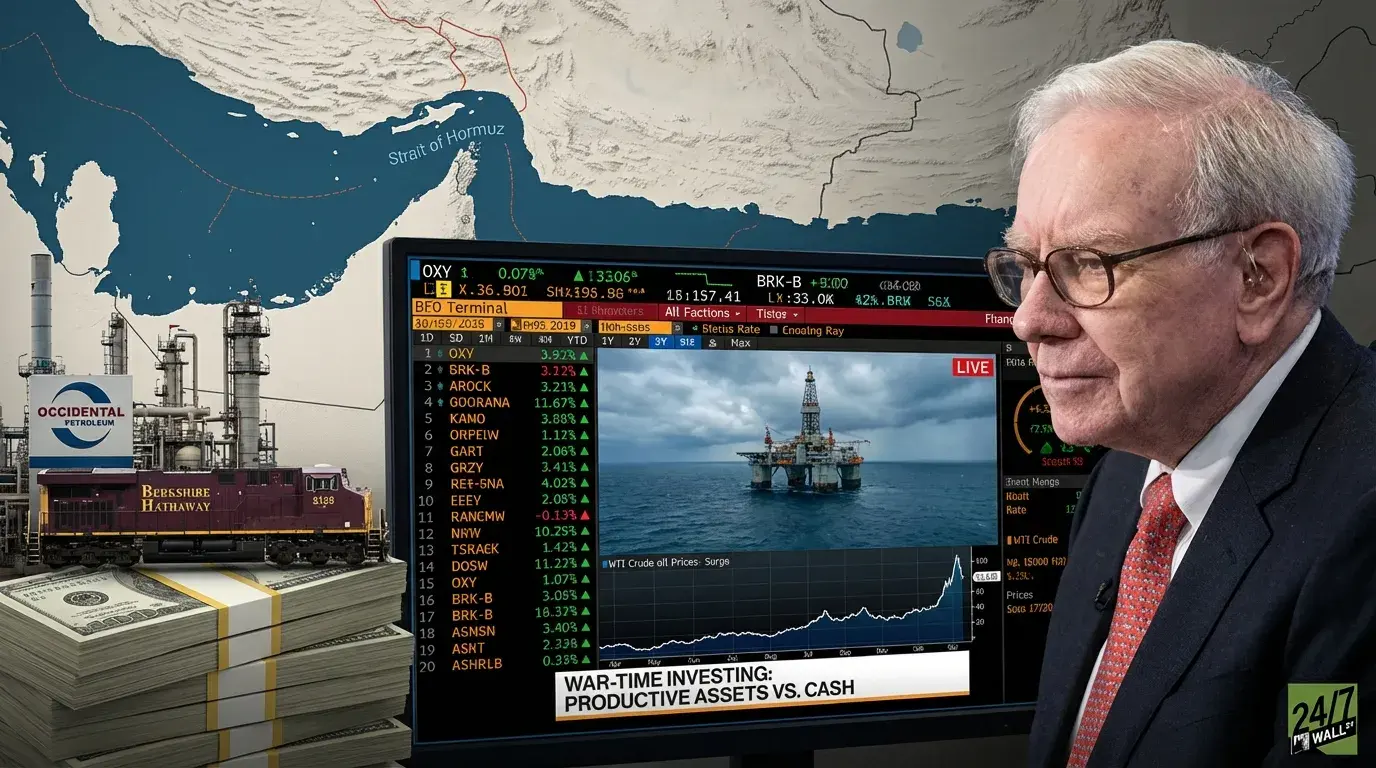
"If we went into some very major war, the value of money would go down... The last thing you'd want to do is hold money during a war... You're going to be a lot better off owning productive assets... than pieces of paper."
"His logic remains straightforward: conflicts disrupt markets in the short term, but businesses that produce real goods and services, especially in energy and essential commodities, continue generating value over time. Governments can print money, but they cannot instantly create new productive assets or replace disrupted oil supply."
"Buffett's team locked in a high-quality industrial asset at a depressed valuation, classic Oracle of Omaha timing. The geopolitical backdrop has since shifted sharply. The Strait of Hormuz returned to the spotlight, sending WTI crude as high as $119 per barrel in recent sessions before today's sharp relief reversal."
Buffett has consistently advocated that during wars or major geopolitical risks, holding cash is detrimental to investment returns. His reasoning is that conflicts temporarily disrupt markets but productive businesses—particularly those in energy and essential commodities—continue generating value. Governments can print money but cannot instantly create productive assets or replace disrupted supply. Berkshire Hathaway's acquisition of Occidental Petroleum's industrial chemicals business for $9.7 billion exemplifies this philosophy, purchasing a high-quality asset at depressed valuations when crude prices were near 12-month lows. Recent geopolitical tensions in the Strait of Hormuz caused oil prices to spike to $119 before retreating to $85-88, demonstrating market volatility. Berkshire Hathaway shares remained stable through this turbulence, with five-year returns of approximately 90%.
#geopolitical-risk-investment-strategy #productive-assets-vs-cash-holdings #berkshire-hathaway-acquisitions #commodity-markets-and-oil-prices #warren-buffett-investment-philosophy
Read at 24/7 Wall St.
Unable to calculate read time
Collection
[
|
...
]