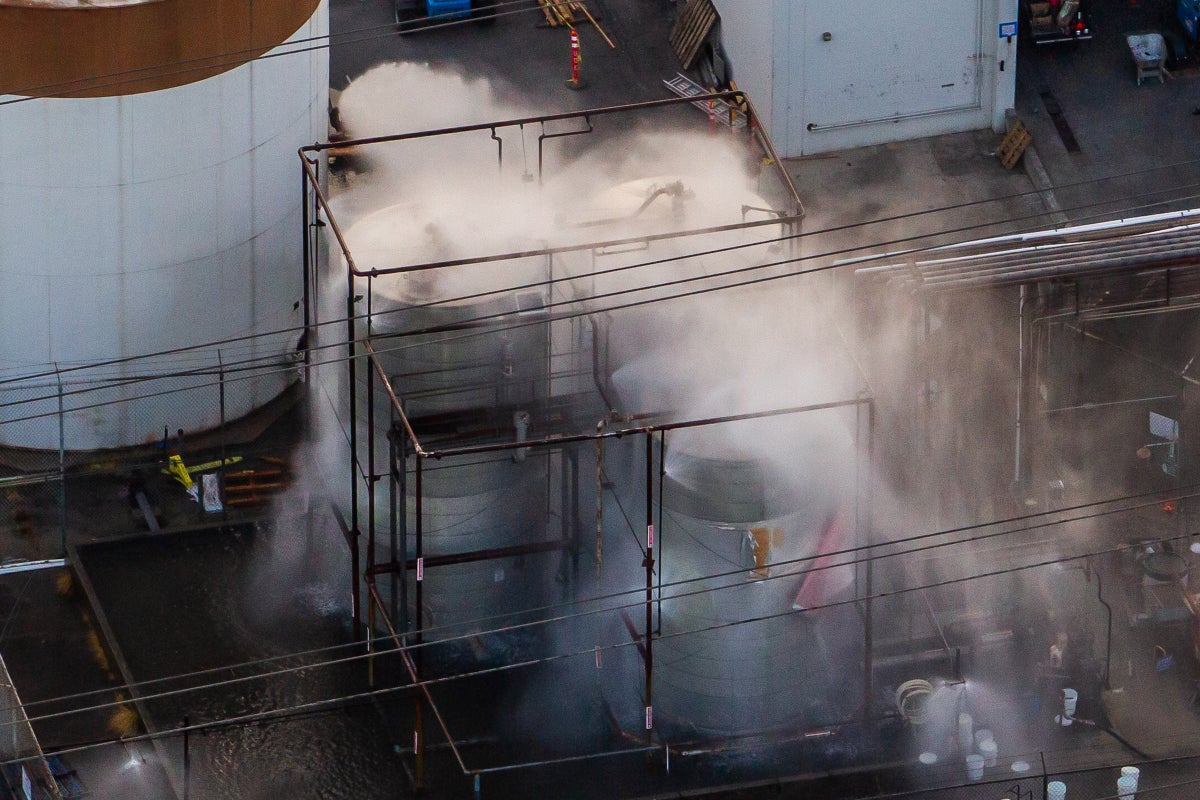
More than 50,000 residents in Garden Grove, California returned home after a narrowly avoided chemical crisis at an aerospace plant. A separate chemical tank rupture in Washington State caused two deaths and left nine people missing and presumed dead. The incidents follow other major chemical plant disasters in the past year. A Trump administration proposal would roll back federal regulations intended to prevent explosions and toxic chemical releases. The proposal would reduce requirements for safer technologies, employee involvement in safety planning, and third-party audits after accidents. It would also remove a requirement to consider climate-related disasters such as floods in emergency planning. Experts warn that without these safeguards, companies would rely on their own safety culture, leading to continued accidents.
"More than 50,000 residents of Garden Grove, Calif., returned home on Tuesday and Wednesday after a narrowly averted chemical crisis at an aerospace plant, a rupture at a separate chemical tank in Washington State claimed two lives and left nine people missing and presumed dead. The back-to-back incidents are among several high-profile disasters at chemical plants in the past year."
"A Trump administration proposal to roll back federal regulations that are meant to guard against such accidents means they could become more frequent, threatening surrounding communities and on-site workers. Last year, the Environmental Protection Agency proposed repealing a 2024 rule that tightened safeguards that were designed to prevent explosions and the release of toxic chemicals at chemical plants and refineries."
"The rollback, which is opposed by California's attorney general, would reduce requirements for facilities to implement safer technologies, involve employees in safety planning and conduct third-party audits after an accident. The plan would also erase a mandate that facilities consider climate-related disasters such as floods when making emergency plans."
"Without the rule, many of these details would be left to the discretion of individual companies and their safety culture. And that, experts say, means that accidents will keep happening. There is just not enough of that kind of planning that goes on, says Philip Price, a retired senior research scientist and chemist in Maryland, who has worked on chemical incident investigations."
#chemical-safety #environmental-regulation #toxic-chemical-releases #emergency-planning #industrial-accidents
Read at www.scientificamerican.com
Unable to calculate read time
Collection
[
|
...
]