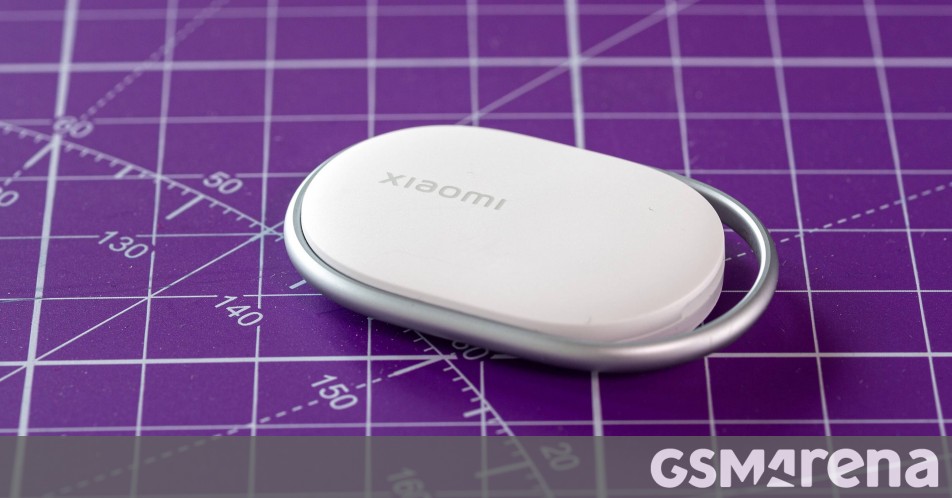
"First, it's how you can get one - an individual tag costs €18, while a pack of four goes for €60. For comparison, a second-gen Apple AirTag is €35 (or €120 for four), a Samsung SmartTag2 is €40 (€130 for four) and a Moto Tag 2 is also €40 (€130 for four). Xiaomi undercutting the competition's pricing is nothing new, but the difference is double or more in this case."
"Second, Xiaomi knocked it out of the park in terms of design - the tag is slender at 7.2mm. The Apple, Samsung and Motorola tags all measure 8.0mm thick. While you may scoff at a difference of less than one millimeter, it does matter when you are trying to slip this in your wallet or in some inner pocket of a travel bag or backpack."
"Unlike its competitors, the Xiaomi Tag doesn't lock you into an ecosystem - it works with Apple Find My and Google Android Find Hub. Unfortunately, it can't work with both simultaneously. Still, these tags will be used for years and you won't have to swap them if you decide to switch between Apple and Android."
Xiaomi launched an affordable tracking tag priced at €18 individually or €60 for four units, substantially undercutting competitors like Apple AirTag (€35), Samsung SmartTag2 (€40), and Moto Tag 2 (€40). The tag features a slim 7.2mm design, thinner than competing models, with a built-in metal ring for key ring attachment without requiring additional cases. Unlike ecosystem-locked competitors, the Xiaomi Tag works with both Apple Find My and Google Android Find Hub, though not simultaneously. The device uses a standard CR2032 button cell battery lasting approximately one year and employs Bluetooth LE 5.4 for proximity finding, offering multi-year usability without ecosystem switching requirements.
Read at GSMArena.com
Unable to calculate read time
Collection
[
|
...
]