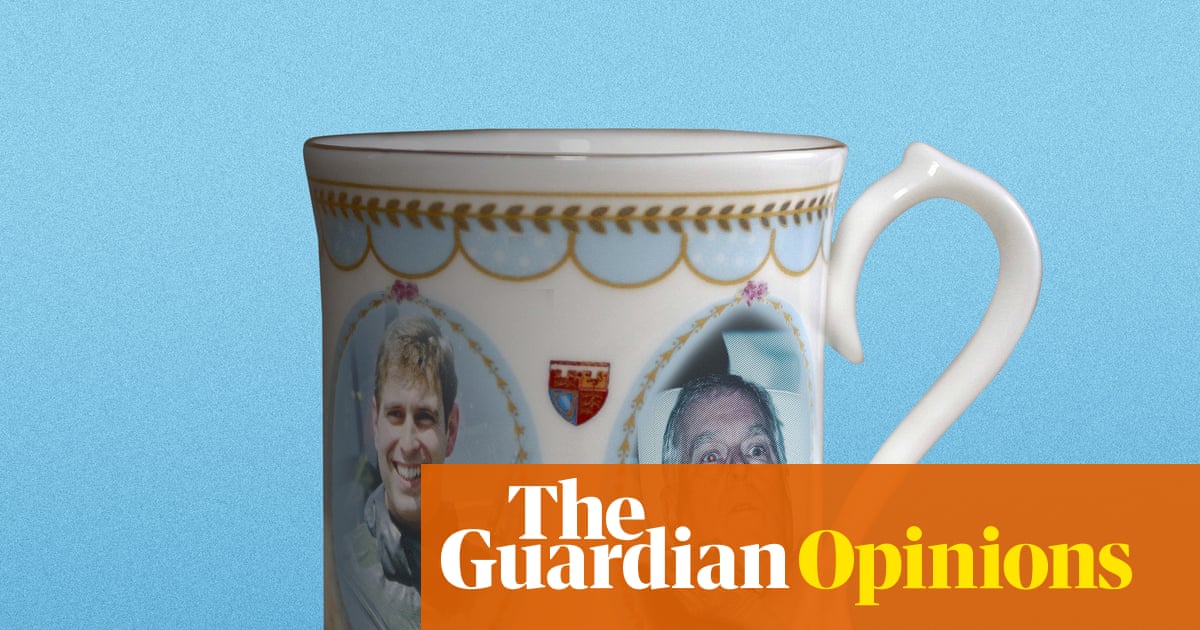
A photograph shows Andrew Mountbatten-Windsor slumped and looking corpse-like, with tight lips and red-rimmed eyes. The image contrasts sharply with his earlier persona as a handsome, affable prince whose likeness appeared on cups, plates and commemorative tins. The face operated as part of a royal brand: the warrior prince, the helicopter pilot and a man who had served. Facial appearance has long acted as a marker of lineage and authority, from coinage to Tudor and Van Dyck portraiture. Historically, physiognomy was read as character, as in Lavater's pseudoscience, though modern facial reading is less straightforward.
"You will have seen the photograph by now: Andrew Mountbatten-Windsor, formerly a prince, slumped in the back of a car outside Aylsham police station in Norfolk. His face is corpse-like his lips tight, stare fixed, eyes turned red by the camera flash. It's a far cry from Randy Andy, the handsome prince with the big teeth and the easy grin, whose face was once plastered on china cups and plates and commemorative tins, pressed into the soft metal of national affection."
"That face on those cups and plates was not merely decorative but an assertion of something ancient: that lineage writes itself in bone structure; that the face of a royal is not just a face but a symbol, a cipher, a condensed history of power. In antiquity, the ruler's face was stamped on coins not merely for identification but as a claim: this profile is authority, this jawline is legitimacy, this gaze is the state."
Read at www.theguardian.com
Unable to calculate read time
Collection
[
|
...
]