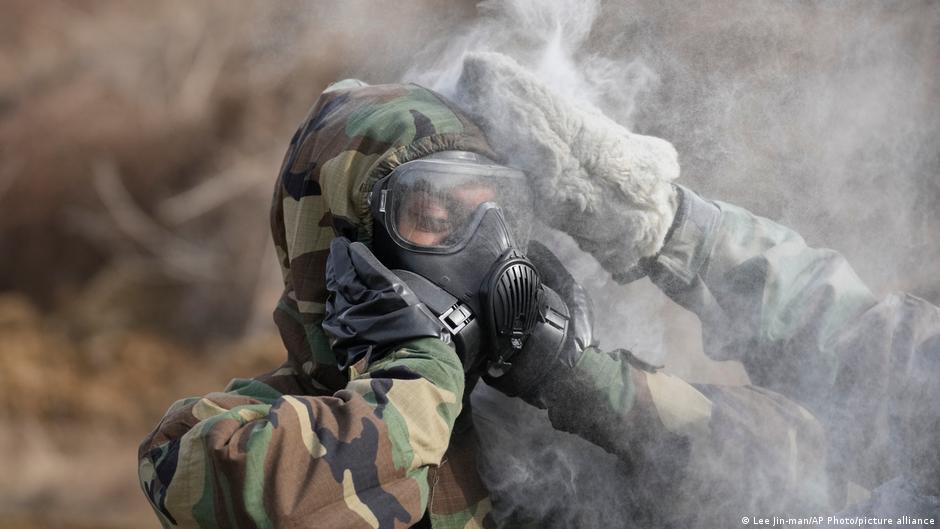
A report based on analysis of more than 30,000 patents and journal articles provides clues about North Korea’s chemical weapons program. The research, conducted under “Project Anthracite,” uses open-source materials to build a networked overview of chemical weapons potential. The findings indicate that industrial facilities, universities, and government-run research institutions have equipment and access to adequate feedstocks to produce multiple chemical weapons agents. The report does not prove chemical weapons production, but it offers a feasibility baseline and identifies indicators for monitoring. The most striking insight is the convergence of multiple discrete indicators suggesting embedded industrial capability. The concern is reinforced by North Korea’s 2017 VX nerve agent use against Kim Jong Nam.
"The report published on the 38 North website was based on research carried out under "Project Anthracite," a multi-year effort led by the Royal United Services Institute (RUSI) security think tank in London to use open source materials to produce a "networked overview" of North Korea's chemical weapons potential. The report points out that industrial facilities, universities and government-run research institutions have the equipment and access to adequate feedstocks to produce a number of chemical weapons agents."
"Although the report emphasizes that it does not prove production of chemical weapons in North Korea, it does add to the existing intelligence by "providing a feasibility baseline and identifies indicators worth monitoring." "Taken together, the most striking insight from this analysis is not the presence of any single 'smoking gun,' but the convergence of multiple, discrete indicators that point towards embedded industrial capability," the report says."
"Especially as Pyongyang demonstrated in 2017 a clear willingness to use a chemical weapon, when agents assassinated Kim Jong Nam, the brother of North Korean dictator Kim Jong Un, with the VX nerve agent at Kuala Lumpur airport. "It is absolutely clear that North Korea can and has made chemical weapons, with the use of VX in 2017 confirming that," said Professor Margaret Kosal, director of graduate studies at Georgia Institute of Technology."
Read at www.dw.com
Unable to calculate read time
Collection
[
|
...
]