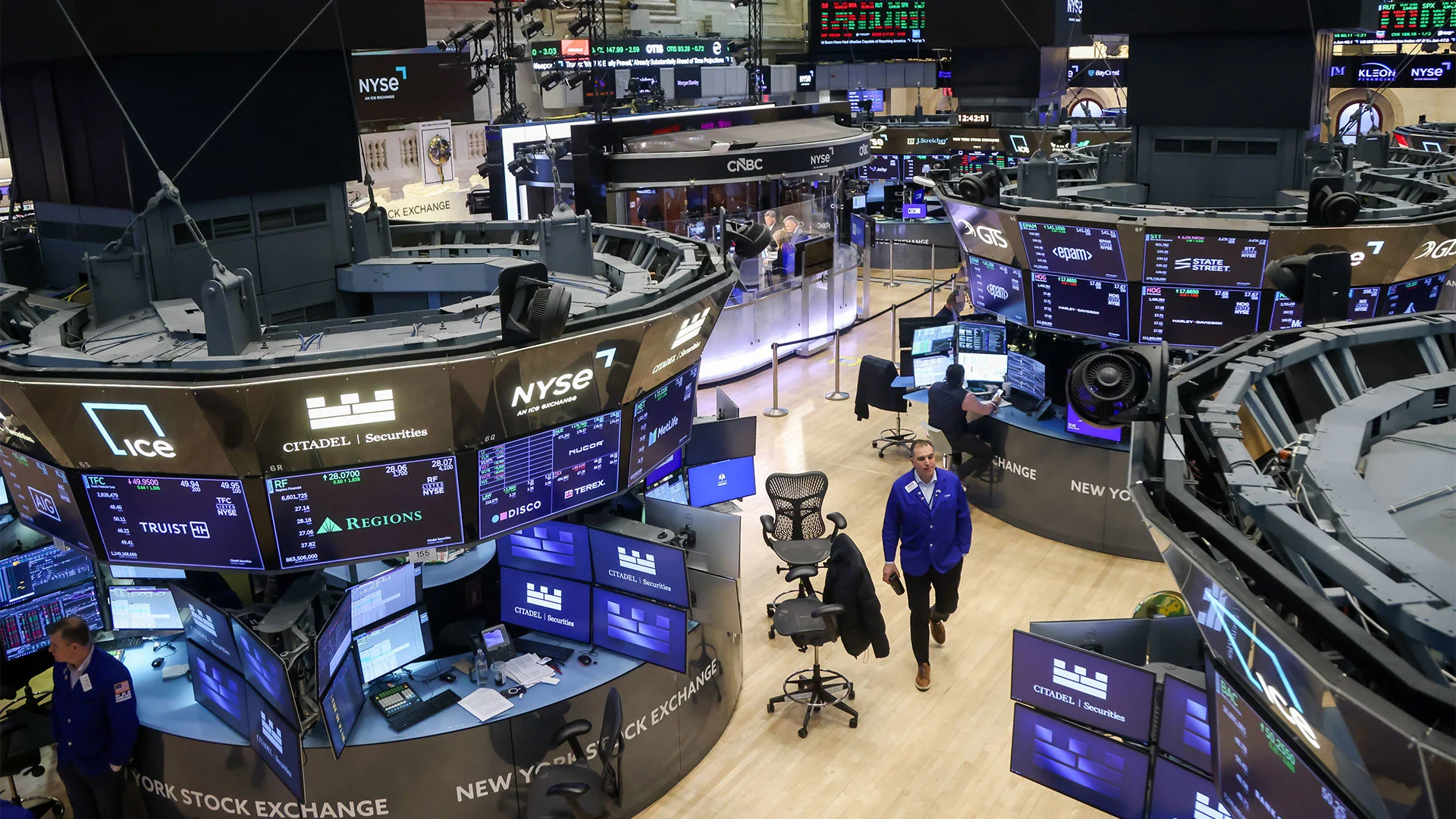
"The wave of red across investors' monitors is primarily due to one major factor: uncertainty around how far the Iran conflict will travel and how long it will last. Over the weekend, President Donald Trump ordered strikes on Iran, during which the country's supreme leader, Ayatollah Ali Khamenei, was killed."
"The Strait of Hormuz is one of the most critical supply routes in the world, with around a fifth of all oil passing through it. Any blockage of the strait could have severe consequences for the global energy trade, and thus the global economy."
"It is looking increasingly likely that the conflict against Iran could go on for some time, with Trump not ruling out that U.S. soldiers may need to be put on the ground in Iran."
Following President Trump's military strikes on Iran that resulted in the death of Supreme Leader Ayatollah Ali Khamenei, major U.S. stock markets—the Dow, Nasdaq, and S&P—experienced significant declines. The primary driver of market losses is uncertainty about the conflict's scope and duration. Iran's Revolutionary Guard Corps announced closure of the Strait of Hormuz, a critical global supply route through which approximately one-fifth of world oil passes. This blockade threatens severe disruptions to global energy trade and the broader economy. Additional concerns include the possibility of prolonged conflict with potential U.S. ground involvement in Iran. Market volatility following major geopolitical events is historically common.
#iran-conflict #stock-market-decline #geopolitical-uncertainty #oil-supply-disruption #strait-of-hormuz
Read at Fast Company
Unable to calculate read time
Collection
[
|
...
]