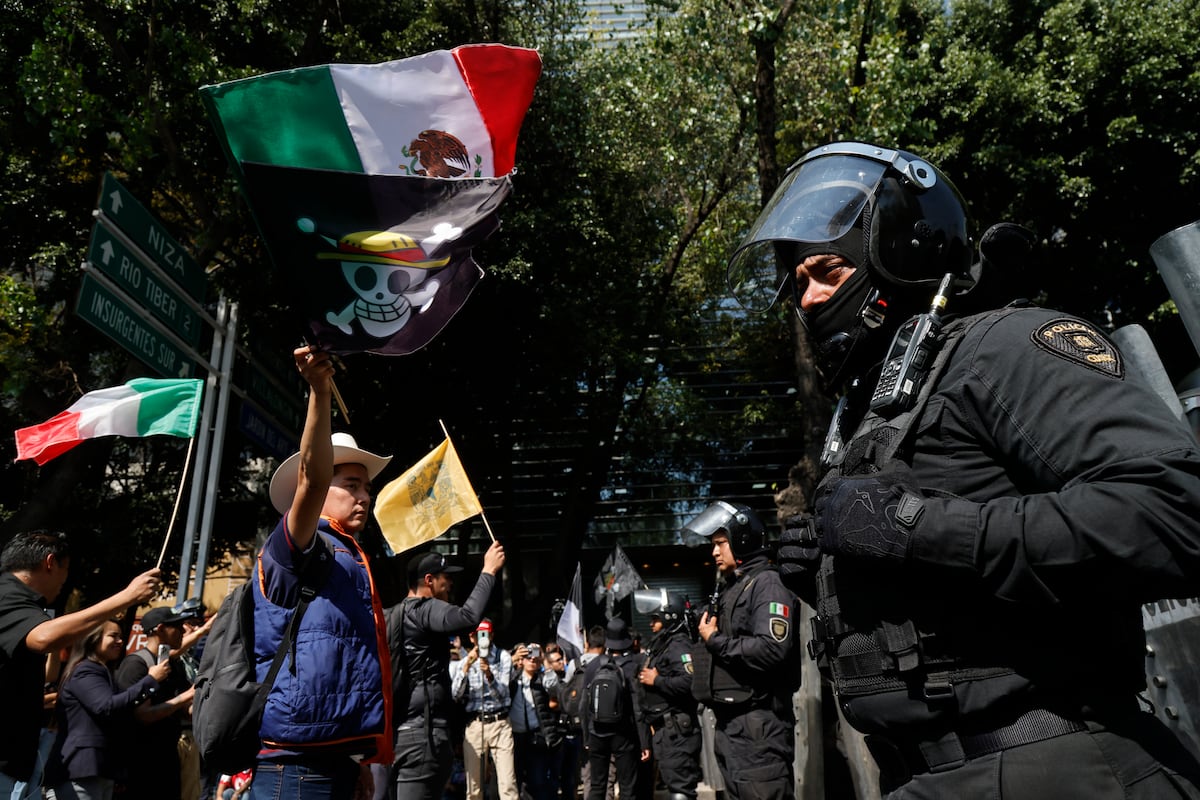
"Gen Z is right-leaning, addicted to their phone, diverse and critical, and grew up amid precarity, uncertainty and distrust in politics. Such is the portrait painted by older generations of young people between the ages of 13 and 28. In some countries, these youth have toppled governments, made things quite difficult for other administrations, and in November, a movement calling for protests under the banner of Generation Z had the Mexican government with its back against the ropes."
"For a couple of weeks, the phenomenon born from social media, with no famous faces, leaders nor unifying rallying cry, managed to install itself in public discourse, and forced Claudia Sheinbaum's government to react. It began online, with AI-generated images that utilized the Japanese animated series One Piece. Quickly, it went from being a dispersed phenomenon to claiming popular attention, driven by an indignation awoken by the murder of the mayor of Urupan, Carlos Manzo. From Mexico's National Palace, the response was clear."
"The president dedicated space in several morning press conferences to disqualifying and minimizing the protest, citing an investigation by Infodemia that uncovered an international network of misinformation and bots behind the march, which cost around $5 million and was backed by business magnate Ricardo Salinas Pliego. For Andrea Samaniego, an expert on political discourse from the National Autonomous University of Mexico (UNAM), the government was perceiving a potential threat."
Older generations portray Gen Z as right-leaning, phone-addicted, diverse and critical, raised amid precarity, uncertainty and distrust in politics. In some countries young people have toppled governments and disrupted administrations. A November movement in Mexico under the banner Generation Z emerged online, using AI-generated images referencing One Piece, and gained momentum after the murder of Urupan mayor Carlos Manzo. The movement captured public attention and compelled Claudia Sheinbaum's government to respond. The National Palace blamed an international misinformation and bot network, citing an Infodemia investigation that alleged about $5 million funding and links to Ricardo Salinas Pliego. Experts saw the government's focus as evidence of perceived threat.
Read at english.elpais.com
Unable to calculate read time
Collection
[
|
...
]