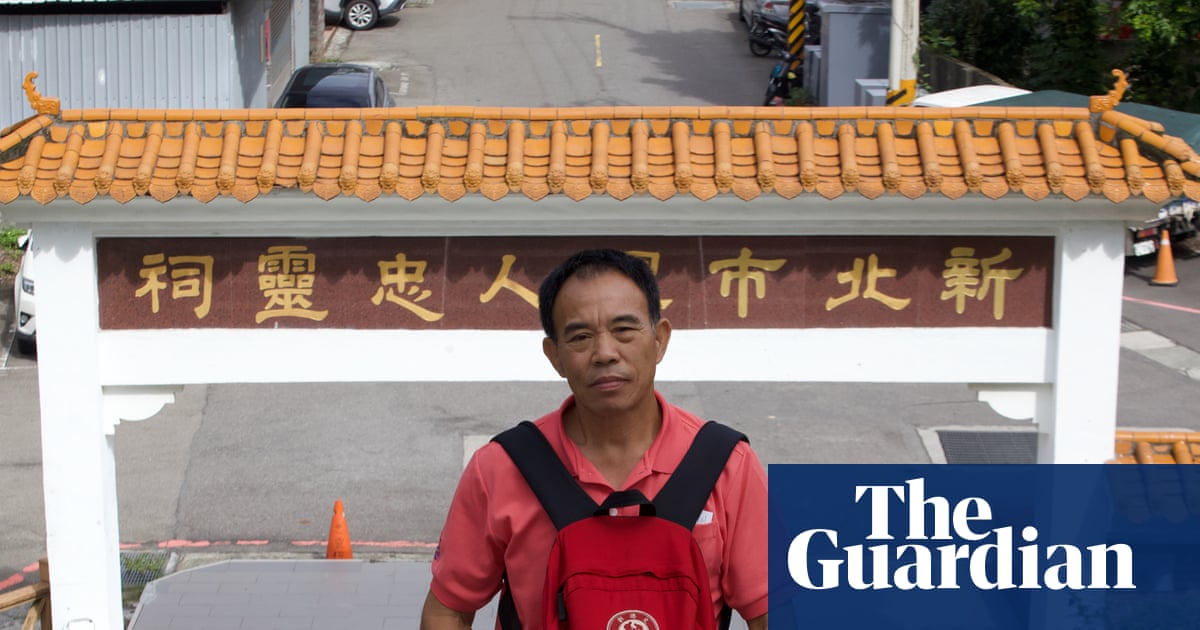
"In the leafy back blocks of a military cemetery in northern Taiwan, Liu De-wen strides through a room holding rows and rows of shelves. He stops and stoops to the lowest row, opening a small, ornate gold door. He pulls out an urn, bundles it into his lap, and hugs it. Grandpa Lin, follow me closely, Liu says. I am bringing you back home to Fujian as you wished. Stay close."
"Inside the jade green urn are the ashes of Lin Ru Min, a former soldier who was 103 when he died in Taiwan, far from his home village in China's Fujian province. Lin is among hundreds of people whose remains Liu, a 58-year-old Taiwanese man, has helped return to China over the past 23 years. Liu's work operates in a complicated space at the heart of modern Taiwan's history, navigating the nuances of family grief and separation."
"At the end of China's civil war between the nationalist Kuomintang (KMT) and the Communists in the late 1940s, Lin was a young fisher with a wife and five children in coastal Fujian, when he was snatched by the defeated KMT troops as they fled defeat on the mainland, his niece's daughter, Chen Rong, says. He was forced into conscription, and taken to Taiwan, not allowed to return home for almost half a century."
Liu De-wen, a 58-year-old Taiwanese volunteer, retrieves urns of mainland-born soldiers from a military cemetery and returns their ashes to Fujian, China. He has helped repatriate hundreds of remains over 23 years, including Lin Ru Min, who died at 103 far from his coastal Fujian home. Many were taken during the KMT retreat at the end of the Chinese civil war, when an estimated one to two million waishengren were brought to Taiwan, including soldiers, officials, families, and forced conscripts. The repatriation work intersects with family grief, long separations, and political tensions across the Taiwan Strait.
Read at www.theguardian.com
Unable to calculate read time
Collection
[
|
...
]