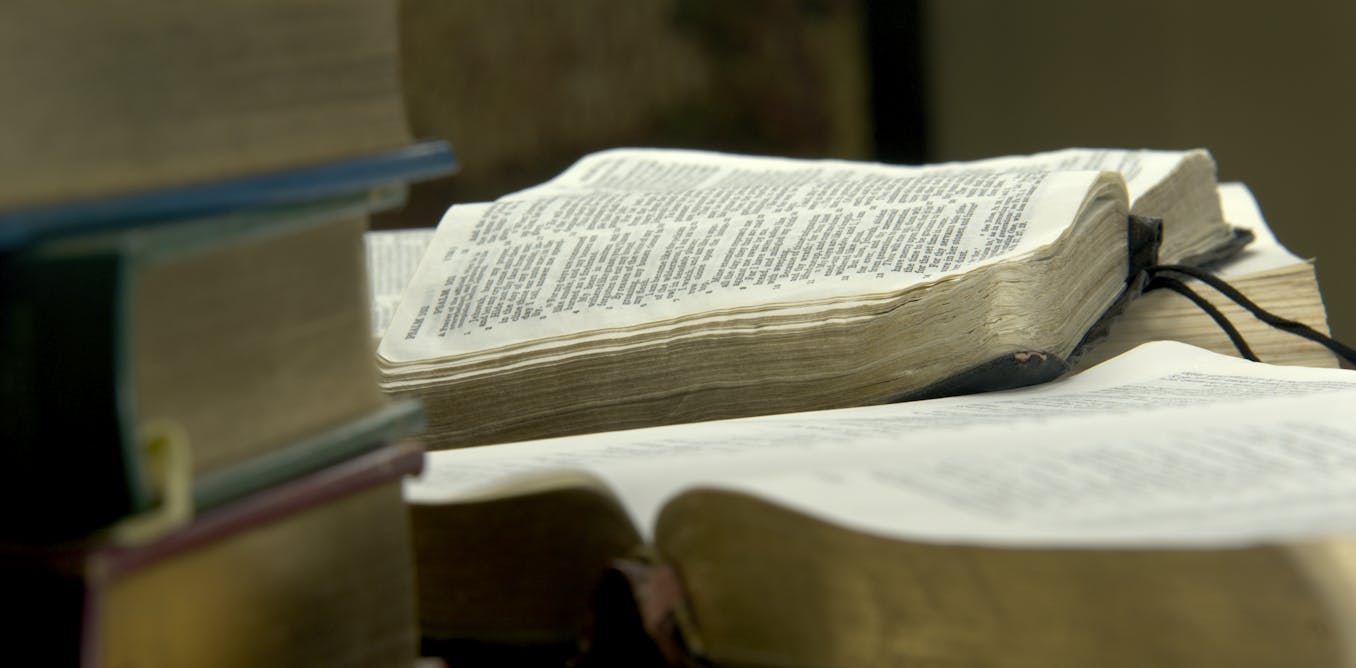
"In ancient Greek, "apocrypha" means "hidden." The word is used for texts that are not part of an approved set of religious books, especially Christian texts outside the official biblical canon. Yet these books are not so hidden. Some of them, like Acts of Peter, have shaped Christian tradition for centuries and are read by many people today."
"These stories are not only fun to read, but also provide valuable information about ideas that interested early Christians. In my research as a scholar of early Christianity, I read and interpret apocryphal texts to explore the ways that early Jews and Christians understood and practiced their religion."
"When the word is capitalized, "Apocrypha" refers to a set of Jewish texts that are found in Roman Catholic Bibles, but they are not included in most Protestant Bibles. These texts were valued within ancient Judaism, yet are not included in the Jewish sacred text the Tanakh."
Apocryphal texts are religious writings not included in official biblical canons, though many have profoundly influenced Christian tradition for centuries. The term derives from ancient Greek meaning "hidden," yet these texts remain widely read and studied. Examples include Acts of Peter, which describes Peter's upside-down crucifixion—a story not found in the Bible itself. Capital-A Apocrypha refers specifically to Jewish texts found in Roman Catholic Bibles but excluded from Protestant versions and the Jewish Tanakh. These texts, including Judith, Sirach, and the Books of Maccabees, were valued in ancient Judaism and contain significant historical narratives like the Hanukkah story. Scholars study apocryphal writings to understand how early Jews and Christians understood and practiced their religion.
Read at The Conversation
Unable to calculate read time
Collection
[
|
...
]