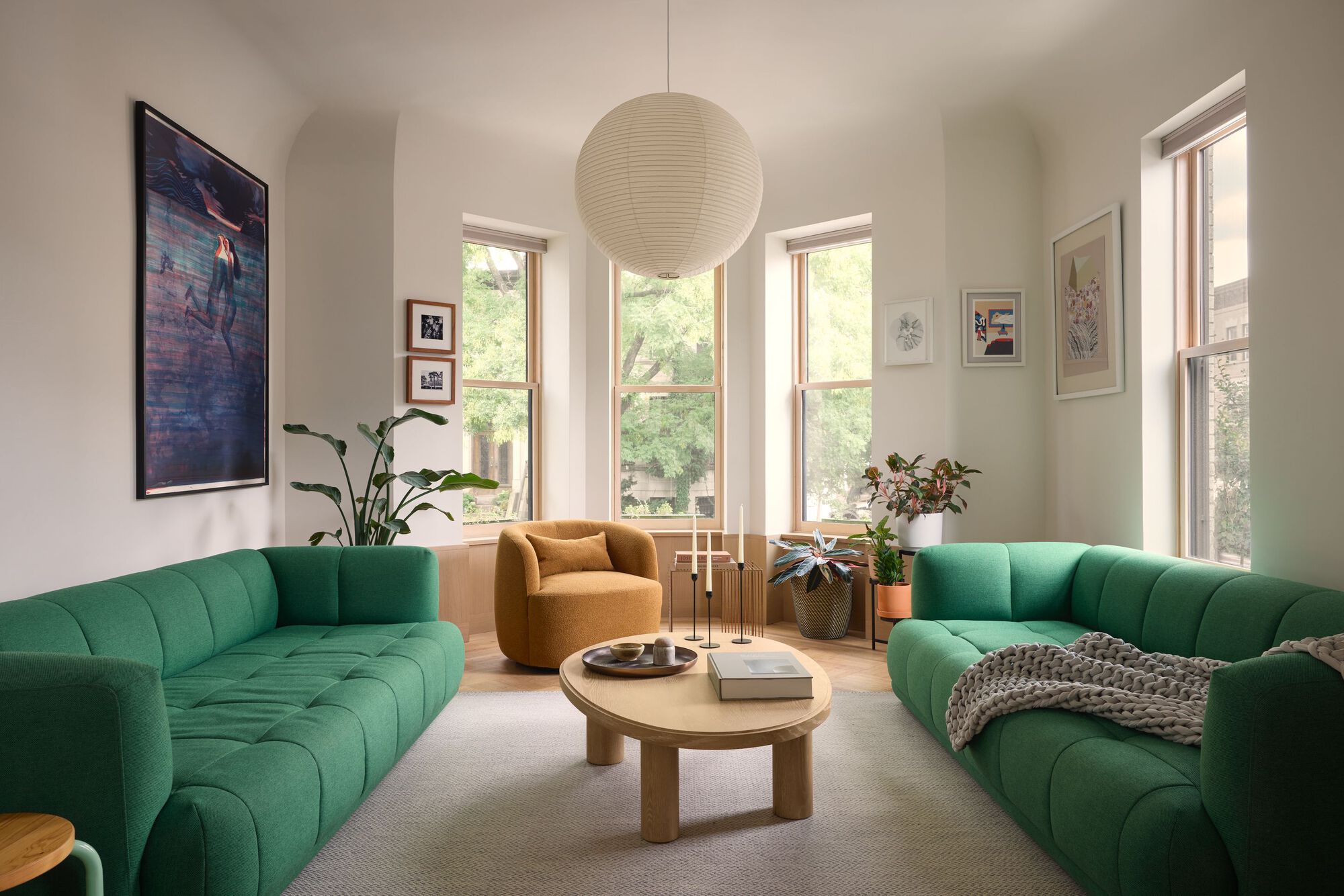
"The Lefferts Manor section of the Prospect Lefferts Gardens Historic District in Brooklyn is a remarkably well-preserved series of historic houses from the late 19th to early 20th-century: stately and large enough for families, the interiors can pose challenges to contemporary living, with outdated building systems, a lack of storage, and dark, divided spaces. New owners of a corner housea couple with backgrounds in marketing and journalism, raising two childrencame to ABA for something "clean, bright, natural, highly purposeful/functional, and kid-friendly.""
"While the exterior of the building is protected by landmark status, ABA approached the interiors not as restoration, but as reinvention. Looking to retain character while minimizing complexity, ABA suggested unifying spaces and bringing calm and simplicity by using as few ingredients as possible, consistently throughout. In doing so, the design process simultaneously references the house's historic form, borrows from early modernists like Adolph Loos in material usage, and unapologetically eliminates detail."
"Brands with products used in this architecture project Manufacturers: Duravit, &Tradition Flowerpot VP7, Andrew Neyer, Ann Sacks, Artemide, Bedrosians, Benjamin Moore, Element Lighting, Fisher Paykel, Frigidaire, GC, GE, Marvin, Minke Aire Roto, Naturali Stone, Pure Edge Cirrus Suspension D, SMC Stone International, Samsung, Sharp, Spot On Lighting Structural Engineering: A Degree of Freedom More SpecsLess Specs Eric Petschek Text description provided by the architects."
The Lefferts Manor corner house in Prospect Lefferts Gardens preserves late 19th–early 20th-century form while presenting interior challenges: outdated systems, limited storage, and dark, divided rooms. New owners, a couple raising two children, sought a clean, bright, natural, highly functional, and kid-friendly interior. With the exterior landmark-protected, interior work focused on reinvention rather than restoration, unifying spaces and simplifying materials to retain character while minimizing complexity. The design references the house's historic form and early modernists like Adolph Loos in material choices, and reduces ornament by using as few ingredients as possible to achieve calm and clarity.
Read at www.archdaily.com
Unable to calculate read time
Collection
[
|
...
]