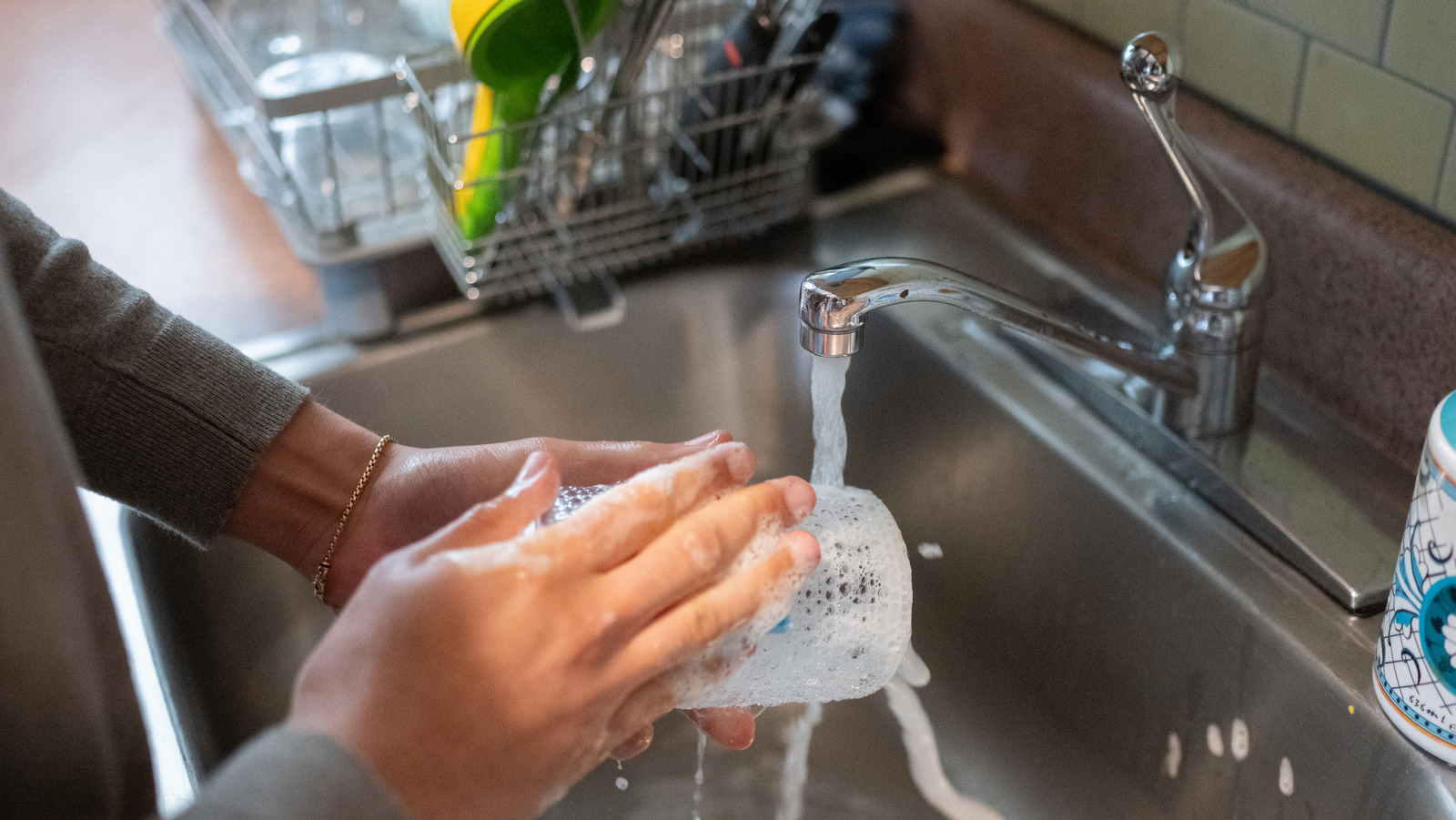
"It's not typically harmful to humans, although you may want to avoid cooking your beans in hard water. These minerals can also make cleaning more of a struggle. Soap reacts the way you want it to in soft water. In hard water, parts of soap bond to some of those minerals and create soap scum, reducing cleaning power and leading to deposits that are especially visible on silverware and glassware."
"Rinse aids aren't just a scam to get you to spend more money washing dishes. They also do a different job than vinegar on cloudy glassware. They contain surfactants, compounds that reduce the surface tension of water. When your dishes are being rinsed, that lower surface tension means the water has a harder time clinging to them. If it can't stay on your plates and glasses, it can't dry and leave mineral deposits behind."
Hard water contains naturally occurring groundwater minerals that cause soap to form scum, reduce cleaning power, and leave visible deposits on silverware and glassware. Rinse aids contain surfactants that lower water surface tension so rinsing water cannot cling and leave mineral deposits. Surfactants also bond with grease so it washes away. Rinse aids commonly include small amounts of acid, such as citric acid, to help break down minerals, and some include chelating compounds that bind hard-water ions. Choosing a rinse aid formulated for hard water improves results. Most dishwashers have a rinse aid dispenser that typically lasts about a month.
Read at Tasting Table
Unable to calculate read time
Collection
[
|
...
]