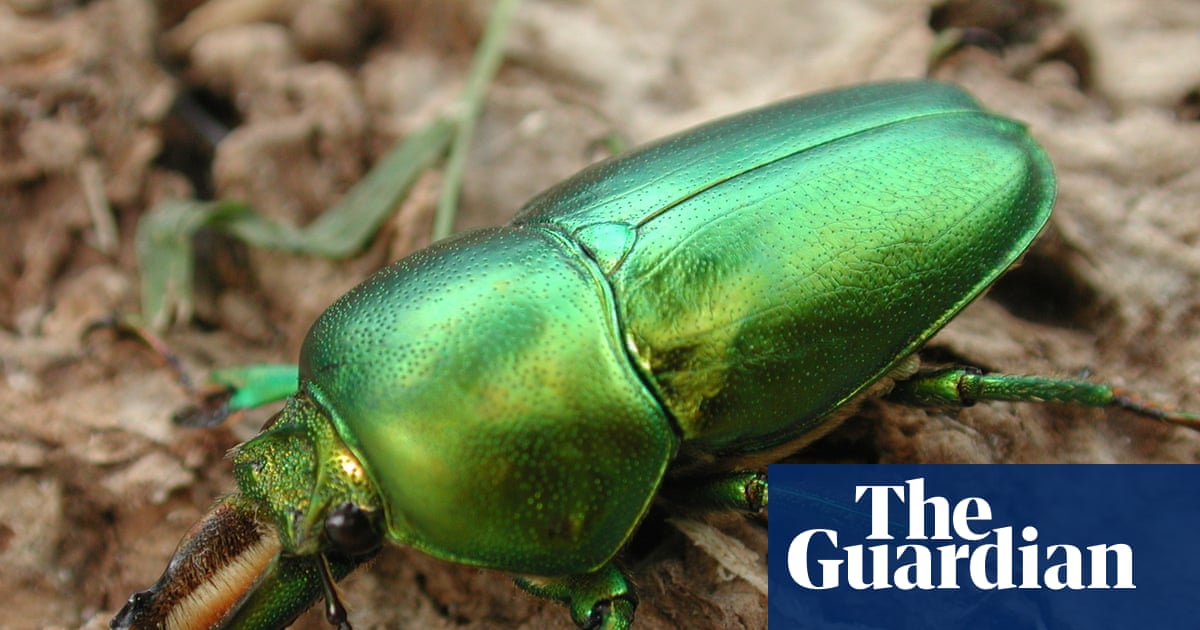
Lord Howe Island’s unique stag beetle flies among ancient tree tops in summer to find a mate. The island, formed by 7-million-year-old volcanic remains, contains many unique plants and animals and has seen a rise in invertebrates in recent years. A campaign removed about 300,000 invasive rats and mice, following earlier damage from mice arriving in the mid-19th century and rats arriving after a 1918 ship incident. Those invasions contributed to extinctions of multiple bird species, plant species, and at least 13 invertebrate species. A study in Biological Invasions reports that invertebrate numbers have rebounded since the 2019 eradication program, with a 60% increase across monitored sites measured using traps and cockroach hotels.
"In the summer months, Lord Howe Island's unique stag beetle, with wing cases that appear forged from iridescent green metal, fly around the ancient tree tops looking for a mate. That's really something wonderful, said Ian Hutton, a naturalist and nature guide on the World Heritage-listed island. I would have struggled to have seen any of them 10 years ago."
"The rise in the island's invertebrates beetles, weevils, bush cockroaches and other bugs has come after a campaign seven years ago to rid the island of about 300,000 invasive rats and mice. Lord Howe Island lies 600km off Australia's New South Wales coast. Now a study in the journal Biological Invasions has found the island's bugs are bouncing back since the 2019 eradication program."
"Across our sites we found a 60% increase in the total numbers of invertebrates, said Maxim Adams, a researcher at the University of Sydney. I think that's pretty extraordinary but it's something we had a feeling for. Walking around Lord Howe now all of us are blown away by what we're seeing."
"Mice arrived on the island in the mid-19th century and then, in 1918, a supply ship grounded on a rock. Stowaway rats jumped ship and ate their way through the island's native flora and fauna helping push five bird species, two plants and at least 13 species of invertebrates to extinction. Before the 2019 program was rolled out, scientists had the foresight to measure the numbers and types of bugs on the island."
#invasive-species-eradication #invertebrate-recovery #lord-howe-island #biodiversity-conservation #ecological-monitoring
Read at www.theguardian.com
Unable to calculate read time
Collection
[
|
...
]