#antonia-ruzic
#antonia-ruzic
[ follow ]
#contemporary-art #sculpture #art #installation-art #photography #illustration #contemporary-painting #motherhood
fromdesignboom | architecture & design magazine
16 hours agopilar zeta's sculpted portals transform public spaces into pocket dreamworlds
Pilar Zeta builds environments like dreams that feel like stepping into a thought mid-formation. Her sculptural works take shape in the form of portals and objects that invite direct engagement, as visitors are invited to walk through them and notice subtle shifts in perception.
Design
#sculpture

Writing
fromHi-Fructose Magazine - The New Contemporary Art Magazine
1 week agoFor Frode Bolhuis, The Figure Contains Life's Mysteries and Its Multitudes - Hi-Fructose Magazine
Bolhuis finds joy in the creative process of sculpture, emphasizing intuition and the use of polymer clay for its playful qualities and vibrant color.
#photography
Photography
fromItsnicethat
1 week ago"What if everyone started making out?" Andrea Marti's horny photo series tackles Gen Z's lack of intimacy head on
Andrea's photographic series reimagines intimacy in a digitally isolated world, inspired by Raquel S. Benedict's essay and Tom Wood's nostalgic club scenes.
fromdesignboom | architecture & design magazine
1 week agohow lachlan turczan reshapes matter by bending light and water in atmospheric installations
Lachlan Turczan's practice sits in the space between physics, optics, and environmental art, as he works with lasers, water, mist, and custom-built lenses to produce sculptures made entirely from light.
Berlin music
#art

Arts
fromdesignboom | architecture & design magazine
1 week agoencyclopedias are lying to you and weronika gesicka proves it with hundreds of fake entries
Weronika Gęsicka's project transforms fictitious 'trap entries' from encyclopedias into a credible photographic book, questioning the nature of knowledge today.
Arts
fromdesignboom | architecture & design magazine
1 week agoencyclopedias are lying to you and weronika gesicka proves it with hundreds of fake entries
Weronika Gęsicka's project transforms fictitious 'trap entries' from encyclopedias into a credible photographic book, questioning the nature of knowledge today.
Renovation
fromdesignboom | architecture & design magazine
2 weeks agoartist marjetica potrc learns from communities worldwide to rethink how we live together
Marjetica Potrč's work emphasizes adaptive community systems over rigid planning, focusing on resource management and environmental responsiveness.

Berlin music
fromArchDaily
3 weeks agoConcentrico 2026 Features Smiljan Radic Installation and 26 Urban Interventions in Logrono, Spain
Concéntrico festival invites international architects, designers, and artists to create temporary installations activating public spaces in Logroño from June 18-23, 2026, featuring Pritzker Prize winner Smiljan Radić and 26 other teams organized around three curatorial themes.
Design
fromArchDaily
4 weeks agoSmiljan Radic: Material Explorations Between Ephemerality and Permanence
Chilean architect Smiljan Radić creates buildings that blend ancient monumentality with provisional fragility, combining diverse materials in experimental ways that challenge conventional architectural categorization.
Photography
fromKALTBLUT Magazine
4 weeks agoThey Return To Their Earth! A photographic project by Federico Masini - KALTBLUT Magazine
Federico Masini's photographic project explores human fragility by absorbing figures into landscapes, reversing traditional hierarchies to create silent narratives about presence and disappearance.
Russo-Ukrainian War
fromArtforum
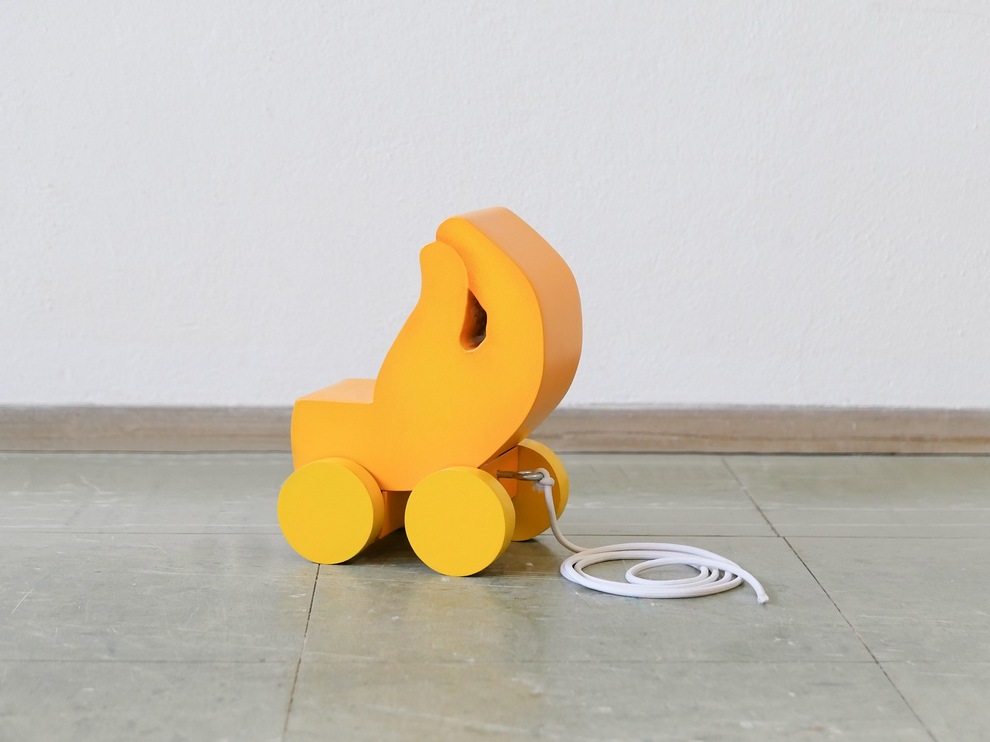
1 month agoRoman Khimei and Yarema Malashchuk on image-making in wartime
Ukrainian artists document social transformation and wartime trauma through performance-based video work that challenges traditional documentary approaches and confronts death's instrumentalization in conflict.



Arts
fromHyperallergic
3 weeks agoZarina Brought the World to New York
Zarina's artistic practice, rooted in South Asian history and shaped by migration and displacement, established her as a foundational figure for South Asian American artists while maintaining independence from nationalist frameworks.
fromBOOOOOOOM!
1 month agoIllustrator Spotlight: Julija Panova
Of Lithuanian-Russian heritage, Panova's work is informed by that layered cultural inheritance as growing up between cultures has shaped her sensitivity to shifting narratives. Her work explores folklore, quiet, and images that feel suspended between past and present.
Graphic design
fromArtnet News
3 weeks agoPeter Halley Returns to Austria with First Solo Show in Two Decades
In many ways working in the tradition of Kazimir Malevich and Josef Albers, his compositions employ a language of squares and rectangles known as "Cells" and "Prisons," connected by bold lines called "Conduits." Together, these geometric and linear arrangements tap into the inherent geometry that structure reality, and conceptually refer to the construction of everyday life, both public and private as well as physical and psychological.
Arts
Arts
from48 hills
3 weeks agoFor Iranian artist Shiva Ahmadi, 'ornamentation becomes a form of resistance' - 48 hills
Shiva Ahmadi's interdisciplinary art practice channels personal experiences of displacement, political upheaval, and immigrant anxiety into visually seductive works that address brutal global issues affecting marginalized communities.
Berlin music
fromKALTBLUT Magazine
1 month agoUnveil the Pulse of Memory: Filipp Jenikae's Visual Symphony at Galerie Sara Lily Perez - %
Filipp Jenikäe's exhibition explores how urban spectacle, collective memory, and personal experience merge through dynamic paintings of cities, crowds, and athletic figures.
fromYanko Design - Modern Industrial Design News
2 months agoColor One Square Each Week and Watch 80 Years Fill with Your Story - Yanko Design
Weeks in a relationship or life blur together. You remember birthdays and trips, but the quiet in‑between time mostly stays invisible. We track deadlines and appointments on digital calendars, but rarely see the whole arc of a shared life at once, the years you've already moved through and the ones still sitting empty ahead. There's something oddly powerful about seeing every week you have, and have had, laid out in one place on a wall.
Gadgets
fromBerlin Art Link
2 months agoInterview with Nina Kintsurashvili | Berlin Art Link
Across Georgia, a series of stunning frescoes traces the country's fractious history, from its early Christian origins to the Soviet-era socialist utopianism. It was through these murals that Nina Kintsurashvili first encountered art-traveling with her father, Lasha, as he journeyed to remote mountain regions to restore medieval murals and re-learn the art of fresco painting. Here, she discovered the importance of perspective, space and line work through the logic of Byzantine and Georgian iconography, absorbing a semiotic system she has adapted and distorted,
Berlin


fromwww.thehistoryblog.com
1 month agoMosaics displayed under floor of new Istanbul museum
An intact mosaic from Late Antiquity discovered during restoration of a historic municipal building in Istanbul is now a floor again, covered in plexiglass and welcoming visitors to the new Zeytinburnu Mosaic Museum. Visitors of Turkey's newest museum move across elevated glass walkways, suspended right above the original floors themselves. The mosaics are not relocated fragments mounted on walls, but surfaces that remain exactly where they were first laid, preserving their context for all to see.
History
fromArtnet News
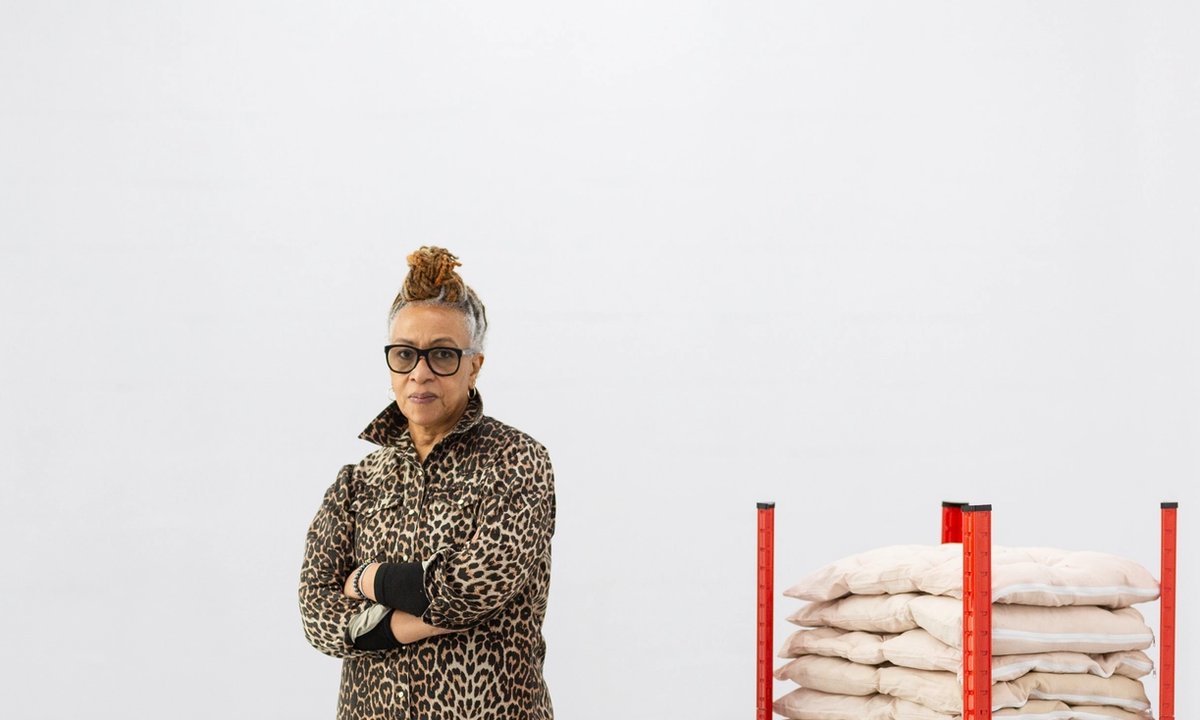
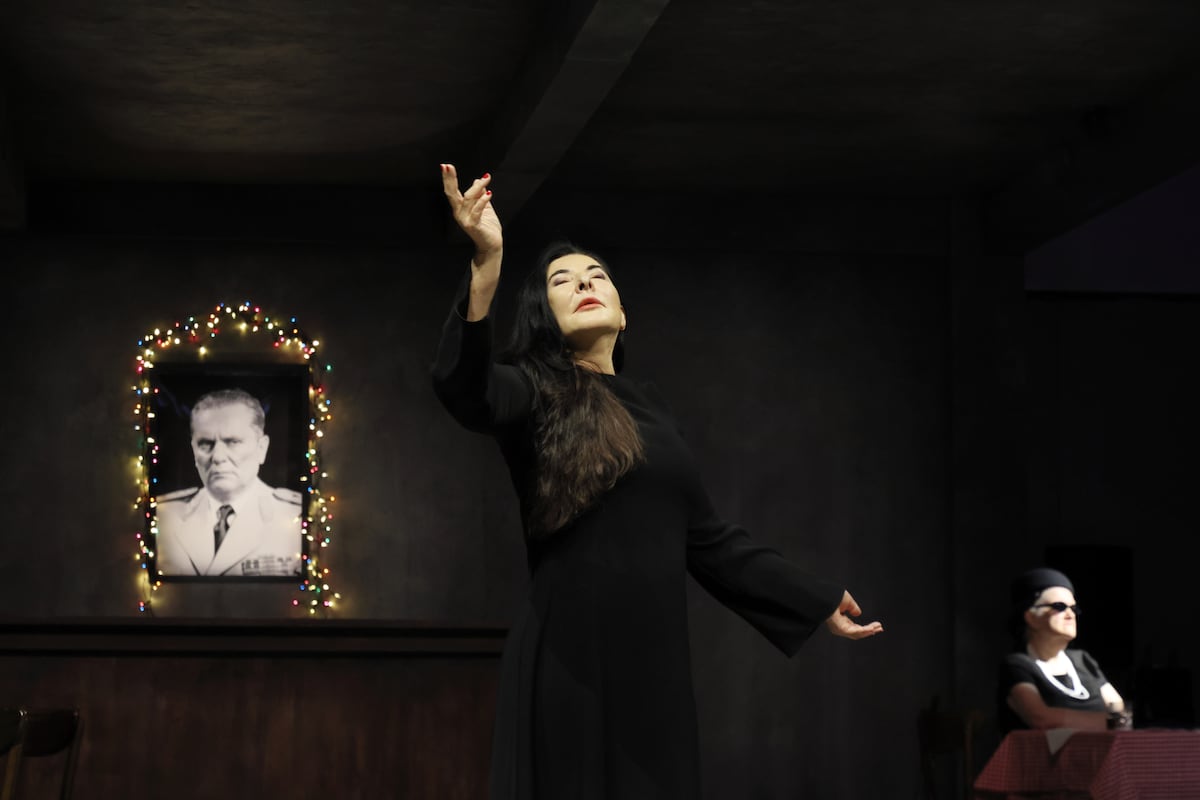
1 month agoMarina Abramovic Is the Unlikely Star of the New Balloon Museum
As a child, I imagined a place far behind our own sky. A planet with its own weather, its own atmosphere, its own logic entirely. It was my own version of science fiction. How did it feel on this planet? Was it snowy, windy, or could you sense the first green breath of spring-I called it Planet Z.
Arts

fromColossal
1 month agoElizabeth Saloka's Vibrant Painted Rocks Adopt the Personalities of Snacks and Pop Culture Icons
Last fall, I bought a ton of marble scraps off a sculptor in Woodstock for like, $10 off Facebook. For sandwiches and cakes, crumbling asphalt parking lots are good. When I lived in Sunset Park, they demolished a building a couple blocks from my apartment, and there was a hole in the fence, so I'd go in there and find tons of cool shapes and textures of rubble.
Arts
fromHyperallergic
1 month agoPetrit Halilaj's Opera of Kosovan Memory and Myth
At the Hamburger Bahnhof, the props, costumes, and set pieces of the musical are staged in vignettes throughout a large hall: a life-sized horse sculpture in a pink clearing surrounded by dirt, a curtained cart set up as a stage with a figure on its steps, two life-sized human figures in animal masks perched in a high window, as if observing the events.
Arts
fromArtnet News
1 month agoMichele Pred's Art of Resistance Is More Necessary Than Ever
Going out and demonstrating is really important. But if you don't feel comfortable demonstrating, you can volunteer for organizations, you can donate to organizations, you can sign petitions, you can call your senator. There's no excuse not to be involved on some level.
Arts
fromHyperallergic
1 month agoMagdalena Abakanowicz Sculpted the Collective Body
The organicity of the human body we're born inside of is encoded in us. This concept of our organic nature as the source of elemental knowledge, at once direct and mysterious, permeates the textural abstractions exhibited in her survey Magdalena Abakanowicz: The Thread of Existence at Musée Bourdelle.
Arts
Arts
fromArtnet News
1 month agoVarvara Roza on Championing Artistic Rigor Over Trends and Speculation
Varvara Roza Galleries helps artists develop their practice and collectors build meaningful collections through integrity, long-term vision, and strategic career development rather than pursuing fleeting trends.
fromdesignboom | architecture & design magazine
1 month agomilla novo renders her desert textile installation within a snowy alpine context
The project, titled 'From Desert Sand to Alpine Snow,' centers on twenty hand-knotted fiber panels first commissioned for the Tanweer Festival in 2025. Installed in a 10 by 10 meter steel frame rising six meters high, the work stood directly on desert ground, its saturated colors vibrating against the pale sand and rocky escarpments of Mleiha.
Arts
fromColossal
2 months agoRegina Silveira Pieces Together an Evolving Narrative of Latin America
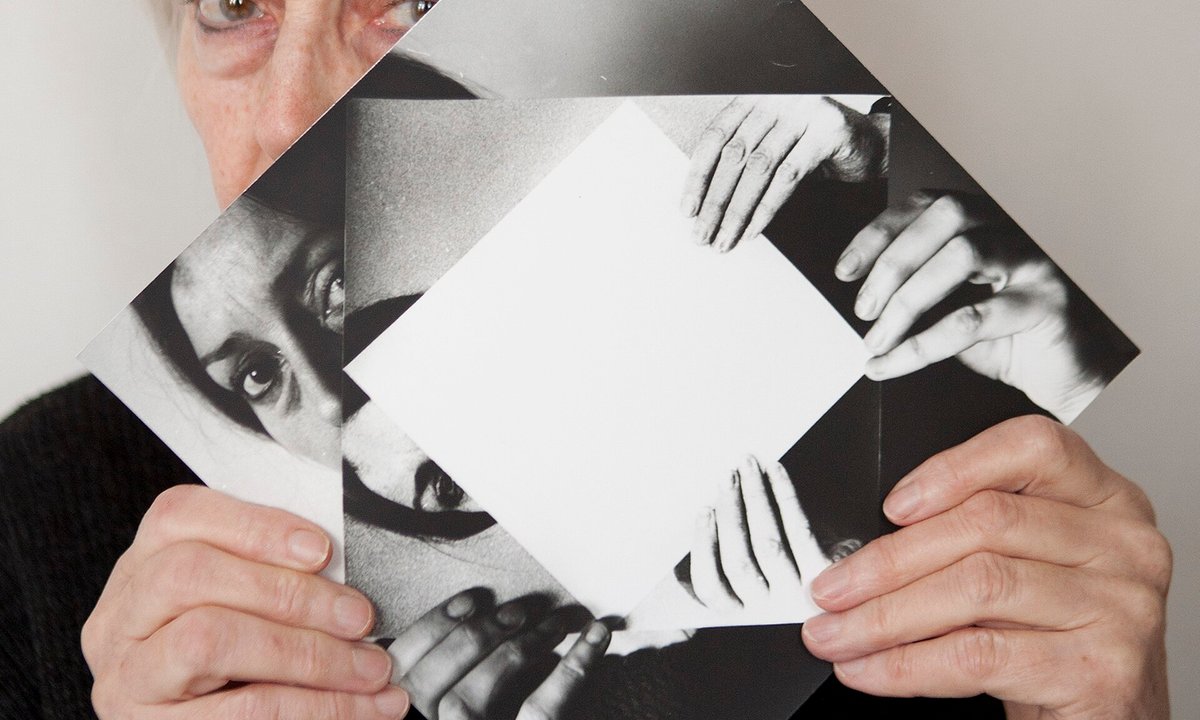
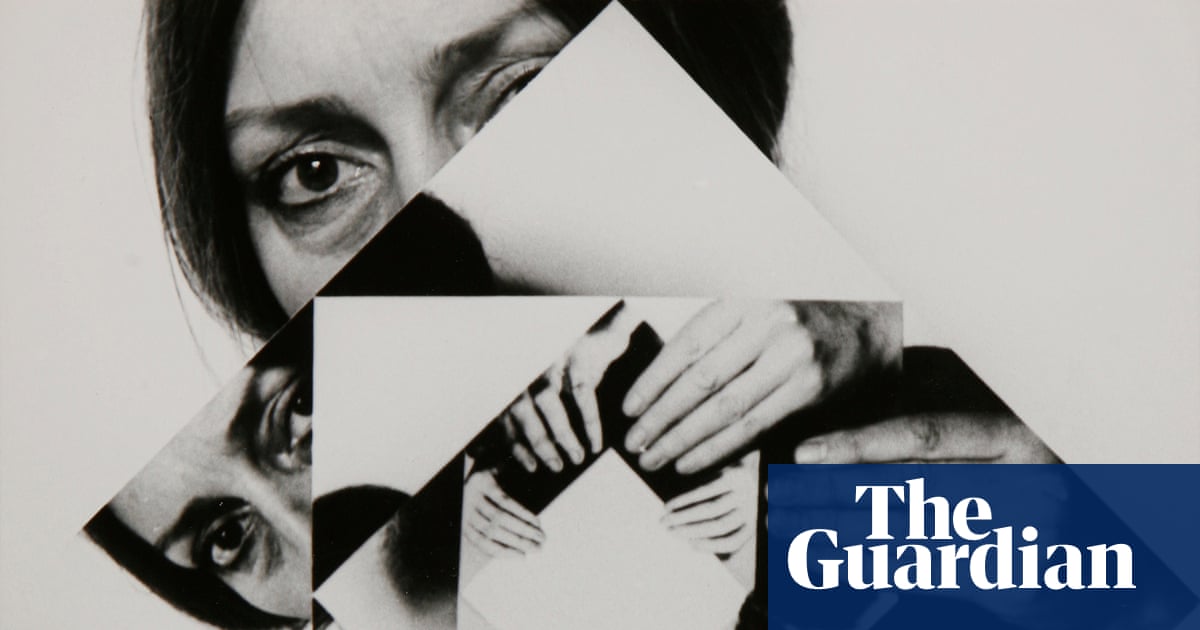
Regina Silveira has spent the better part of three decades considering the relationship between media and meaning, particularly as it relates to Latin America. First presented in 1997, "To Be Continued..." features 100 black-and-white reproductions of photos, newspaper clippings, propaganda, advertisements, and more. Silveira nests each image into an oversized puzzle piece, which cuts off faces and scenes to leave fragments of pop culture icons, flora and fauna, and even the occasional mugshot spliced next to one another.
Arts
fromBerlin Art Link
1 month agoAn Interview with Monia Ben Hamouda | Berlin Art Link
Monia Ben Hamouda's work weaves calligraphy, material transformation and ancestral memory into sculptures and installations that oscillate between language and form. In conversation, we traced the conceptual and sensory threads of her practice, unfolding through key works that reflect on heritage, embodiment and translation. Using materials such as iron, stone and pigment, her installations become sites where history is not only referenced but physically felt.
Arts
fromHyperallergic
1 month agoMarigold Santos Takes Root
The only thing most people know about epiphytes, if they know about them at all, is that they're rootless. That's not quite true - they develop highly specialized root systems adapted to wherever they land. In Epiphytic Elucidations at Patel Brown Gallery, Calgary-based artist Marigold Santos takes this fact as more than a metaphor. The exhibition uses epiphytes - plants that grow on other plants without harming them - as a framework for the expansive ways diasporas form through material labor.
Arts
Arts
fromwww.theguardian.com
2 months agoIt's about hurling yourself into the unknown': Charmaine Watkiss on turning a UK museum upside down
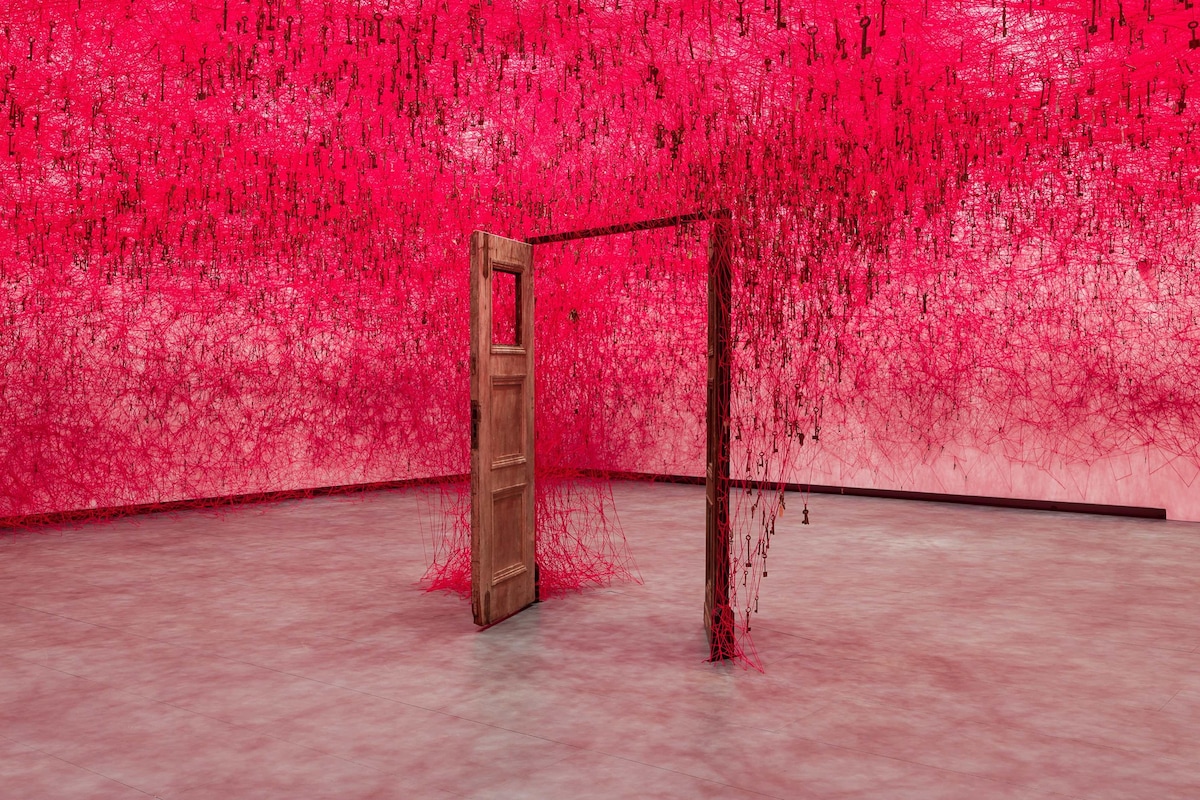
Charmaine Watkiss connects Caribbean, African and UK botanical knowledge and diaspora histories through portraits and sculpture emphasizing medicinal plants and ancestral herbal traditions.


Arts
fromThe Art Newspaper - International art news and events
2 months agoHawai'i at the British Museum, a Venice palazzo for sale, Joseph Beuys's 'Bathtub'-podcast
British Museum presents Hawaiʻi: a kingdom crossing oceans with renewed stewardship of Hawaiian objects; Venice's Ca' Dario is for sale; Beuys' Bathtub in London show.
Arts
fromwww.theguardian.com
2 months agoArtist Sarah Sze: A work of art is finished when everything teeters'
Sarah Sze’s Gagosian Beverly Hills exhibition uses 13 works—large, intricate paintings and video installations—to create immersive, disorienting landscapes reflecting an image‑saturated, unstable contemporary world.
[ Load more ]