"Last year, when I saw that Windows NT had been ported to the Wii, I felt a renewed sense of motivation. Even if my lack of low-level experience resulted in failure, attempting this project would still be an opportunity to learn something new."
No matter how inevitable the AI-takes-all scenario may sound, as long as there is a person in the world who still wants to own their means of computation, we will be here to build the hardware that enables it.
Meta is working on two proprietary frontier models: Avocado, a large language model, and Mango, a multimedia file generator. The open-source variants are expected to be made available at a later date.
Our customers, ranging from large enterprises to AI research labs, are no longer just asking for AI features. They need a way to collect high-fidelity, synchronized robot and vision data to train AI models on the same robots they intend to deploy. Our AI Trainer is the industry's first direct lab-to-factory solution for AI model training.
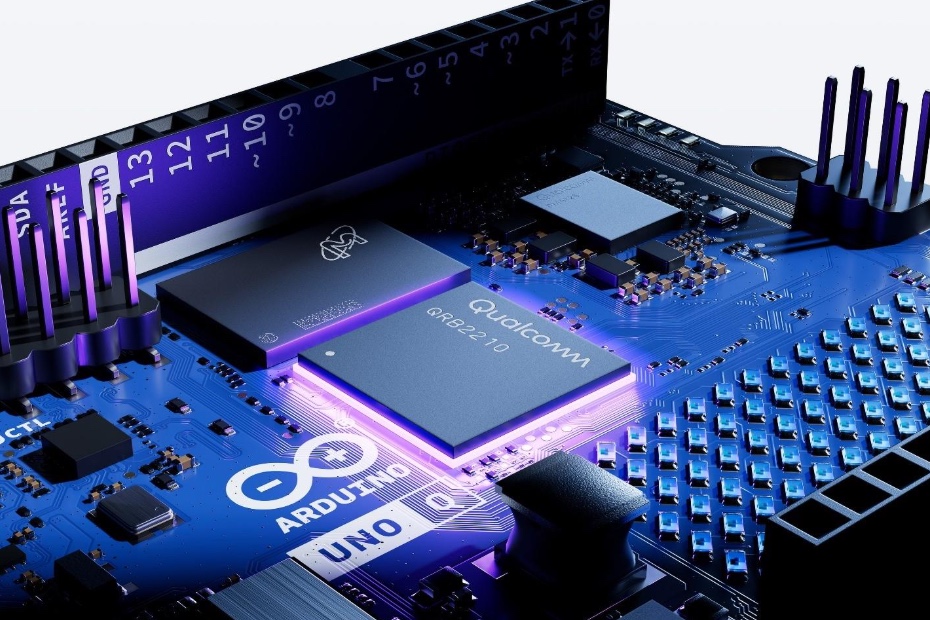
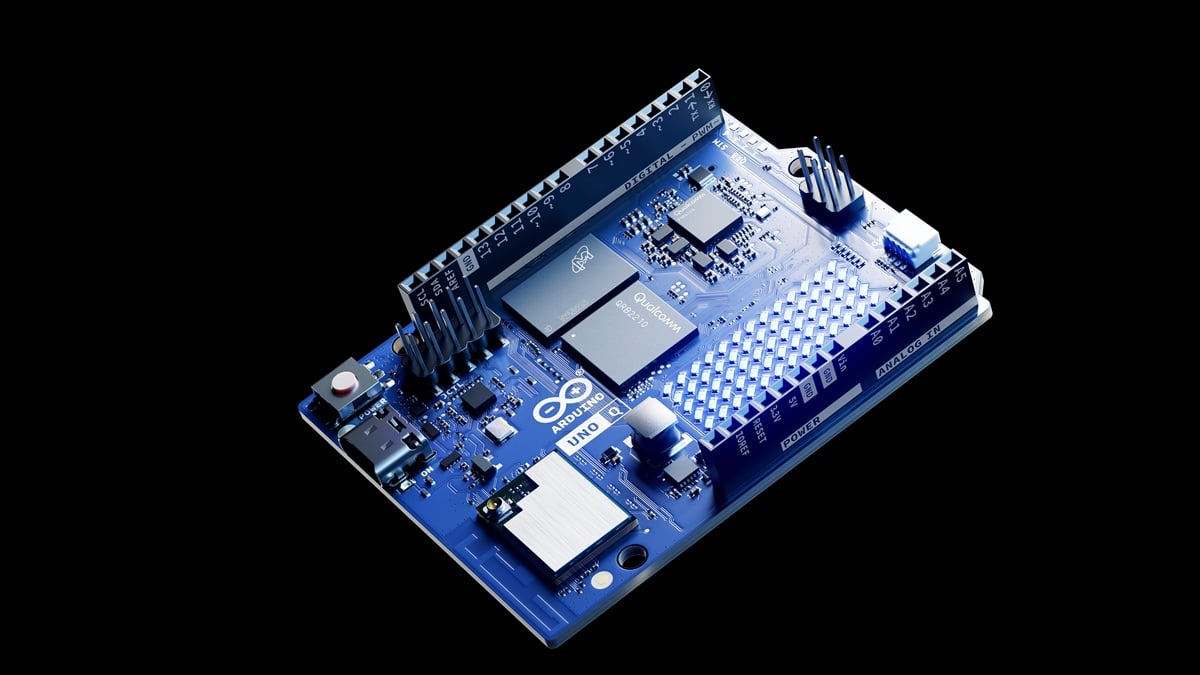
The new Arduino Ventuno Q is a very different beast. For one, it's powered by the Dragonwing IQ-8275 chipset. This contains an 8-core Kryo CPU (2x Gold Prime at 2.35GHz + 2x Gold at 2.1GHz + 4x Silver at 1.95GHz) and an Adreno 623. The Ventuno Q offers up to 16GB of RAM and up to 64GB of eMMC storage plus an M.2 NVMe Gen 4 connector for SSDs.
My website was not what potential customers would be looking for. Although what the site did was useful, no one in the age of agentic coding was going to use it. Instead, they would want some way to have their coding agent, or their build process, or some other automated thing, use my system.
The advertising industry has always been in the business of making things, such as the OOH billboard, the 30-second spot, the snappy social post, the standard website: final, finite assets polished and pushed into the world. Agencies were paid, often by the hour, for producing final versions of these things and then moved on to the next project. Even with generative AI entering the picture, much of the conversation remains focused on making those same things faster or cheaper.
Atoms is the first AI team that autonomously builds, launches, and grows real businesses, not just repos, without additional hiring costs and time investment in long recruitment processes. Powered by open-source models, Atoms deliver results that are 45% better than those of top proprietary tools, at up to 80% lower cost. Atoms runs an AI-dedicated team right in your browser: a team lead, a researcher, a product manager, an architect, an engineer, a marketing executive, a SEO specialist, a data analyst, etc.
Intrinsic "graduated" into an independent company inside Alphabet's Other Bets division in 2021, a portfolio of high-risk, speculative ventures that also includes robotaxi firm Waymo and healthcare company Verily. It pitches itself as an Android-like layer for robotics, building software and tools that make it easier to create robot applications.
In an effort to probe the limits of autonomous software development Anthropic researcher Nicholas Carlini used sixteen Claude Opus 4.6 AI agents to build a Rust-based C compiler from scratch. Working in parallel on a shared repository, the agents coordinated their changes and ultimately produced a compiler capable of building the Linux 6.9 kernel across x86, ARM, and RISC-V, as well as many other open-source projects. The agents ran roughly 2,000 sessions without human intervention, incurring about $20,000 in API costs.
Open-source AI coding tool OpenCode features a native terminal-based UI, multi-session support, and compatibility with over 75 models, including Claude, OpenAI, Gemini, and local models. In addition to its CLI tool, OpenCode is also available as a desktop app and and an IDE extension for VS Code, Cursor, and other tools. OpenCode allows developers to use their existing subscriptions to paid services such as ChatGPT Plus/Pro, GitHub Copilot. Additionally, it includes a set of free models that can be used locally through LM Studio.
All of the appliances and systems are brand-new: the HVAC, the lighting, the entertainment. Touch screens of various shapes and sizes control this, that, and the other. Rows of programmable buttons sit where traditional light switches would normally be. The kitchen even has outlets designed to rise up from the countertop when you need them, and slide away when you don't.
After some investigation, I found that Home Assistant has an integration with Node-RED - a graphical tool for manipulating data and event streams. It could probably satisfy most of my needs. But from time to time I remember that I'm a professional software developer, working with event streams for many years, and for this kind of problem there's nothing better than math (and Scala's type system, which supports it very well).
If a team of human engineers built a web browser that only half-worked, it wouldn't get people talking. But when Michael Truell, CEO of coding startup Cursor, posted on X last week that a swarm of AI agents had built a browser that, he wrote, "kind of works"-while running uninterrupted for a week without any human intervention-it went viral across the tech world, with over six million views.
Smart TV UIs are hard enough for adults to navigate, let alone preschoolers. When his three-year-old couldn't learn to navigate with a remote, one Danish computer scientist did what any enterprising creator would do: He turned an old floppy disk drive into a kid-friendly content controller that starts streams based on what disk you insert. As Mads Olesen explained in a blog post, his son usually winds up asking him to handle the television, leaving him disempowered and unable to make content choices for himself.
AI coding tools have caused as many problems as they have solved, according to industry experts. The easy-to-use and accessible nature of AI coding tools has enabled a flood of bad code that threatens to overwhelm projects. Building new features is easier than ever, but maintaining them is just as hard and threatens to further fragment software ecosystems. The result is a more complicated story than simple software abundance.
Software development used to be simpler, with fewer choices about which platforms and languages to learn. You were either a Java, .NET, or LAMP developer. You focused on AWS, Azure, or Google Cloud. Full-stack developers learned the intricacies of selected JavaScript frameworks, relational databases, and CI/CD tools. In the best of times, developers advanced their technology skills with their employer's funding and time to experiment. They attended conferences, took courses, and learned the low-code development platforms their employers invested in.
Software developers have spent the past two years watching AI coding tools evolve from advanced autocomplete into something that can, in some cases, build entire applications from a text prompt. Tools like Anthropic's Claude Code and OpenAI's Codex can now work on software projects for hours at a time, writing code, running tests, and, with human supervision, fixing bugs. OpenAI says it now uses Codex to build Codex itself, and the company recently published technical details about how the tool works under the hood.