#art-attribution
#art-attribution
[ follow ]
#jmw-turner #art-history #john-opie #michelangelo #renaissance-art #british-portrait-painting #tate-collection

fromwww.scientificamerican.com
4 weeks agoDid AI just solve the mystery of one of El Greco's most enigmatic paintings?
Using artificial intelligence, researchers analyzed The Baptism of Christ at the microscopic level, looking for trends in the texture of the paint at the resolution of a single paintbrush bristle.
Philosophy
fromArtnet News
3 months agoVan Eyck Attribution Dispute Pits Art Historians Against A.I. Firm | Artnet News
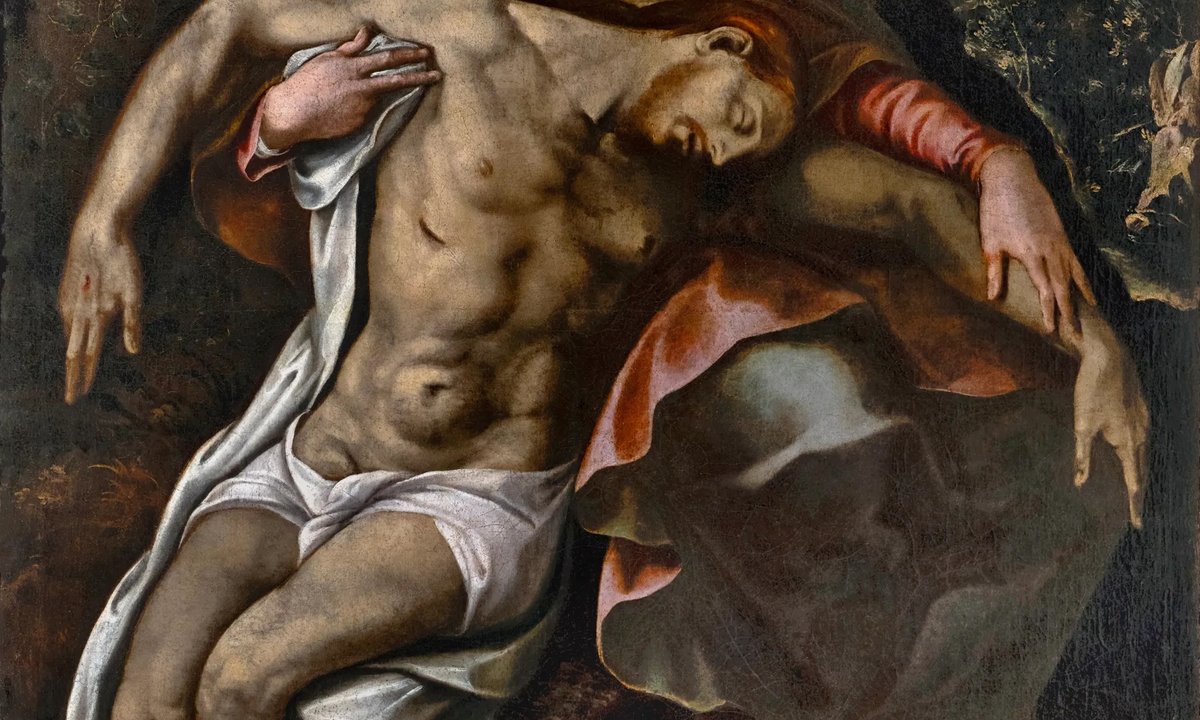
Once again, A.I. and human experts are butting heads over the authenticity of a world-famous painting. A Belgian art historian has refuted claims made by Swiss company Art Recognition that two paintings have been falsely attributed to the Northern Renaissance master Jan van Eyck. The paintings in question are versions of Saint Francis of Assisi Receiving the Stigmata (ca. 1428-32) belonging to the Royal Museums of Turin and the Philadelphia Museum of Art.
Arts
fromArtnet News
3 months agoThis Durer Portrait, Dismissed as a Copy, Is the Real Deal, Historian Says
The portrait of Albrecht Dürer's father that has been sitting in the collection of the National Gallery in London for over a century has long been regarded as a copy. However, an art historian argues, in a recently published book examining the Northern Renaissance painter's oeuvre in great depth, that the painting is real.
Arts
fromMail Online
7 months agoPortrait of young Marie Antoinette is really of her sister, study says
One of her most famous portraits allegedly shows the queen as a young girl, holding a shuttle used for weaving in one hand and a red thread in the other. Assumed to have been about seven years old, she wears a steely gaze directed at the observer, typical of a powerful queen-to-be. The acclaimed watercolour, painted in 1762 by Genevan painter Jean-Étienne Liotard, appears in biographies of Marie Antoinette all around the world.
History
fromThe Art Newspaper - International art news and events
7 months agoGeorges de La Tour, once a victim of the academy's collective amnesia, can be seen in a new light in Paris
And yet, not a century earlier, that name was near unknown to anyone who knew anything about the history of painting in France. In fact, it was a German art historian with prodigious visual recall, Hermann Voss, who in 1915 thought to connect two paintings in the Nantes Museum of Fine Arts (respectively signed "GS. de La Tour" and "G. de La Tour") with an unsigned canvas, titled Newborn Child, in Rennes.
Arts
[ Load more ]