#british-cinema-1970s
#british-cinema-1970s
[ follow ]
#bafta #racial-slur #artistic-legacy #character-dynamics #film-awards #british-comedy #steven-soderbergh


Arts
fromThe Art Newspaper - International art news and events
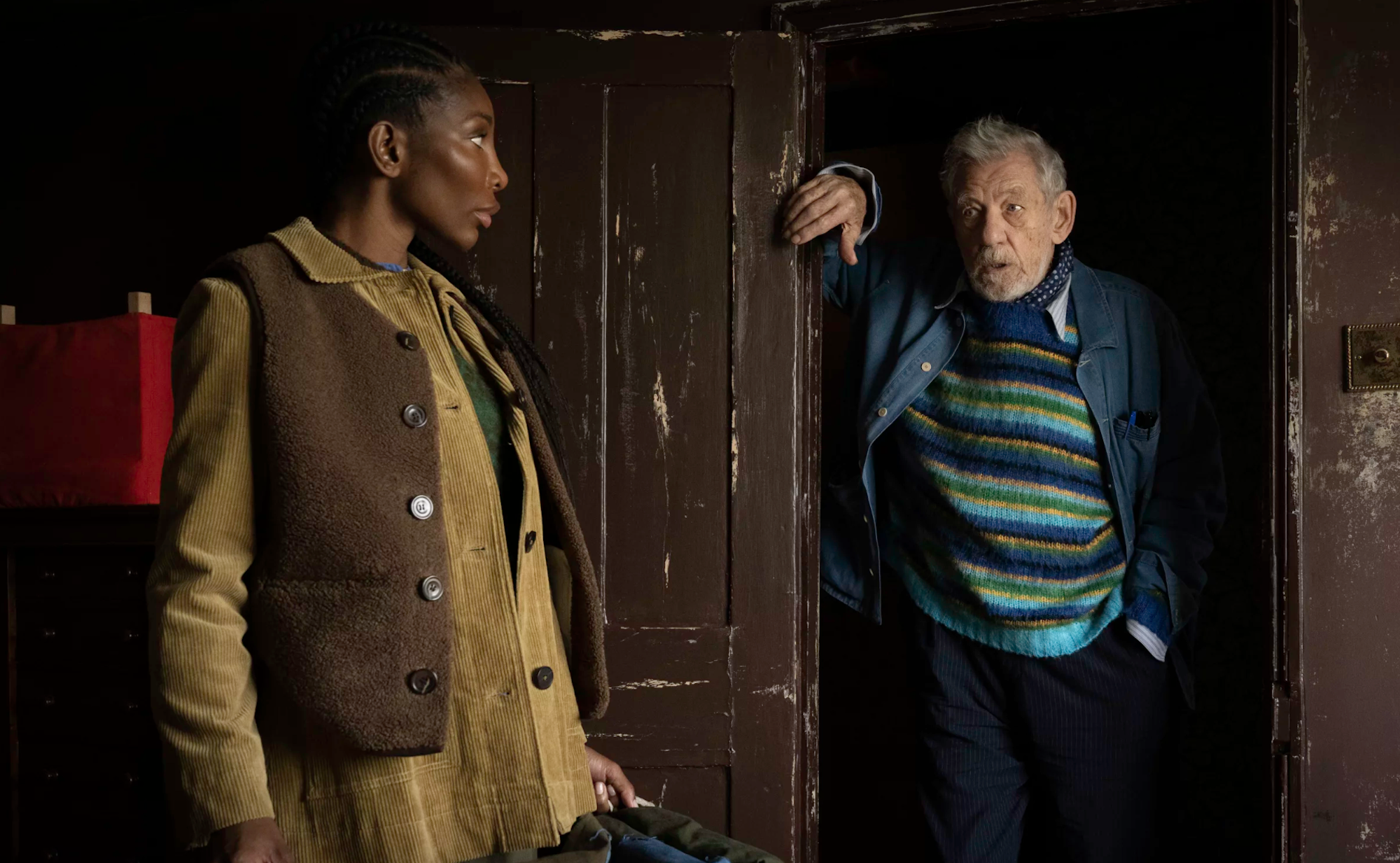
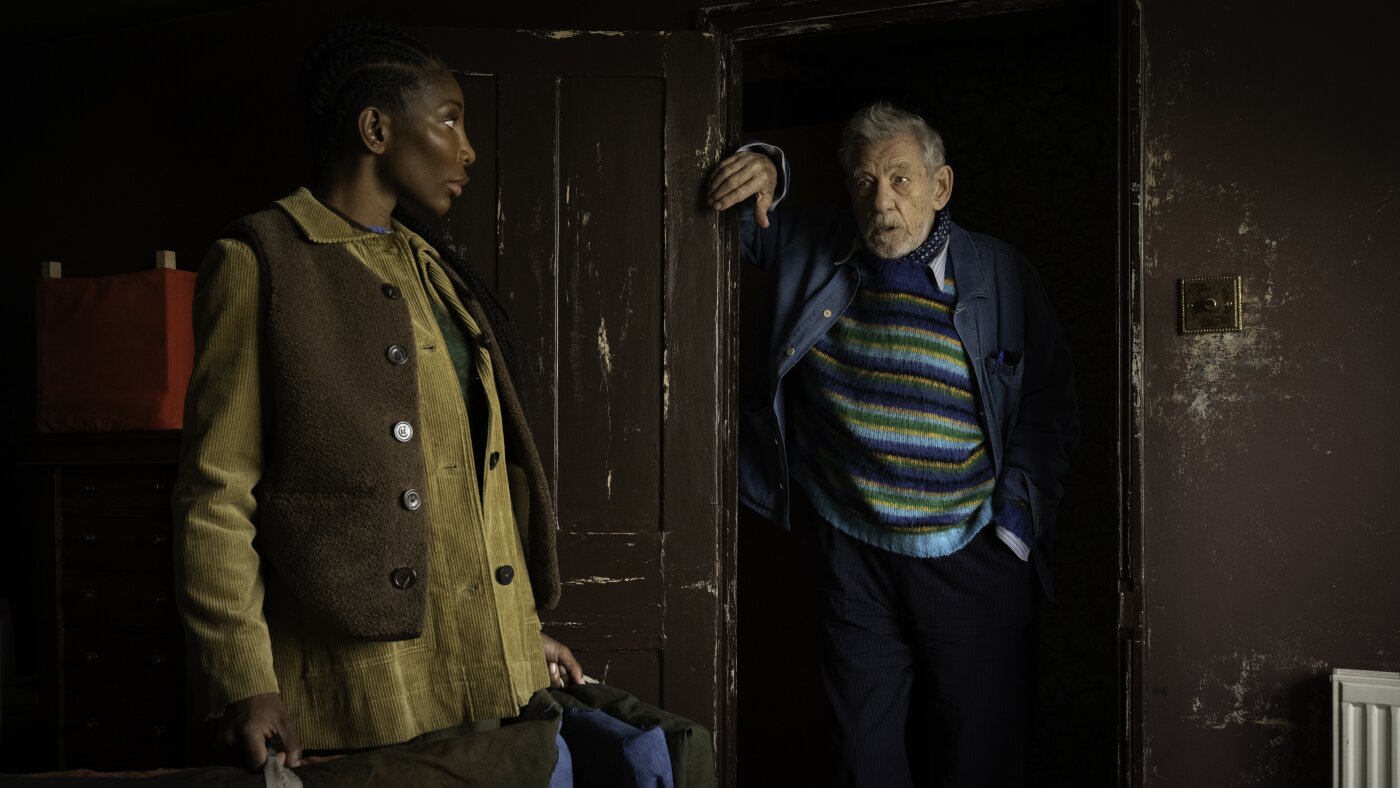
1 week agoIn The Christophers, an aging artist's unfinished masterpieces are subjects of speculation and scheming
Art heists and the financialization of art raise questions about value, merit, and priorities, as seen in the film The Christophers.
London music
fromwww.theguardian.com
2 weeks agoCurated chaos': Danny Boyle on the pop culture spectacular' he's bringing to London's Southbank Centre
Danny Boyle's 'You Are Here' celebrates 75 years of youth culture with a one-day immersive event featuring 1,000 performers at London's Southbank Centre.
Psychology
fromwww.theguardian.com
1 month agoReaders reply: which are more like life, novels or films?
Films and novels employ fundamentally different narrative techniques to convey character psychology, with neither medium inherently more realistic than the other due to their diverse stylistic approaches.
Independent films
fromLondon Business News | Londonlovesbusiness.com
2 weeks agoUK film industry posts $5.3bn in global revenue, but independents struggle - London Business News | Londonlovesbusiness.com
The UK film industry is growing, but independent producers face challenges due to dominance of large studio-backed films.
fromPinkNews | Latest lesbian, gay, bi and trans news | LGBTQ+ news
1 month agoHSTikkyTokky responds to Louis Theroux as Netflix doc exposes his true feelings
Call me racist, call me a misogynist, call me homophobic, call me a scammer - I'm all those things. I don't care. This is the general population of the UK right now, scattering to make comments online about me. They don't know me. They don't know my purpose.
SF LGBT
Arts
fromenglish.elpais.com
1 month agoRebecca Hall: We lost counterculture somewhere along the way'
Peter Hujar's Day reconstructs a 1974 conversation between photographer Peter Hujar and writer Linda Rosenkrantz, capturing the vibrant 1970s New York art scene through dialogue set entirely in Hujar's Westbeth apartment.
fromwww.theguardian.com
4 weeks agoMidwinter Break review sad, spiky and brilliantly acted portrait of rupture and rapture
Gerry and Stella, played by Ciaran Hinds and Lesley Manville, are a late-middle-aged couple from Northern Ireland who left for Scotland in the 1970s, traumatised by the Troubles, and are taking a restorative midwinter break in Amsterdam. They appear perfectly happy and affectionate, but Gerry has a drinking problem and Stella feels lonely because Gerry does not share her Catholic faith.
Film
fromVulture
1 month agoSinners' Jayme Lawson Says BAFTAs Were Exploitative, Not Inclusive
Institutionally, we still don't understand what inclusion means. Just because you invite someone into a space, but you don't provide the necessary resources to keep them and everyone else in that room safe by them being there, that's not inclusivity. That's exploitation. That man's disability got exploited that night, and it led to multiple offenses.
Media industry
Film
fromwww.theguardian.com
1 month agoRon Howard, Emma Rice, Neil Tennant and more on Liza Minnelli: She holidayed in my Cornish bungalow'
Liza Minnelli demonstrated exceptional comic talent and fearless artistry throughout her career, leaving lasting impressions on colleagues who worked with her across decades.
Humor
fromIndependent
2 months ago'I just poured out all this stuff about getting divorced': John Bishop on saving his marriage - and how it became a Hollywood movie
John Bishop's first open-mic joke in 2000 launched his stand-up career and played a pivotal role in saving his marriage while inspiring a film.
fromwww.theguardian.com
1 month agoHe loved showing his bum. Loved it': the subversive genius of Kenneth Williams
I wanted to mention Kenneth Williams because he was so profound, Allen tells me. And yet, because he was also funny, that profundity hasn't been acknowledged. As a child, I connected with his outsiderness. Rather than trying to fit in, he went in the opposite direction. Not only did he not apologise for being different, but he was queer in every sense, truly at odds with the world in which he found himself.
LGBT
fromVulture
1 month ago17 Movies With Exclamation-Point Titles, Ranked!
During a junket interview with OutNow, Gyllenhaal explained that the punctuation mark was included to represent the "whole lot of energy" that comes out when the historically muted Bride of Frankenstein is finally allowed to speak. That's all well and good, but to viewers the titular exclamation point is less of a metaphor and more of a golden arrow saying, "This movie is going to be crazy."
Film
Television
fromThe Independent
2 months agoDownton Abbey star opens up on working with 'proper multi-tasker' Guy Ritchie
Hugh Bonneville praises Guy Ritchie's multitasking directing, hints at an unconfirmable Gentlemen role, reflects on Downton Abbey's unexpected longevity, and doubts further Paddington appearances.
fromwww.theguardian.com
1 month agoChic couture, bio-terror and a whole load of Mike Leigh: Lesley Manville's finest films ranked!
Among the bold choices in Luca Guadagnino's feverish film of William S Burroughs' novel are the late 20th-century pop and alternative soundtrack (Nirvana, Prince, New Order) for a 1950s story, and the casting of an unrecognisable, orc-like Manville in a trumped-up cameo as the shaman Dr Cotter, who was male in the original book.
Film
fromInverse
2 months agoThe Director Of Britain's Bleakest Apocalypse Movie Has One Big Concern About Its Remake
BBC Threads, directed by Mick Jackson, follows two families in Sheffield as they try to survive a direct hit from a nuclear bomb. It pulls no punches as its characters fall one by one, before ultimately only focusing on pregnant Ruth (Karen Meagher) as she tries to survive and carve out a life for her and her child. Meticulously researched, it presents a bleak picture of what civilization would look like after nuclear winter, including the ozone layer weakening, resulting in blindness and skin cancer, and the degradation of the English language itself.
Television
Television
fromwww.theguardian.com
2 months agoWatching The Office recently, my heart just sank' Mackenzie Crook on comedy, cruelty and being TV royalty
Mackenzie Crook portrays Gordon in Small Prophets, a pedantic DIY-store manager amid a melancholic story centered on Michael's quiet grief and middle-age rumination.
fromwww.theguardian.com
2 months agoWe thought Midnight Cowboy might end everybody's career': the diverse, disruptive, Oscar-winning cinema of John Schlesinger
The esteemed film-maker was licking his wounds: his most recent picture, Far from the Madding Crowd, which imbued its 19th-century rural characters with an anachronistic King's Road style and panache, had flopped stateside. Childers approached the date with mixed feelings. He adored Schlesinger's previous movie, the jazzy Darling, starring Julie Christie as a model on the make, and had seen it three times.
Film
fromCN Traveller
1 month agoHow the British countryside became 2026's breakout onscreen star
"On that bleak hill-top the earth was hard with a black frost, and the air made me shiver through every limb," so wrote Emily Brontë. In a story studded with untameable lust, unbreakable love, fierce tempers and shocking acts of revenge, perhaps the most faithful aspect of Emerald Fennell's latest film, "Wuthering Heights", to its 1847 novel is the tempestuous depiction of the remote English countryside. The Yorkshire moors, to be exact.
Film
fromwww.theguardian.com
2 months agoDown with the neo-puritans: I say a true Christian can watch horror films and Emmerdale | Ravi Holy
I posted a rave review of the new Sam Raimi film, Send Help, the other day and triggered a debate I didn't expect: is it OK for Christians to watch horror films? Send Help a gore-laced plane-crash survival face-off, according to the Guardian review (which was less kind than mine) is more comedy-horror than horror, or maybe horror/thriller. But there's definitely horror there you get the point.
Film
fromAnOther
2 months agoPark Chan-wook on His "Bitter" Black Comedy, No Other Choice
At the narrative midpoint, pathetic protagonist Yoo Man-su ( Lee Byung-hun) - also a hobbying horticulturist with a bonsai mag subscription - arrives at the home of a man he deems a rival for one of the only paper jobs on the market. He wields a pistol concealed inside several oven gloves, intending to kill vinyl enthusiast Goo Beom-mo (Lee Sung-min) as a means of levelling the playing field.
fromLondon On The Inside
1 month agoOne of East London's Best Indie Cinemas Is Opening South of the River
The Castle Cinema, which opened on Chatsworth Road in 2015 after a crowdfunding campaign, has become one of the best places to catch a film in the whole of London, so there's no better team to revitalise Catford Mews. Reopening at The Castle Catford some time in 2026, the venue will boast three screens, a community space, a bar and a cafe.
Film
fromwww.bbc.com
1 month agoWhy has Croydon become a film location hotspot?
It has an impeccable inner-city skyline. Croydon has the facade of being a bigger city. It's got all these huge offices that looks like residences. And filmmakers get this authentic scenery without the restrictions of space and traffic management found in central London.
Film
Film
fromBrooklynVegan
2 months agoSee Paul Mescal, Barry Keoghan, Harris Dickinson & Joseph Quinn as The Beatles: first images from Sam Mendes' 4 biopics
Sam Mendes is directing four interconnected Beatles biopics, each focusing on one Beatle, starring Mescal, Dickinson, Keoghan, and Quinn, releasing April 2028.
fromAnOther
2 months agoPark Chan-wook on His "Bitter" Black Comedy, No Other Choice
At the narrative midpoint, pathetic protagonist Yoo Man-su ( Lee Byung-hun) - also a hobbying horticulturist with a bonsai mag subscription - arrives at the home of a man he deems a rival for one of the only paper jobs on the market. He wields a pistol concealed inside several oven gloves, intending to kill vinyl enthusiast Goo Beom-mo (Lee Sung-min) as a means of levelling the playing field.
Film
fromwww.theguardian.com
2 months agoWhy US cinemagoers are dressing as Jimmy Savile to see 28 Years Later: The Bone Temple
In the film, a murderous cult known as the Jimmies stalk the ruins of postapocalyptic Britain. Led by Sir Jimmy Crystal, played by Jack O'Connell, the sect are instantly recognisable for their cheap tracksuits, bleached blonde wigs and particular mannerisms. For viewers in the UK, Crystal is unmistakably reminiscent of the entertainer Jimmy Savile, whose decades-long history of sexual abuse was only revealed after his death.
Film
fromOpen Culture
2 months agoHow the "Netflix Movie" Turns Cinema into "Visual Muzak"
A quarter-century later, it's safe to say that those days have come to an end. Not only does the streaming-only Netflix of the twenty-twenties no longer transmit movies on DVD through the mail (a service its younger users have trouble even imagining), it ranks approximately nowhere as a preferred cinephile destination. That has to do with a selection much diminished since the DVD days
Film
Film
fromwww.theguardian.com
1 month agoPeople feel like they're in on the joke': the new wave of pseudo-biopics
Filmmakers increasingly create pseudo-biopics that borrow recognizable elements from real people and events while changing names and details to avoid legal liability and maintain creative freedom.
Film
fromIndieWire
2 months ago'Everybody to Kenmure Street' Review: A Vital and Inspiring Portrait of Spontaneous Collective Action
Ordinary people can rapidly organize large-scale civil resistance to block unjust state actions, exemplified by mass protest in Glasgow defending neighbors against immigration enforcement.
Film
fromwww.theguardian.com
2 months agoThe Guide #227: A brain-melting sci-fi movie marathon, curated by Britain's best cult film-maker
Ben Wheatley is a cult-status British director whose DIY sci-fi-noir Bulk blends experimental techniques, low-budget effects, and a UK–Ireland independent cinema tour.
fromThe Independent
1 month agoWarner Bros reportedly asked for Baftas slur to be cut from BBC broadcast
Labour MP Dawn Butler has since accused the BBC of "an obvious bias" and a "failure of duty of care" for airing the slur. The MP for Brent Central stated the offensive language "should never have been aired" and described its broadcast as "painful and unforgivable."
Film
[ Load more ]