#claim-construction
#claim-construction
[ follow ]
#patent-law #federal-circuit #inter-partes-review #obviousness #patent-infringement #patent-litigation #ipr
#patent-law




Intellectual property law
fromIPWatchdog.com | Patents & Intellectual Property Law
5 months agoCAFC Gives Targeted Ads Patent Owner Another Shot at Meta Due to District Court Error
CAFC vacated and remanded the district court's dismissal, ruling the court improperly construed claim terms and prematurely dismissed Adnexus's infringement complaint.
Intellectual property law
fromIPWatchdog.com | Patents & Intellectual Property Law
4 days agoCAFC Affirms Dual PTAB Rulings Invalidating Pictometry's Aerial Roof-Measuring Patents
Excluding fundamental claim embodiments from coverage is highly disfavored, and PTAB obviousness findings were affirmed for both patents.
Intellectual property law
fromIPWatchdog.com | Patents & Intellectual Property Law
1 week agoFederal Circuit Affirms PTAB Ruling That Samesurf's Shared Browsing Patent Claims Are Unpatentable
Claims are not limited to a single described embodiment absent a clear intent to limit, and the Board’s claim construction supported obviousness findings.

#patent-infringement


Intellectual property law
fromIPWatchdog.com | Patents & Intellectual Property Law
2 weeks agoCAFC Says Generic Hypertension Drug Does Not Infringe Actelion's Patents
CAFC affirmed claim construction and found no literal infringement or proven, non-barred infringement by equivalence for Actelion’s epoprostenol patents.
Intellectual property law
fromIPWatchdog.com | Patents & Intellectual Property Law
2 weeks agoFederal Circuit Affirms ITC Finding That Redesigned Vacuum Products Do Not Infringe Bissell Patents
The Federal Circuit affirmed the ITC’s no-violation finding for redesigned vacuum products and upheld the technical domestic industry determination.


fromPatently-O
2 months agoFrom Graham to Gramm: A New Deere Case Arrives at the Federal Circuit
Gramm v. Deere & Company, No. 2024-1598 (Fed. Cir. Mar. 11, 2026), involves neither obviousness nor the Graham factors. Instead, it offers an illustration of means-plus-function claiming under § 112(f) and the doctrinal hazards.
Intellectual property law
Intellectual property law
fromIPWatchdog.com | Patents & Intellectual Property Law
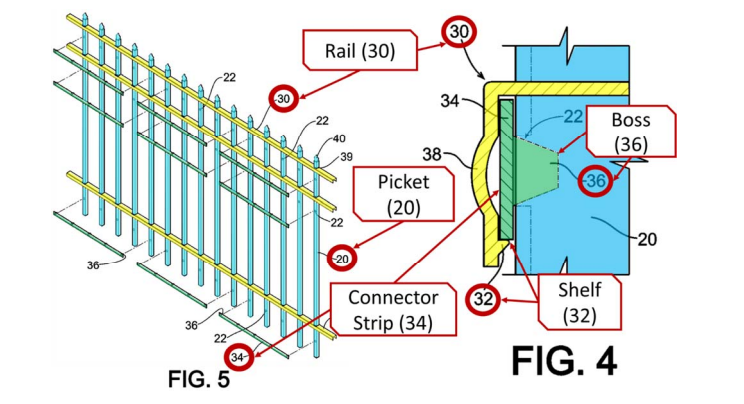
2 months agoCAFC Reverses Judgment of Indefiniteness in Crop Harvester Patent Dispute
A means-plus-function claim is valid if at least one embodiment discloses corresponding structure, even if that structure differs from the accused device's implementation.





Intellectual property law
fromPatently-O
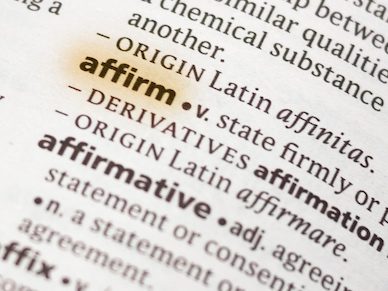
3 months agoFind the Differences vs Substantial Similarity: Chief Judge Moore Challenges Federal Circuit's Design Patent Infringement Framework
Federal Circuit affirms non-infringement; the application of the "plainly dissimilar" standard is criticized as diverging from the Supreme Court's "substantially similar" test.
fromPatently-O
5 months agoProcedural Fairness in Patent Pleading: Federal Circuit Vacates Adnexus Dismissal
On appeal here, the Federal Circuit has vacated and remanded, holding the district court erred by implicitly construing a disputed claim term against the patentee without first providing an opportunity to be heard on claim construction. Although pleading standards have shifted against patentees in recent years, this case is an important reminder that even legal questions require procedural fairness. Although claim construction has been (almost entirely) a question of law for the court since Markman, that designation does not bypass ordinary due process requirements.
Intellectual property law
Intellectual property law
fromPatently-O
5 months agoFederal Circuit's Top Precedents (2025): Claim Construction Classics and the Procedural Turn
Federal Circuit citations are led by Phillips, KSR, and Markman, with procedural preservation, standards-of-review, and IPR judicial-review issues prominently cited.
Intellectual property law
fromIntellectual Property Law Blog
6 months agoFederal Circuit Upends Two Infringement Judgments
Federal Circuit vacated design-patent infringement for erroneous claim construction and reversed DOE verdict because accused integrated frame failed to perform claimed separate-frame functions.
Intellectual property law
fromIPWatchdog.com | Patents & Intellectual Property Law
6 months agoCAFC Reverses Indefiniteness Ruling Since Claims Meet 'Demanding' Standard for Judicial Correction
The Federal Circuit reversed a district court, finding a patent claim error evident and that only one reasonable correction exists under intrinsic evidence.

fromPatently-O
7 months agoCase1Tech: Changing Claim Construction Position on Appeal
Samsung had petitioned for IPR of ST Case1Tech's always-on recording patents, arguing that the claimed "audio forensics analysis system" encompassed speech-to-text functionality disclosed in the prior art. Before the Board, Case1Tech argued that "analysis" means "calculation of noise dosage" using a specific measurement used for hearing protection. After losing at the Board, Case1Tech altered its position on appeal, arguing that audio forensics analysis merely "includes" noise dosage calculation and encompasses any "analysis that uses all captured acoustic data."
Intellectual property law
[ Load more ]