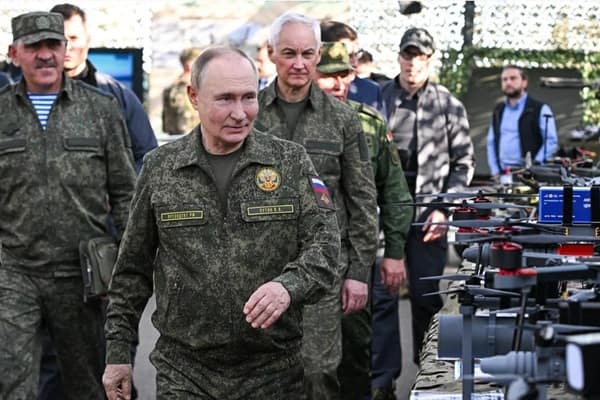
A double agent, by contrast, is an intelligence asset who is knowingly and deliberately directed by one service to engage another in espionage. The controlling service uses that agent to feed information (called feed material) -true, false, or mixed-to the adversary. They do so to simultaneously study the adversary's tradecraft, collection priorities, and decision-making. In the Russian system, double agents also serve a bureaucratic function: they generate statistics, "success stories," and operational narratives that demonstrate effectiveness to political overseers and ultimately to Putin himself.
First, this report is an attack on Kash from the right, complaining among other things, that he hasn't eradicated "Trump Derangement Syndrome" from the FBI and that Fox doesn't play in FBI break rooms, while applauding him for eliminating DEI. It was shared first with Miranda Devine, whose skillset is hit jobs, not government analysis. It was shared as a Sribd.
The plan was first hatched after Lopez received a tip about Venezuelan planes undergoing repairs in the Dominican Republic. Realizing that Venezuela likely violated sanctions by using American parts, Lopez first worked to have the planes seized. Then, he got the idea to use one of the pilots Venezuelan Gen. Bitner Villegas to bring the elusive Maduro to them.
It may sound anachronistic to use terms like espionage, counterintelligence, secret services, or double agents in relation to ancient times. But activities, organizations, and personnel that largely fit our current concepts were widely deployed by the civilizations of the ancient world, giving truth to the saying that there is nothing new under the Sun (or, in this case, the shadows). To provide a few examples: Ramses II was nearly defeated at the Battle of Kadesh (which ended in a stalemate)