#data-consistency

[ follow ]
Marketing tech
fromAdExchanger
1 day ago

AI Is Nothing Without Data Fidelity. Here's A Four-Step Approach to Protect It | AdExchanger

Data integrity is crucial for effective AI in advertising, as flawed data leads to poor outcomes.
DevOps
fromInfoQ
1 week ago

Replacing Database Sequences at Scale Without Breaking 100+ Services

Validating requirements can simplify complex problems, and embedding sequence generation reduces network calls, enhancing performance and reliability.
Software development
fromTechzine Global
1 week ago

OutSystems focuses on control and consistency in AI projects

OutSystems introduces Agentic Systems Engineering to enhance coherence and control in AI development, addressing fragmentation and integration challenges.
fromMedium
1 week ago

Snowflake Supports Directory Imports

With this feature, you can bring entire folders, ML models, dbt adapters, utilities, directly into UDxFs and Stored Procedures without zipping, file-by-file bookkeeping, or manual updates.
Django
#ai
Data science
fromMedium
1 week ago

Data models: the shared language your AI and team are both missing

Understanding the attention mechanism in AI is crucial for effective use of AI tools.
Business intelligence
fromTheregister
2 weeks ago

Microsoft Fabric Database Hub dubbed 'partial' solution

Microsoft's Fabric Database Hub offers a centralized management solution for its database services but lacks support for non-Microsoft databases.
DevOps
fromInfoQ
2 weeks ago

ProxySQL Introduces Multi-Tier Release Strategy With Stable, Innovative, and AI Tracks

ProxySQL 3.0.6 introduces a multi-tier release strategy focusing on stability, innovation, and AI capabilities for diverse user needs.
Data science
fromInfoQ
3 weeks ago

Data Mesh in Action: A Journey From Ideation to Implementation

Data mesh is essential for organizations to develop independent data analytics capabilities after separation from larger parent companies.
Business intelligence
fromTheregister
3 weeks ago

Microsoft promises multi database wrangling hub on Fabric

Microsoft launched Database Hub, a unified management tool within Fabric that consolidates multiple database services across on-premises, PaaS, and SaaS environments with AI-assisted capabilities.
DevOps
fromInfoQ
3 weeks ago

AWS Expands Aurora DSQL with Playground, New Tool Integrations, and Driver Connectors

Amazon Aurora DSQL introduces usability enhancements, including a browser-based playground and integrations with popular SQL tools for improved developer experience.
Data science
fromMedium
4 weeks ago

Building Consistent Data Foundations at Scale

Building consistent data foundations through intentional architecture, engineering, and governance is essential to prevent fragmentation, support AI adoption, ensure regulatory compliance, and enable reliable organizational decisions at scale.
fromMedium
1 month ago

Real-Time Data Validation in Healthcare Streaming: Building Custom Schema Registry Patterns with...

In a single streaming pipeline, you might be processing HL7 FHIR messages with frequent specification updates, claims data following various payer-specific formats, provider directory information with inconsistent taxonomies, and patient demographics with privacy redaction requirements. Our member eligibility stream processes roughly 50,000 records per minute during peak enrollment periods.
Healthcare
DevOps
fromInfoWorld
4 weeks ago

Update your databases now to avoid data debt

Multiple major open source databases reach end-of-life in 2026, requiring teams to plan upgrades and migrations to avoid security risks and higher costs.
Business intelligence
fromInfoWorld
1 month ago

Why Postgres has won as the de facto database: Today and for the agentic future

Leading enterprises achieve 5x ROI by adopting open source databases like PostgreSQL to unify structured and unstructured data for agentic AI, with 81% of successful enterprises committed to open source strategies.
DevOps
fromInfoQ
1 month ago

From Minutes to Seconds: Uber Boosts MySQL Cluster Uptime with Consensus Architecture

Uber redesigned MySQL infrastructure using Group Replication to reduce failover time from minutes to seconds while maintaining strong consistency across thousands of clusters.
fromDbmaestro
4 years ago

5 Pillars of Database Compliance Automation |

There is a growing emphasis on database compliance today due to the stricter enforcement of compliance rules and regulations to safeguard user privacy. For example, GDPR fines can reach £17.5 million or 4% of annual global turnover (the higher of the two applies). Besides the direct monetary implications, companies also need to prioritize compliance to protect their brand reputation and achieve growth.
EU data protection
Data science
fromInfoWorld
1 month ago

The revenge of SQL: How a 50-year-old language reinvents itself

SQL has experienced a major comeback driven by SQLite in browsers, improved language tools, and PostgreSQL's jsonb type, making it both traditional and exciting for modern development.
DevOps
fromTechzine Global
1 month ago

MariaDB acquires GridGain for agentic AI data

MariaDB acquires GridGain Systems to combine relational database technology with in-memory computing, enabling sub-millisecond performance for agentic AI applications.
Software development
fromInfoQ
1 month ago

MySQL 9.6 Changes Foreign Key Constraints and Cascade Handling

MySQL 9.6 moves foreign key constraint and cascade management from InnoDB storage engine to SQL layer, improving CDC pipeline accuracy and data consistency across replication and analytics workloads.
#mysql
fromInfoWorld
2 months ago

AI is changing the way we think about databases

Developers have spent the past decade trying to forget databases exist. Not literally, of course. We still store petabytes. But for the average developer, the database became an implementation detail; an essential but staid utility layer we worked hard not to think about. We abstracted it behind object-relational mappers (ORM). We wrapped it in APIs. We stuffed semi-structured objects into columns and told ourselves it was flexible.
Software development
UK news
fromComputerWeekly.com
2 months ago

Birmingham Oracle project: Data cleansing and resourcing issues | Computer Weekly

Birmingham City Council's Oracle ERP reimplementation faces major delays, escalating costs, poor data quality, technical and staffing risks, and a measurable chance of project abandonment.
fromInfoWorld
2 months ago

AI-augmented data quality engineering

SHAP for feature attribution SHAP quantifies each feature's contribution to a model prediction, enabling: LIME for local interpretability LIME builds simple local models around a prediction to show how small changes influence outcomes. It answers questions like: "Would correcting age change the anomaly score?" "Would adjusting the ZIP code affect classification?" Explainability makes AI-based data remediation acceptable in regulated industries.
Artificial intelligence
Software development
fromInfoWorld
2 months ago

4 self-contained databases for your apps

XAMPP provides a complete local web stack (MariaDB, Apache, PHP, Mercury SMTP, OpenSSL) while PostgreSQL can be run standalone or embedded via pgserver in Python.
Tech industry
fromTechzine Global
2 months ago

ScyllaDB: We're so over, overprovisioning

ScyllaDB X Cloud provides truly elastic, auto-scaling database capacity to reduce overprovisioning and deliver predictable high-throughput, ultra-low-latency performance.
Software development
fromMedium
2 months ago

Why Your System Shows Old Data: A Practical Guide to Cache Invalidation

Caching introduces multiple truths; without correct cache invalidation users will receive stale data and silently lose trust.
fromComputerWeekly.com
2 months ago

AI slop pushes data governance towards zero-trust models | Computer Weekly

Unverified and low quality data generated by artificial intelligence (AI) models - often known as AI slop - is forcing more security leaders to look to zero-trust models for data governance, with 50% of organisations likely to start adopting such policies by 2028, according to Gartner's seers. Currently, large language models (LLMs) are typically trained on data scraped - with or without permission - from the world wide web and other sources including books, research papers, and code repositories.
Artificial intelligence
Tech industry
fromInfoQ
2 months ago

Google Introduces Managed Connection Pooling for AlloyDB

AlloyDB's managed connection pooling increases client connections and transactional throughput while reducing operational burden and latency for high-concurrency and serverless workloads.
Software development
fromMedium
2 months ago

The Complete Database Scaling Playbook: From 1 to 10,000 Queries Per Second

Database scaling to 10,000 QPS requires staged architectural strategies timed to traffic thresholds to avoid outages or unnecessary cost.
Data science
fromDevOps.com
2 months ago

Why Data Contracts Need Apache Kafka and Apache Flink - DevOps.com

Data contracts formalize schemas, types, and quality constraints through early producer-consumer collaboration to prevent pipeline failures and reduce operational downtime.
Software development
fromDbmaestro
1 year ago

Why Do You Need Database Version Control?

Database version control tracks schema and code changes, enabling CI/CD integration, collaboration, rollback, and faster, more reliable deployments across multiple databases.
fromDbmaestro
4 years ago

What is Database Delivery Automation and Why Do You Need It?

Manual database deployment means longer release times. Database specialists have to spend several working days prior to release writing and testing scripts which in itself leads to prolonged deployment cycles and less time for testing. As a result, applications are not released on time and customers are not receiving the latest updates and bug fixes. Manual work inevitably results in errors, which cause problems and bottlenecks.
Software development
fromDbmaestro
5 years ago

Database Delivery Automation in the Multi-Cloud World

The main advantage of going the Multi-Cloud way is that organizations can "put their eggs in different baskets" and be more versatile in their approach to how they do things. For example, they can mix it up and opt for a cloud-based Platform-as-a-Service (PaaS) solution when it comes to the database, while going the Software-as-a-Service (SaaS) route for their application endeavors.
DevOps
fromDbmaestro
4 years ago

Database DevOps - Where Do I Start? |

Integrating databases into the CI/CD process or the DevOps pipeline is overlooked in the current DevOps landscape. Most organizations have adapted automated DevOps pipelines to handle application code, deployments, testing, and infrastructure configurations. However, database development and administration are left out of the DevOps process and handled separately. This can lead to unforeseen bugs, production issues, and delays in the software development life cycle.
Software development
fromDbmaestro
4 years ago

If You Don't Have Database Delivery Automation, Brace Yourself for These 10 Problems |

Manual database processes break DevOps pipelines; only 12% deploy database changes daily, causing configuration drift, frequent errors, slower time-to-market, and reduced productivity.
fromInfoWorld
2 months ago

Snowflake updates developer tools, adds observability features

Snowflake adds observability capabilities via Trail The company also added new observability features in the form of Snowflake Trail, which provides visibility into data quality, pipelines, and applications, enabling developers to monitor, troubleshoot, and optimize their workflows. It is built with OpenTelemetry standards so developers can integrate with popular observability and alert platforms including Datadog, Grafana, Metaplane, PagerDuty, and Slack, among others.
DevOps
fromdeath and gravity
2 months ago

DynamoDB crash course: part 1 - philosophy

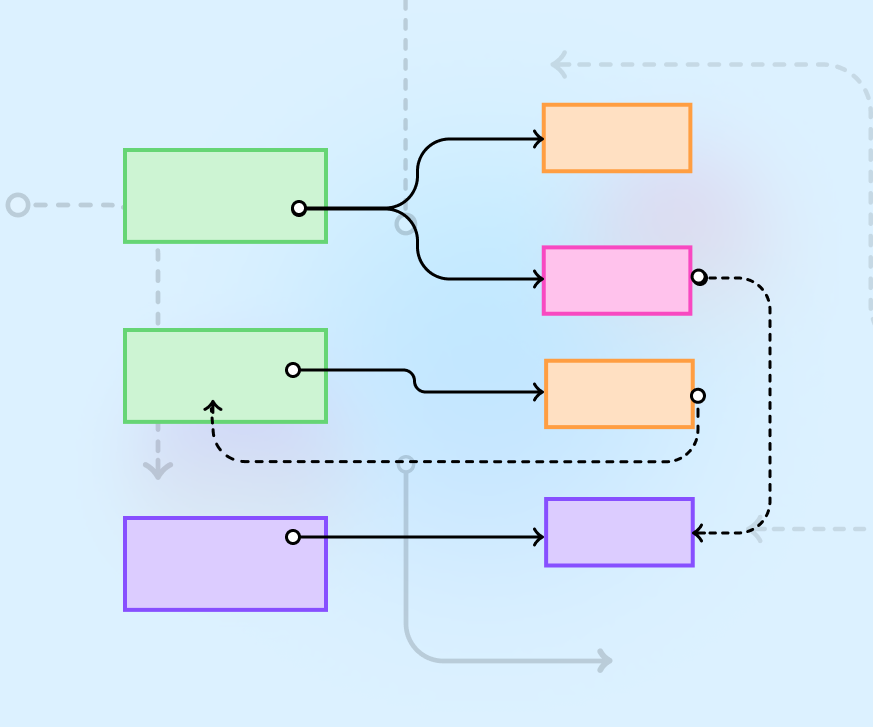
A table is a collection of items, and an item is a collection of namedattributes. Items are uniquely identified by apartition key attribute and an optionalsort key attribute. The partition key determines where (i.e. on what computer) an item is stored. The sort key is used to get ordered ranges of items from a specific partition. That's is, that's the whole data model. Sure, there's indexes and transactions and other features, but at its core, this is it. Put another way:
Software development
fromInfoWorld
2 months ago

Why your next microservices should be streaming SQL-driven

Streaming SQL with UDFs, materialized results, and ML/AI integrations enables continuous, stateful processing of event streams for microservices.
[ Load more ]