#early-printed-books
#early-printed-books
[ follow ]
Berlin music
fromGothamist
3 weeks agoMozart's childhood violin and original manuscripts come to the Morgan Library
Mozart's personal belongings, including the clavichord used to compose 'The Magic Flute' and his childhood violin, are exhibited at the Morgan Library & Museum in Manhattan for the first time in the United States.


London
fromianVisits
1 month agoThe Last Collar: Rare survivor from Charles Dickens's wardrobe goes on display
Charles Dickens's rarely surviving shirt collar, believed to be his last worn before his death, will be displayed at the Charles Dickens Museum alongside a formal suit's silk stockings from 1870.
Arts
fromColossal
4 weeks agoYou'll Need a Magnifying Glass to Read Some of the World's Smallest Books at the V&A
Queen Mary's Dolls' House at Windsor Castle contains nearly 600 miniature books designed by leading craftspeople, representing a remarkable collection of scaled literary works from the early 20th century.
OMG science
fromNature
1 month agoDaily briefing: Galileo's notes discovered in the margins of an ancient book
Tectonic plates moved 3.3 billion years ago with higher oxygen levels; Galileo's annotations discovered in 400-year-old Ptolemy text; rotator cuff degeneration common in older adults regardless of symptoms.
France news
fromwww.theguardian.com
1 month agoWorried about the demise of reading? Come to France, where we're up to our eyes in print | Alexander Hurst
XXI/Revue21 represents a vital counterforce to digital fragmentation by publishing literary long-form journalism that prioritizes authorial presence, reader trust, and substantive narrative reporting in physical form.
Books
fromianVisits
1 month agoNew exhibition explores how early printing developed into readable books
William Caxton revolutionized English book printing in the late 15th century, transforming books from elite luxury items into affordable, widely accessible products through rapid technological advancement.
fromArtnet News
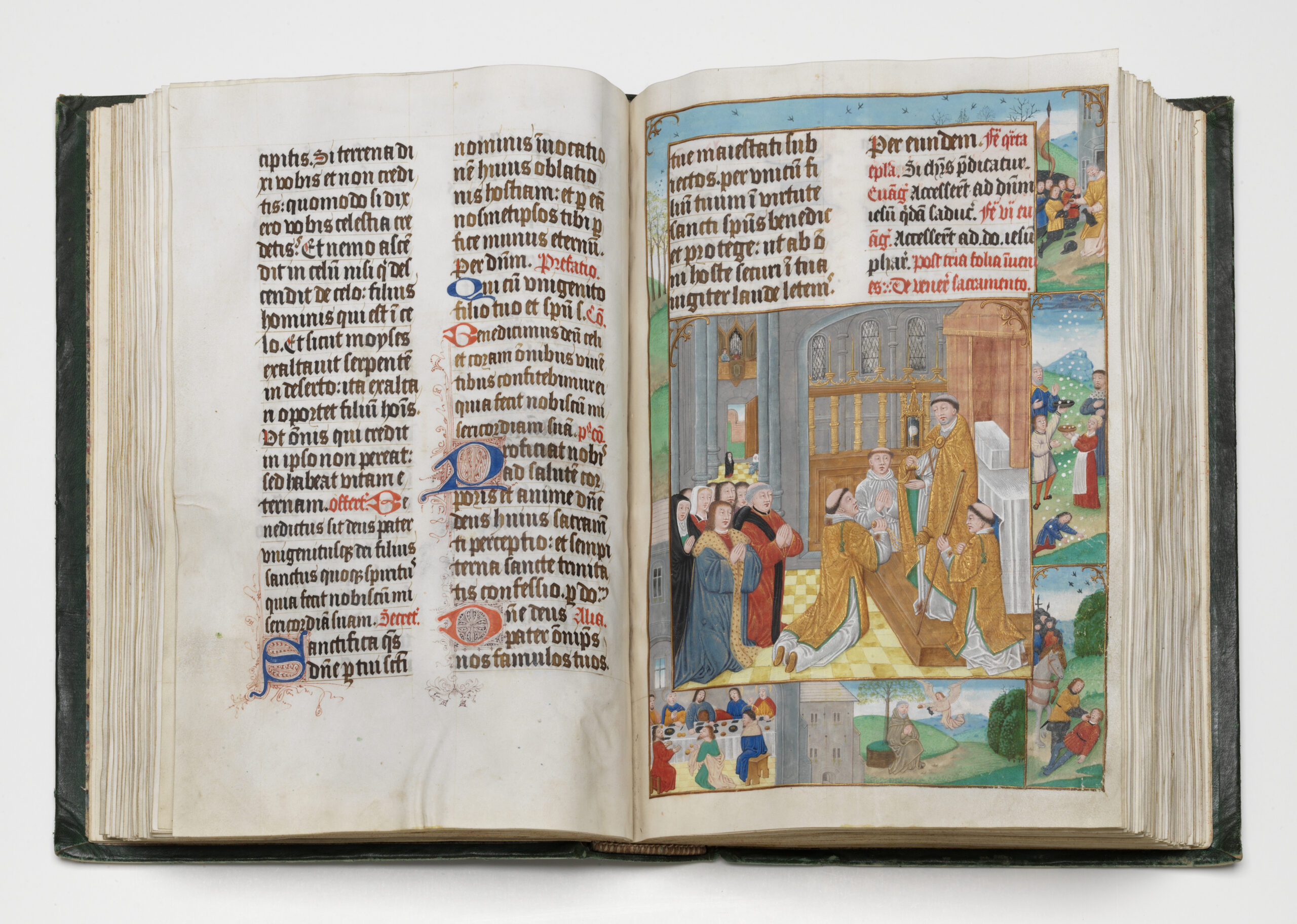
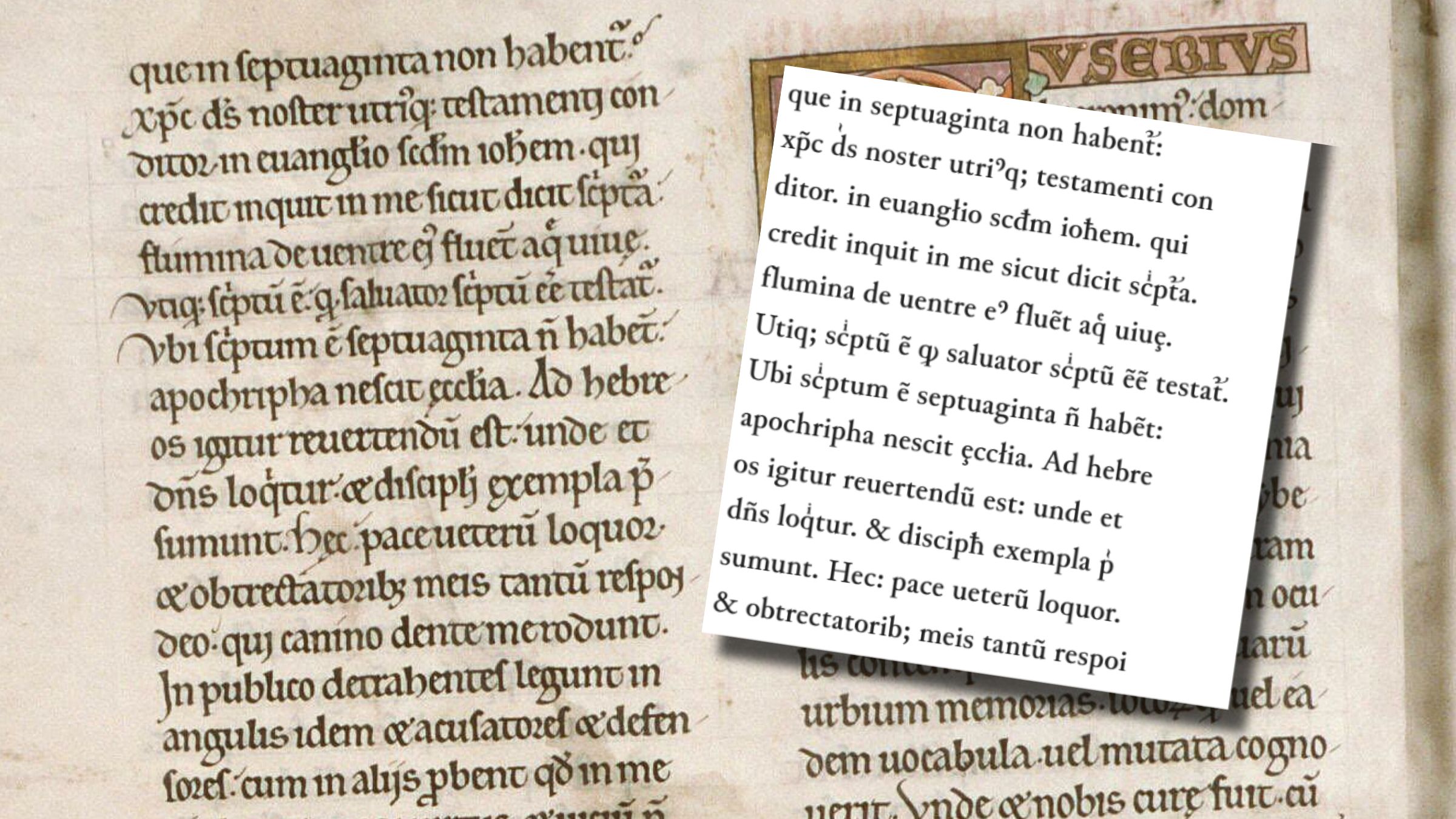
1 month agoOops, Typo! A New Exhibition Embraces 500 Years of Printed Mistakes
What we found was that errata sheets were not only spaces for corrections but also sites of humor, legal maneuvering, and reinterpretation. With this exhibition, we wanted to share ways in which even small corrections can reshape meaning and authority.
Arts
Artificial intelligence
fromFuturism
2 months agoAnthropic Knew the Public Would Be Disgusted by How It Was Destroying Physical Books, Secret Documents Reveal
Anthropic bought, shredded, and scanned millions of used books to train AI, relying on first-sale doctrine and a transformative-use ruling to avoid paying authors.
History
fromMedievalists.net
1 month agoDreaming of Owning a Medieval Artefact? Here's Your Chance - Medievalists.net
TimeLine Auctions' March 3 online sale features hundreds of medieval historical objects including a 13th-century Limoges cross, 1224 Chinese armor, Viking silver mount, and Anglo-Saxon brooch.
fromOpen Culture
2 months agoThe Rohonc Codex: Hungary's Mysterious Manuscript That No One Can Read
Image by Klaus Schmeh, via Wiki­me­dia Com­mons Mag­yar, which is spo­ken and writ­ten in Hun­gary, ranks among the hard­est Euro­pean lan­guages to learn. (The U.S. For­eign Ser­vice Insti­tute puts it in the sec­ond-to-high­est lev­el, accom­pa­nied by the dread­ed aster­isk label­ing it as "usu­al­ly more dif­fi­cult than oth­er lan­guages in the same cat­e­go­ry.") But once you mas­ter its vow­el har­mo­ny sys­tem, its def­i­nite and indef­i­nite con­ju­ga­tion, and its eigh­teen gram­mat­i­cal cas­es, among oth­er noto­ri­ous fea­tures, you can final­ly enjoy the work of writ­ers like Nobel Lau­re­ates Imre Kertész and Lás­zló Krasz­na­horkai in the orig­i­nal. Alas, no degree of mas­tery will be much help if you want to under­stand a much old­er - and, in its way, much more noto­ri­ous - Hun­gar­i­an text, the Rohonc Codex.
Books
fromArtnet News
2 months agoInside New York's Grolier Club, Where the Rare Book World Is Open to All
Founded in 1884, it is one of the world's most important societies devoted to books. Though it operates as a members-only institution, the club maintains a steady program of free, public exhibitions that draw from its members' collections. Though often historical, there are fascinating intersections with contemporary culture. Focused on rare books, manuscripts, and literary ephemera, these shows often illuminate how historical texts continue to shape the present.
Arts
fromMedievalists.net
2 months agoRules of a Medieval Library - Medievalists.net
When universities began to emerge in Europe during the eleventh and twelfth centuries, they soon became important centres of knowledge. Their libraries could hold hundreds of books, and many of the most valuable volumes were kept under close control - sometimes even chained to desks. We have few details about how medieval university libraries operated, but a revealing set of rubric headings survives from the University of Angers in western France.
History
fromOpen Culture
2 months agoCats in Medieval Manuscripts & Paintings
Renais­sance artist Albrecht Dür­er (1471-1528) nev­er saw a rhi­no him­self, but by rely­ing on eye­wit­ness descrip­tions of the one King Manuel I of Por­tu­gal intend­ed as a gift to the Pope, he man­aged to ren­der a fair­ly real­is­tic one, all things con­sid­ered.
Arts
History
fromMedievalists.net
2 months agoReading in Byzantium: Literacy, Books, and a World of Texts - Medievalists.net
Byzantine reading was communal and performative, woven into religious, educational, and administrative life while preserving classical learning within a Christian intellectual framework.
fromMedievalists.net
2 months agoNew Medieval Books: Chasing the Pearl-Manuscript - Medievalists.net
This is a book about a book: the small, cropped, somewhat ragged but brightly illustrated volume now known formally, and rather forbiddingly, as British Library MS Cotton Nero A.x/2. The fame and beauty of its four Middle English poems have given it sobriquets beyond the shelfmark, however, which are more familiar and intimate: it is also the Gawain-Manuscript or, as I will call it, the Pearl-Manuscript.
History
fromMedievalists.net
1 month agoNew Medieval Books: The Medieval Moon - Medievalists.net
In this book of moons, I am writing for people for whom the medieval world and its literatures and arts may be unfamiliar. I hope that in telling the stories of medieval moons, I also introduce these readers to the wonderful, mesmerising realm of medieval texts and images. But I also hope that this book may be useful to those with greater familiarity with medieval languages, literatures, and arts.
History
fromMedievalists.net
2 months agoNew Medieval Books: The Forsaken 14th Century - Medievalists.net
In this volume, the authors aim to provide a truly global overview of the 14 century, with each region given approximately the same space. It is obviously impossible to cover every event in every country of the world in a single volume, just as you would not be able to visit every city in every country if you traveled around the world for a year.
History
fromMedievalists.net
2 months agoNew Medieval Books: Interconnected Traditions - Medievalists.net
This open-access book brings together more than thirty essays on languages and the ways they develop, interact, and influence one another. Its main focus is the Middle East, where Hebrew, Arabic, and Aramaic long existed side by side and often overlapped in everyday use, scholarship, and culture. In line with Geoffrey (Khan)'s commitment to the maximally accessible dissemination of research, this Festschrift has been published in both open-access digital editions and affordable printed formats.
History
History
fromOpen Culture
1 month agoThe Dead Sea Scrolls: Discover the Secrets of the Bible's Oldest and Strangest Texts
Dead Sea Scrolls include the oldest known biblical manuscripts, diverse texts (biblical, apocryphal, sectarian, unknown) that complicated but did not completely upend understanding of Christianity.
[ Load more ]