"They're everyday professionals who simply don't have the time to shop the traditional way," said Kneen about J. Hilburn customers. Instead, stylists manage fit, fabrics and wardrobe planning, effectively outsourcing the entire process for busy professionals.
A good kitchen rug will follow a particular set of criteria. First and foremost it should be washable, because the kitchen is a dirty place. The second criteria is that it should be interesting, as an interesting texture, pattern, or color scheme can obscure the inevitable accumulation of wear.
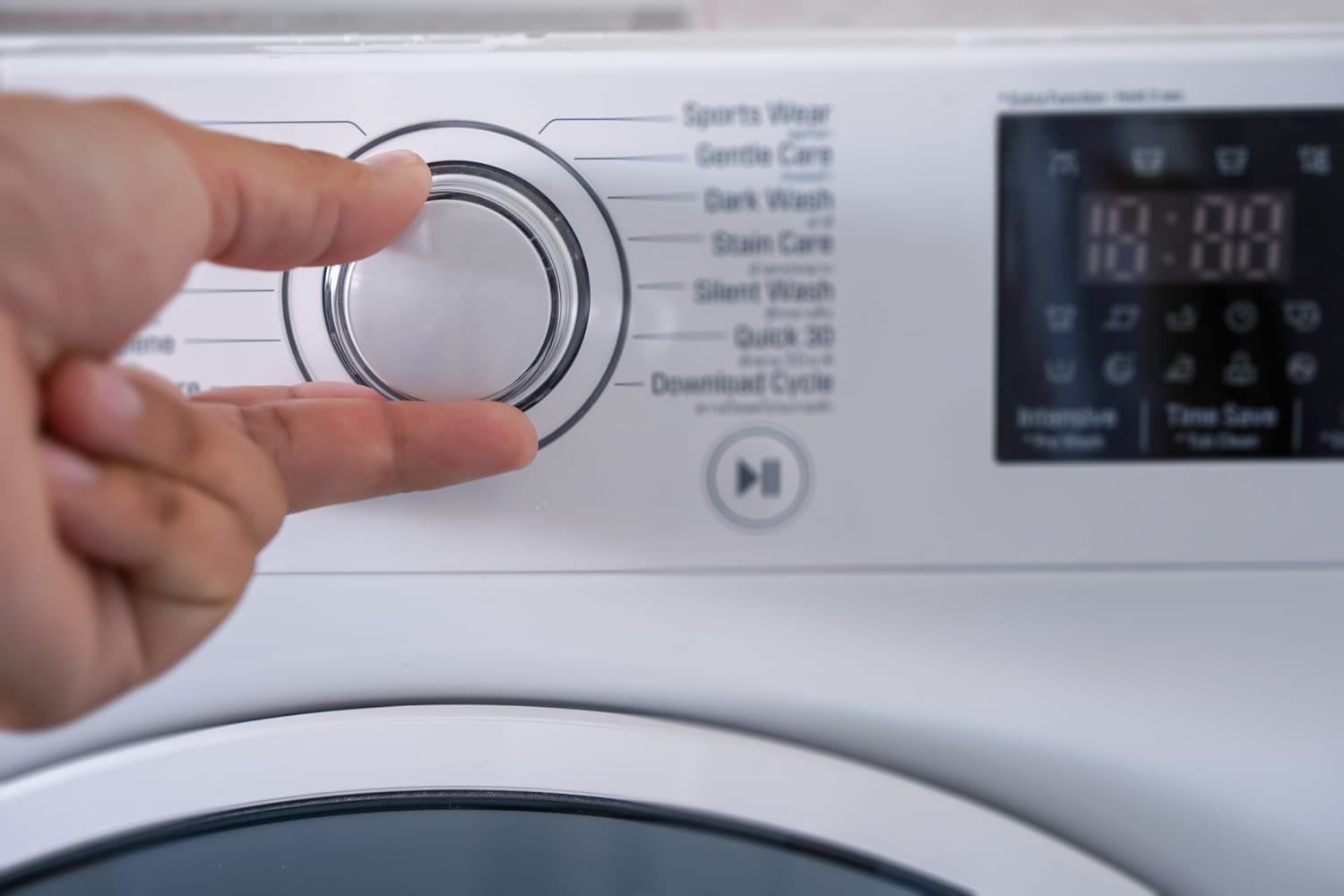
Washing machine rubber door seals are one of the biggest hidden breeding grounds for mould in the home. They trap moisture, detergent residue and fabric fibres during and after washes, creating the perfect warm, damp environment for mould and bacteria to thrive.
When you hire the cheapest operator in town, you usually aren't getting a clean floor. You are getting a soaking wet carpet, hidden upcharges, and a sticky chemical residue that acts like a dirt magnet the second it dries.
I'll be honest: Washing my actual pillows (not just the cases) used to be one of those chores I knew I should be doing, but rarely actually did. As long as my pillows were tucked inside clean pillowcases, I convinced myself they were fine. But that all changed after I came across this article on Apartment Therapy where three popular pillow-washing methods were put to the test.
Your eyes don't deceive you. The use of polyester has ballooned with time, according to Henry Navarro Delgado, an associate professor at Toronto Metropolitan University's school of fashion. It's partly because polyester can be quite useful, he said. It is a type of plastic made from petroleum compounds that are cooled and stretched into yarn, according to Michael Palladino, a fashion industry veteran and lecturer at Kingsborough Community College's business of fashion program in New York.
My husband and I just upgraded our apartment here in Germany to one with much more space. The downsides of this is we have hard marble floors and a tall-ceilinged living room (oh woe is us!). It's very echo-y and looks directly into our neighbors across the street. The windows have external shutters, so light-blocking isn't needed, but we'd love to get
This research-based design project by Laura Oliveira investigates discarded as a potential raw material for sustainable design applications. Human hair is produced continuously and in large quantities through everyday grooming practices, yet it is almost always treated as waste once separated from the body and typically disposed of in landfills. Despite its material properties, strength, flexibility, and durability as a keratin-based protein fiber, its remains uncommon within design and research contexts.
Any time I've felt like a room in my home was "missing something," it's almost always been a rug. They have a way of subtly tying the details of a space together and can enhance the aesthetic without you having to make much effort. In my opinion, the hardest part is picking one out - but knowing where to shop is a great place to start.
Using one in place of a cloth dinner napkin was unacceptable, and if I ever used more than a single perforated sheet to wipe up a spill then I'd expect to hear about it. It wasn't until I was a fully grown adult, responsible for stocking my own kitchen, that I understood why: Paper towels aren't cheap! They're also super wasteful, which is why I've made the switch to the more sustainable and budget-friendly Stasher Reusable Swedish Dishcloths - and I'm never going back.
I have to admit something: When I woke up this morning, I was not entirely sure what a baseboard was. I knew it had to do with the floors in some way, but it was just one of those terms I never bothered to look up. Meanwhile, I've spent years wondering if there was a better way to get all the dust off that raised edge that sits between the floor and the walls. Humbling!
When you lack the good fortune of having an in-unit washer and dryer like I do, you have to be extra judicious about how many times you wear clothes before tossing them in the hamper. Laundry piles up quickly, after all, and I refuse to go to the laundromat more often than necessary. The only issue with re-wearing clothing items is that they wrinkle - fast - and they don't always smell daisy-fresh, if you catch my drift.
In the show, "dirty" extends to anything that breaks fashion's pact with propriety. Here are clothes caked in grime, blotted with makeup, stiffened by salt, pieced from trash, frayed, and faded. The garments span decades, from the 1980s through the mid-2000s, when the likes of Vivienne Westwood and Jean Paul Gaultier built their fame on defying convention, to today, when corporatization has made such daring increasingly rare. But forgoing practicality frees certain designers from the demands that the body be polite-and thereby policed.
When I was growing up, shampoo options were limited, and Johnson's Baby Shampoo was a household staple. It lathered well, smelled clean, and was gentle enough to use every day. At some point, my mom realized that same gentleness made it effective on clothes, too. She believed in the product so completely that I never questioned it - and eventually, I adopted the same habit in my own home.
Getting dressed shouldn't feel like a daily obstacle course, but if you've ever battled a loose button or a hem that just won't cooperate, you know the struggle is real. That's where these low-key genius clothing hacks come in. Think: tiny tools and brilliant fixes that make your clothes actually work for you. These all solve those oddly specific wardrobe problems you didn't even realize had such easy fixes. Scroll on for more.