#hidden-chamber
#hidden-chamber
[ follow ]
#archaeology #ancient-egypt #book-of-the-dead #ramses-ii #museum-exhibition #archaeological-artifacts #pelusium
#ancient-egypt


London
fromThe Art Newspaper - International art news and events
1 month agoBlockbuster show on ancient Egyptian pharaoh Ramses II opens in London
A major exhibition featuring over 180 ancient Egyptian treasures from Ramses II's reign opened in London near Battersea Power Station, running through May 31, with proceeds funding Egyptian archaeological research and conservation.
#archaeology


Science
fromwww.theguardian.com
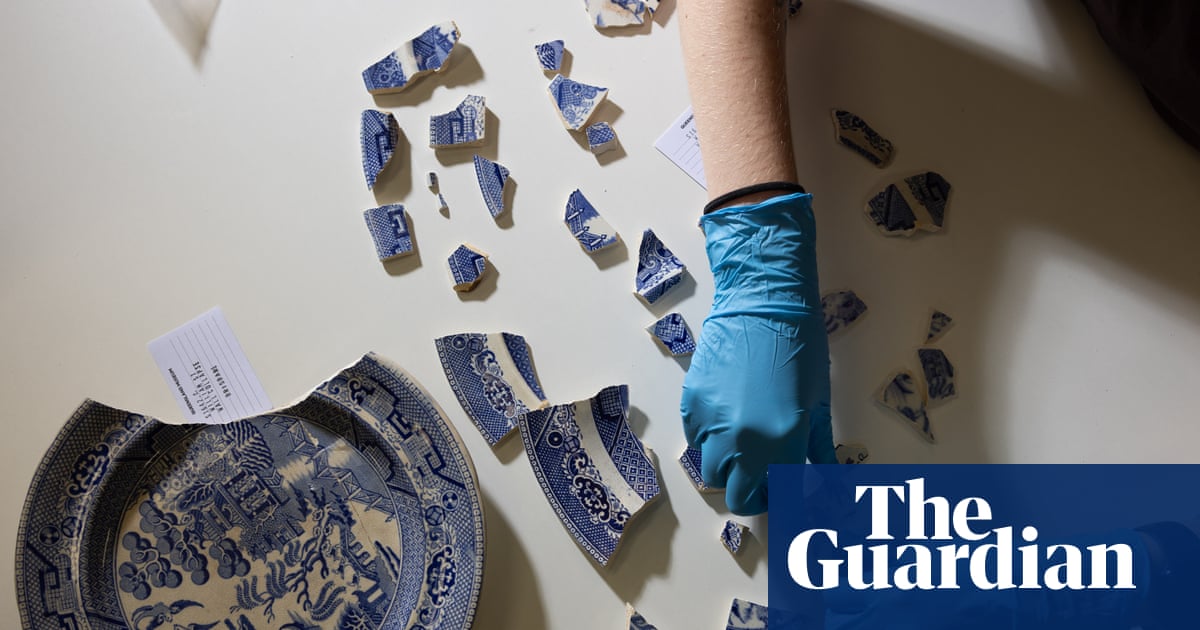
2 months agoArchaeology against the clock: the race to salvage fragments of early Brisbane
Young archaeology students in Brisbane are cataloguing 19th-century ceramic fragments, reflecting growing salvage archaeology activity amid urban development and heritage preservation.





fromMail Online
3 weeks agoMystery of 'second Sphinx' deepens as new footage reveals hidden clues
The footage captured by Trevor Grassi shows dozens of square shafts carved into bedrock, many extending deep underground but primarily filled with sand, raising new questions about what may lie beneath the surface.
OMG science
fromThe Local France
1 month agoMysterious ancient skeletons discovered sitting upright in France
Similar to four others unearthed nearby earlier this month, it is sitting upright at the bottom of a one-metre-wide pit. The skeleton's hands are resting in its lap. Like the others, its back is against the eastern wall, its face directed westward.
France news
London food
fromIndependent
1 month agoAn Irish Goodbye: 'You'd be surprised how often you visit the pyramids when you actually live here'
A creative director from Northern Ireland relocated to Cairo in 2024 after experiencing an immediate emotional connection to the city's unique energy during a visit.
fromThe Art Newspaper - International art news and events
1 month agoAncient Egyptian 'Tipp-Ex' discovered on papyrus at UK's Fitzwilliam Museum
The corrective fluid analysed using light infrared photography revealed a mixture of huntite and calcite, while images made using a 3D digital microscope show that there also are flecks of yellow orpiment, probably to make it blend in better with the fresh papyrus, which would have originally been pale cream in colour.
Typography
fromMedievalists.net
4 weeks agoWho Lies in Winchester's Medieval Mortuary Chests? - Medievalists.net
This project demonstrates the combined power of science, the study of human remains and historical research to discover new information about the six mortuary chests and their occupants which would not have been available to us a generation ago.
History


fromMail Online
2 months agoLost tomb of mysterious 'cloud people' unearthed after 1,400 years
Archaeologists in Mexico have uncovered a 1,400-year-old tomb in the Central Valleys of Oaxaca that had been lost to history. The stone structure, built by the Zapotec culture, known as Be'ena'a, or 'The Cloud People', is adorned with sculptures, murals and carved symbols that suggest ritual significance. The Zapotec believed their ancestors descended from the clouds and that, in death, their souls returned to the heavens as spirits.
World news
California
fromwww.mercurynews.com
2 months agoRedwood forest once owned by the King Tut of Hoarders is added to famed Santa Cruz Mountains state park
California added a cleaned 153-acre NoraBella property adjacent to Saddle Mountain to Big Basin Redwoods State Park after a $2.4 million state purchase.
fromMail Online
2 months agoLong-lost Egyptian scroll fuels debate over real-life biblical giants
An ancient Egyptian papyrus held by the British Museum has been cited as possible evidence supporting some of the Bible's most controversial claims about giants. The 3,300-year-old document, known as Anastasi I, has been in the museum's collection since 1839 and has recently resurfaced on the Associates for Biblical Research, renewing interest in its possible links to biblical accounts. The papyrus describes encounters with the Shosu people, said to stand 'four cubits or five cubits' tall, up to eight feet in height.
Books
fromwww.bbc.com
2 months agoTreasures found on HS2 route stored in secret warehouse
Treasures unearthed by hundreds of archaeologists so far during work on the controversial planned HS2 train line have been shown exclusively to the BBC. The 450,000 objects, which are being held in a secret warehouse, include a possible Roman gladiator's tag, a hand axe that may be more than 40,000 years old and 19th Century gold dentures. It is an "unprecedented" amount and array of items, which will yield new insights into Britain's past, says the Centre for British Archaeology.
London
World news
fromwww.theguardian.com
2 months agoAlleged cat burglar arrested after priceless Egyptian artefacts taken in Queensland museum heist
A 52-year-old man was arrested for allegedly stealing priceless Egyptian artefacts from the Abbey Museum in Caboolture, with most items recovered and minor damage reported.
fromArs Technica
2 months agoMuseums incorporate "scent of the afterlife" into Egyptian exhibits
Her team's analysis of the residue samples contained beeswax, plant oils, animal fats, bitumen, and resins from coniferous trees such as pines and larches, as well as vanilla-scented coumarin (found in cinnamon and pea plants) and benzoic acid (common in fragrant resins and gums derived from trees and shrubs). The resulting fragrance combined a "strong pine-like woody scent of the confers," per Huber, mixed in with "a sweeter undertone of the beeswax" and "the strong smoky scent of the bitumen."
Science
Arts
fromOpen Culture
1 month agoThe Met Releases High-Definition 3D Scans of 140 Famous Art Objects: Sarcophagi, Van Gogh Paintings, Marble Sculptures & More
The Metropolitan Museum of Art now offers high-definition 3D scans of its artifacts, enabling unprecedented close examination and interaction with masterpieces through digital zoom, rotation, and augmented reality technology.
History
fromwww.thehistoryblog.com
1 month ago43,000 ostraca found at one site shed light on social history of Egypt
Excavations at Athribis in Lower Egypt uncovered 13,000 ostraca, bringing the total to 43,000 fragments—the largest collection at any single Egyptian archaeological site, spanning from the 3rd century BCE to the 11th century CE.
fromwww.thehistoryblog.com
1 month agoCoffins of Amun's singers, sealed papyri found at Luxor
The coffins are elaborately painted in vivid polychrome. They were stacked in layers and carefully arranged so the 22 coffins fit into the constricted space. They were placed in 10 horizontal rows and the lids separated from the body of the coffin to maximize the limited space. There are no personal names on most of the coffins, but there are titles. The most common title found in the coffin is Singer of Amun or Chantress of Amun.
History
Arts
fromThe Art Newspaper - International art news and events
1 month ago2,000-year-old inscriptions found in Valley of the Kings offer fresh insight into Indian presence in Ancient Egypt
Nearly 30 inscriptions in ancient Indian languages discovered in Valley of the Kings tombs provide evidence of Indian presence in Egypt between the first and third centuries AD.
History
fromwww.mercurynews.com
2 months agoToday in History: February 16, Tutankhamen's tomb unsealed
Feb. 16 features major historical events including King Tutankhamen's burial chamber unsealing (1923), Fort Donelson surrender (1862), Castro becoming Cuba's premier (1959), and several modern political and transportation incidents.
fromMail Online
2 months agoMystery of Egypt's pyramids deepens as hidden megastructure revealed
More than 200 scans from multiple satellites, including Italy's Cosmo-SkyMed and the US-based Capella Space, showed uniform results suggesting massive pillars about 65 feet in diameter wrapped in spirals and plunging nearly 4,000 feet deep. Those pillars appear to end in 260-foot cubic chambers beneath all three pyramids and the Sphinx, which Biondi described as 'huge chambers' measuring roughly 260 feet in length and width.
History
fromMail Online
2 months agoMysterious symbols spanning the globe hint at a lost civilization
His investigation began after identifying recurring giant T-shapes, three-level indents, and step pyramids carved into ancient stones worldwide. 'These specific symbols that are built in different size proportions, and the symbols are found in ancient stones around the world, are not supposed to exist; no cultures are supposed to have any cross-platform,' LaCroix explained. The symbols appear in locations ranging from Turkey's Van region to South America and Cambodia.
History
History
fromMedievalists.net
1 month agoNewly Discovered Document Confirms a 'Legendary' African King - Medievalists.net
An Arabic document from Old Dongola confirms King Qashqash's historical existence and reveals how Nubian rulers exercised power through coordinated gift exchanges with subordinates and merchants.
History
fromTime Out London
2 months agoA new 'Cleopatra' immersive experience in London will be all about Ancient Egypt
Cleopatra: The Experience opens at Immerse LDN as a 3,000 square metre, nine-gallery immersive exhibition tracing the late Ptolemaic dynasty with artefacts, AR, VR and staged environments.
fromOpen Culture
1 month agoSeven Wonders of the Ancient World: From the Walls of Babylon to the Sewers of Rome
Seven were the strings of the lyre (unless there happened to be eight or nine), seven were the gates of Thebes, and seven were the "wandering stars" in the night sky (if you count the sun and moon). The identity of the wonders was less important than the length of their list, and indeed, additions and changes were proposed since the beginning.
History
[ Load more ]