#leeds-castle
#leeds-castle
[ follow ]
#reproductive-rights #journalism #london #royal-family #queen-elizabeth-ii #climate-change #big-tech #memorial
.png?trim=0,0,0,0&width=1200&height=800&crop=1200:800)




fromwww.theguardian.com
5 days agoLincolnshire church leaning more than Tower of Pisa needs 100k to fix wonky floor
The church was originally built as a Chapel of Ease for older residents to attend rather than walking to neighbouring Westborough. It later became its own parish church and its tower, dating from the 14th century, is estimated to have first moved in the late 19th century or early 20th century.
Renovation





fromMedievalists.net
2 weeks agoMedieval Gold Discovery Goes on Display in Newcastle - Medievalists.net
We are delighted to unite these incredible archaeological finds from across the North for our latest exhibition. From Roman silver discovered along Hadrian's Wall to 9th-century gold found by a Newcastle University student, this is a rare opportunity to see these scattered treasures displayed alongside one another.
History
fromianVisits
1 month agoLittle Holland House: The arts and crafts home open to visitors once a month
It's not a house of outstanding art, being a self-taught carver whose skills evidently advanced over the years, as you can see the evolution from fairly rough carving on the stairs to the very skilled work in the living room. He also created the paintings on the walls - talented chap - but never finished the carving in the living room, as his time finally ran out.
Renovation
fromianVisits
1 week agoTulip takeover: Hampton Court Palace bursts into bloom as Tulip Festival returns
The tulips gained fame in 1912, when it was widely reported that a tulip with four distinct blooms on one stem had been spotted at the palace, and the following year, it was reported that the palace had its best display in many years.
London
fromianVisits
1 month agoThe church with anti-aircraft guns: Kilburn's unusual naval relics removed
The Grade II listed building is on Historic England's Heritage at Risk Register and is currently recorded as being in poor condition. The national Marine Society and Sea Cadets (MSSC), which held the lease, has confirmed that it can no longer meet the building's repair obligations and will surrender the lease so that restoration can be carried out by new occupants.
London music
fromArtnet News
1 month agoA Powerful Medieval Queen Returns-As an A.I. Avatar You Can Chat With
Although Eleanor's marriage to Edward in 1253 was political in nature (it settled a dispute over Gascony), the two were besotted and virtually inseparable. Over the course of a 30-year marriage she gave birth to 16 children (only six survived) and became Edward's confidant, accompanying him on crusade in the early 1270s.
Arts
UK news
fromwww.independent.co.uk
1 month agoPrince William's 2,500-home estate set for approval despite fierce local outrage
A 2,500-home development on Prince William's Duchy of Cornwall estate in Kent faces approval despite significant local opposition over traffic, pollution, and service strain concerns.

fromLos Angeles Times
10 years ago'Downton Abbey' dowager's house and acreage sells in Surrey, England
Twelve weeks after coming on the market, the Surrey house used to portray the home of actress Maggie Smith's character, Lady Violet Crawley, found a buyer and recently closed along with several adjacent properties for nearly $9 million. Known as Dower House on the TV series, it was built around 1686.
Boston real estate
History
fromianVisits
1 month agoLooted from a royal palace: The medieval jug now on display in London
A medieval English bronze jug looted from Ghana's Asante kingdom reveals how European luxury goods became valued ceremonial objects through trans-continental trade networks before colonial appropriation.
Arts
fromArtnet News
1 month agoYou Can Now Tour Queen Elizabeth II's Private Rooms at Holyroodhouse
Holyroodhouse Palace opens Queen Elizabeth II's private apartments for a limited 100-day tour celebrating her centennial, offering unprecedented public access to royal chambers filled with Royal Collection artworks and personal objects.
History
fromOpen Culture
1 month agoHow the Long-Lost Body of Richard III Was Found Under a Parking Lot: Solving a 500-Year-Old Mystery
Richard III's remains were discovered in Leicester in the early 2000s after centuries of mystery following his burial at Greyfriars Church and the church's demolition by Henry VIII.
London politics
fromwww.standard.co.uk
1 month agoTower of London 'at-risk of serious harm' under draft plan for Square Mile
Historic England warns that the City of London Corporation's City Plan 2040 poses serious risks to the Tower of London's preservation due to excessive development scale and location.
fromianVisits
2 months agoTickets Alert: Open days at Whitehall's Banqueting House
Whitehall's Banqueting House, one of the few survivors of the vast Palace of Whitehall, is due to reopen this summer, but is having a few preview days before fully reopening. Inside the highlight is the painted ceiling by Sir Peter Paul Rubens, commissioned by King Charles I and installed in 1636. That painted ceiling would also have been one of the last things the King saw when he was led out onto the scaffolding to be executed.
History
fromMedievalists.net
1 month agoNew Medieval Books: Castles and Strongholds of Northumberland - Medievalists.net
Northumberland contains more castles, towers, peles, bastles and barmkins than any other British county, serving as private residences and fortifications for nobility and landowners.
London
fromTime Out London
1 month agoOne of London's most spectacular houses is opening to the public next month
The Cosmic House, a rare Grade I-listed postmodernist building in Kensington designed by Charles Jencks and Sir Terry Farrell, opens to the public on April 22 with an Isaac Julien film installation.
fromThe Art Newspaper - International art news and events
2 months agoBritish Museum acquires 3.5m golden pendant linked to Henry VIII after high-profile campaign
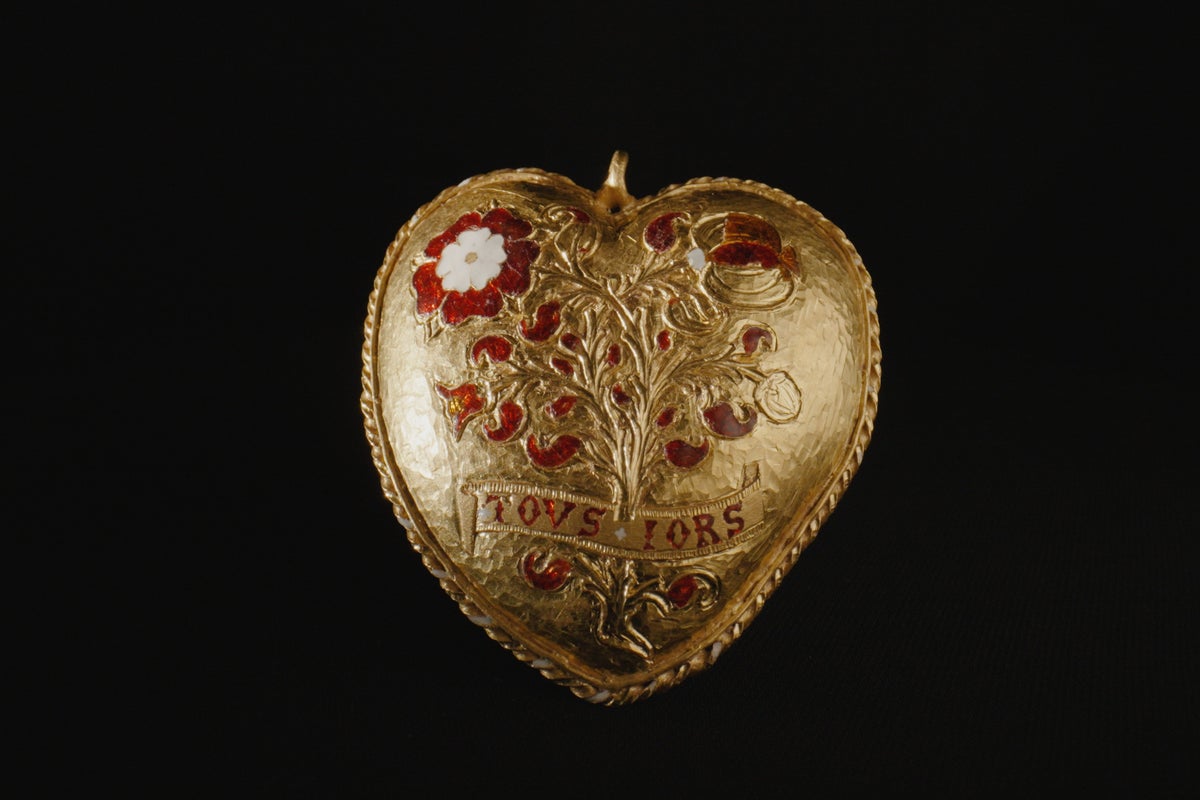
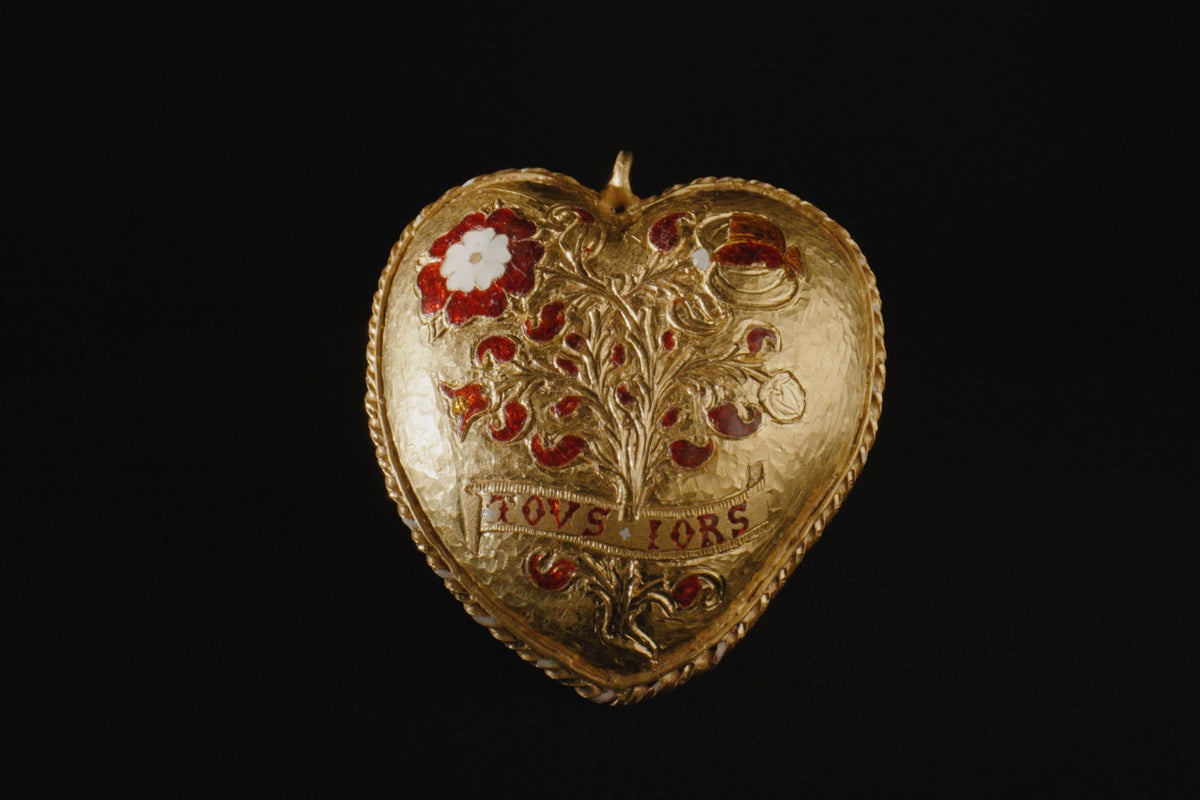
The British Museum has successfully raised the £3.5m it required to acquire the Tudor Heart, an intricately decorated golden pendant with links to Henry VIII and his first wife, Katherine of Aragon. The purchase has been made possible after a four-month fundraising campaign, and thanks to donations including £1.75m from the National Heritage Memorial Fund as well as contributions from more than 45,000 members of the public.
Arts
fromwww.theguardian.com
2 months agoThe overlooked' saint: digitally recreated shrine marks 800th anniversary of William of York
The slab, found in a York drain in the 19th century, has gone on display at a new exhibition marking the 800th anniversary of Saint William a forgotten, once adored martyr said to be responsible for that miracle and others. At the centre of the exhibition is a cutting-edge, digital recreation of an imposing shrine to William that once stood in York Minster's nave but was broken up and buried to protect it from the ravages of Henry VIII's reformation.
History
fromThe Art Newspaper - International art news and events
2 months agoOpulent golden slipper, believed to have belonged to England's King James II, goes on display in UK
A magnificent leather and golden silk slipper believed to have once been worn, then lost, or given away by King James II, is going on display at Killerton, a mansion in Devon which houses the National Trust's costume collection. He is said to have worn the slippers when visiting Coventry in in 1687, where a grand banquet was held in his honour, and may have given them to one of his hosts.
History
fromianVisits
1 month agoYou can now have afternoon tea in the Old Bailey
The afternoon starts with a tour of the Old Bailey, including the courtrooms, the judges' dining room, and the cells below. If you've booked the afternoon tea, you're taken back up to the richly decorated Great Hall for an afternoon tea surrounded by all the pomp and grandeur that the hall can deliver.
London
fromMedievalists.net
2 months agoOnline Course: The Normans in Europe - Medievalists.net
We get started by exploring the origins of the Normans in the county and then duchy of Normandy. We will understand their Norse background and their relationship with the Carolingians. The timeline approach will help us discover all the counts and dukes of Normandy, and what they contributed to their realm. This will set the foundation for the interconnected stories that will lead us to England and the Mediterranean.
History
[ Load more ]