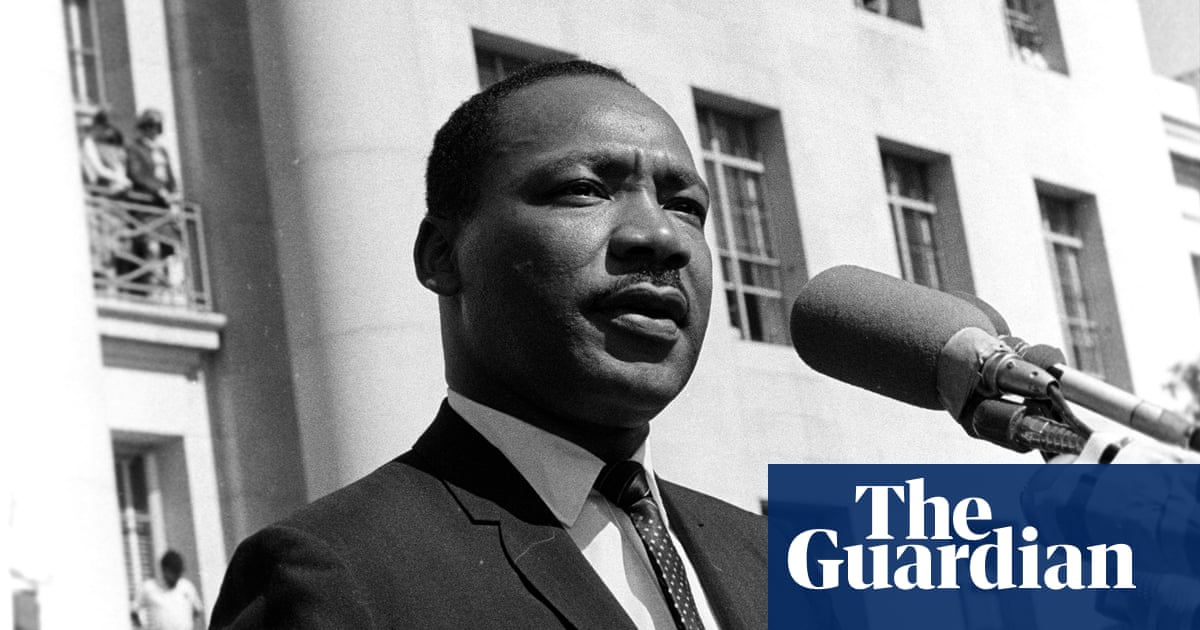
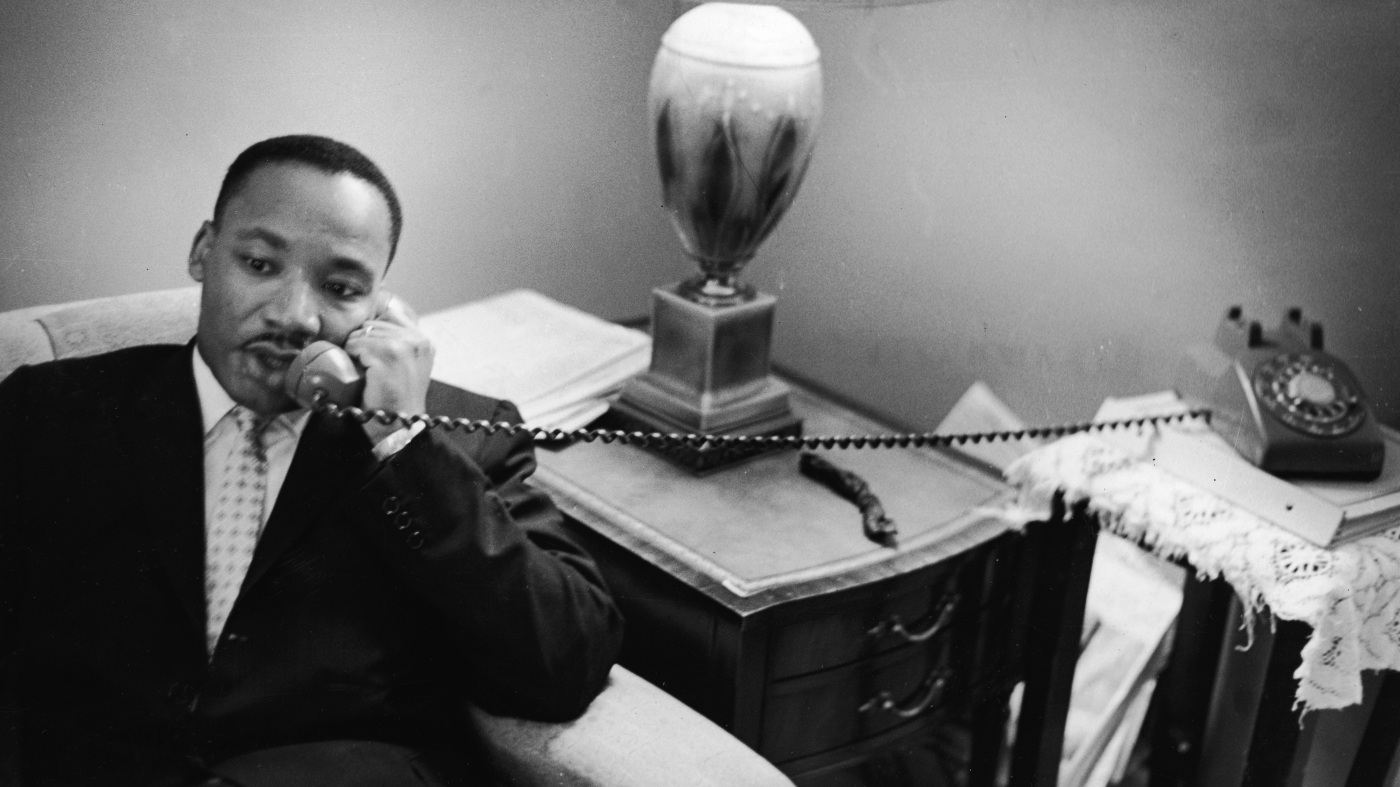
For it is in examining the people like Dr. King, that we can see how yoga can not just make us feel calmer and more peaceful, but can really affect change in a world that is in deep need of healing. By his words, and more importantly his actions, Martin Luther King Jr. showed many of the principles that are central to and deeply embedded in yoga philosophy.
Good afternoon, Cathedral community. As we gather today and ask the question, "Where do we go from here?," we are guided by the wisdom of Martin Luther King Jr. Nearly 60 years ago, as he posed the same question, he reminded us of an essential truth: "In order to answer the question, 'Where do we go from here,' we must first honestly recognize where we are now."
The Nobel Peace Prize was awarded to King in 1964, four years before he was assassinated. He earned it. King did not beg for it or annoyingly insist that it should be awarded to him. He did not make boastful claims about all he had single-handedly done to help end human suffering in America and abroad. Instead, he bravely put his life on the line for peace and justice, not for a prize.
King's intuition was that white people with lower incomes would support this type of policy because they could also benefit from it. In 1967, King argued, "It seems to me that the Civil Rights Movement must now begin to organize for the guaranteed annual income . . . which I believe will go a long, long way toward dealing with the Negro's economic problem and the economic problem with many other poor people confronting our nation."
White-supremacist sentiment is being proclaimed again after decades of being too disreputable to say out loud. Perversion of the Christian Gospel to justify hatred and violence is as widespread as it was when white churches defended racial segregation as holy. And now, as then, advocates for "law and order" regard protest as insurrection and protesters as terrorists (or as George Wallace used to call them, anarchists).
His words were unequivocal: Peace for Israel means security, and we must stand with all of our might to protect its right to exist, its territorial integrity. He went on to describe Israel as one of the great outposts of democracy in the world. But King's support for Israel was not political posturing. It flowed directly from his understanding of oppression and liberation. He recognized what it meant for a people to be denied sovereignty, safety, and dignity.
The celebration starts at 10:30 a.m. at the Howard Gilman Opera House and includes remarks by Reverend Dr. William J. Barber II and Citizens Youth Speaker Aponi Kafele. Dr. Cornel West once described Barber as "the closest person we have to Martin Luther King, Jr. in our midst." Kafele is in BAM's Brooklyn Interns for Arts and Culture (BIAC) program and a senior at Essex Street Academy.
I'll tell you what I don't believe, and the whites were quick to say this: Charlie Kirk was this generation's Martin Luther King, Chappelle said after discussing Jimmy Kimmel's temporary suspension by ABC over comments about Kirk following his September death. That's a reach. They both got murdered in a terrible fashion. They both got shot in the neck, but that's about where those similarities ended. Chappelle dismissed Kirk as a motherf**king internet personality and nothing like MLK.
On a hot summer day a little over six decades ago, a quarter of a million people gathered peacefully in Washington, D.C. to demand laws to advance civil rights, protect voting rights and stop employment discrimination. It was there, at the March on Washington, that the Rev. Martin Luther King Jr. delivered his celebrated "I Have A Dream" speech on the steps of the Lincoln Memorial on Aug. 28, 1963.
We need to be crystal clear on the fact that Trump releasing the MLK assassination files is not about transparency or justice, it's a desperate attempt to distract people from the firestorm engulfing Trump over the Epstein files and the public unraveling of his credibility among the MAGA base.