#neutron-stars
#neutron-stars
[ follow ]
#astrophysics #magnetars #gravitational-waves #superluminous-supernovae #general-relativity #black-holes

OMG science
fromMail Online
1 month agoAstronomers watch the birth of a magnetar for the first time
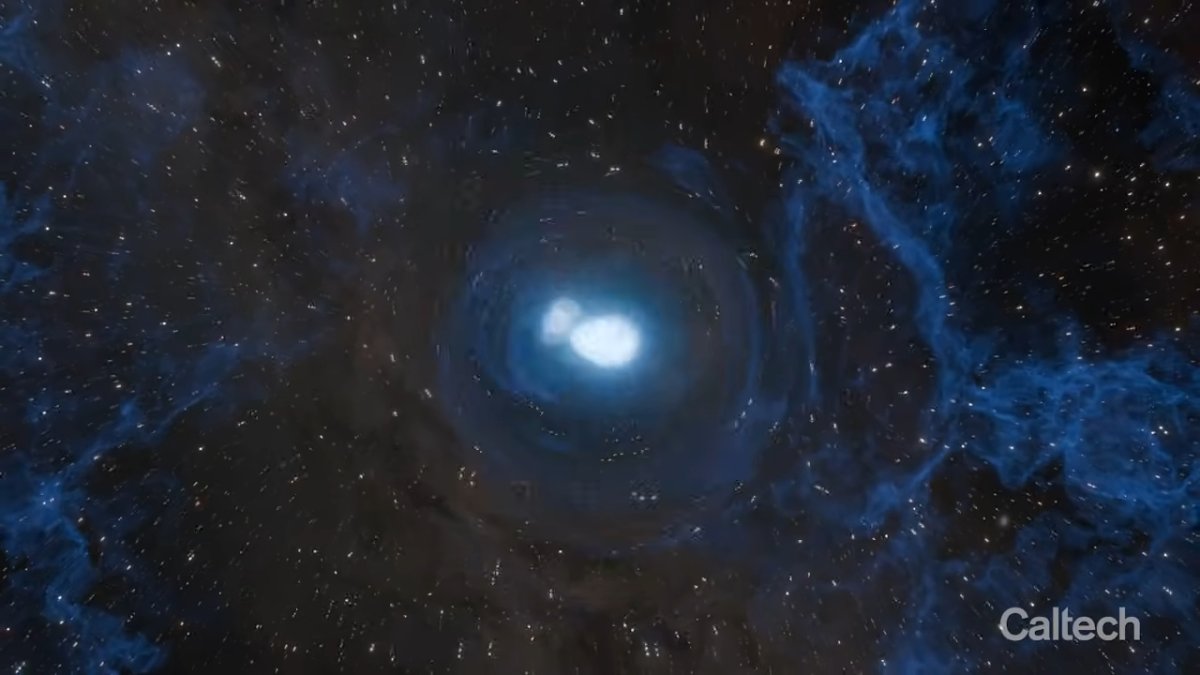
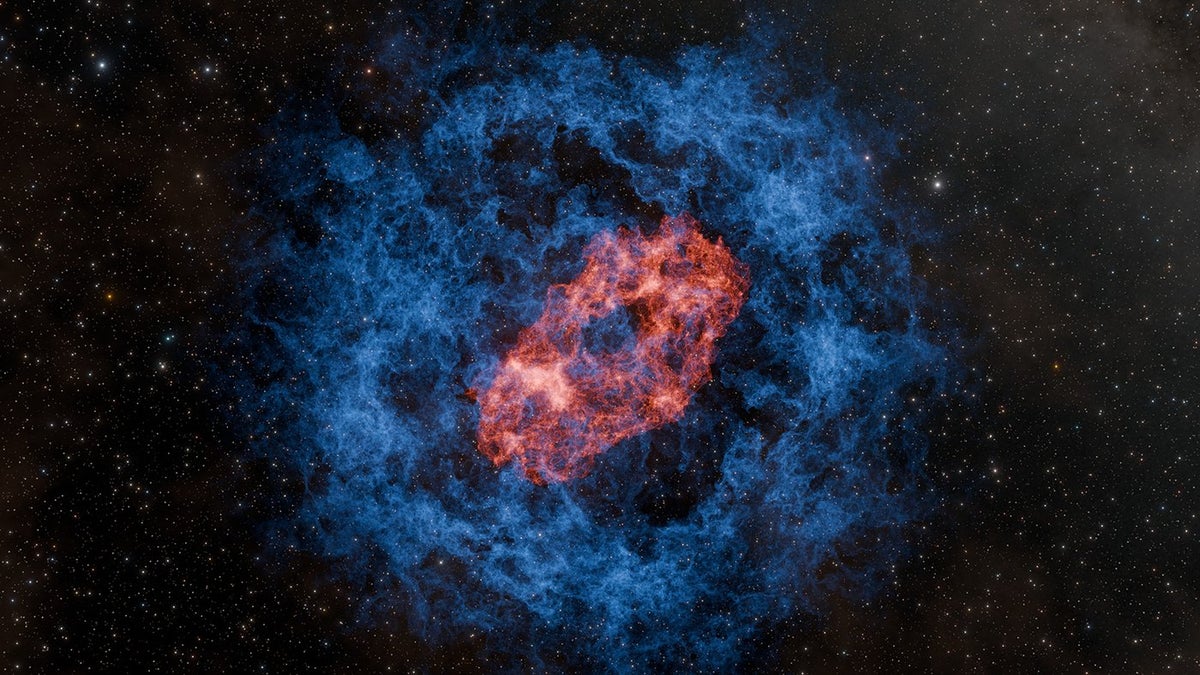
Astronomers observed the birth of a magnetar, an extremely dense neutron star with the universe's most powerful magnetic fields, through a superluminous supernova's unusual flickering light pattern over 200 days.
fromwww.scientificamerican.com
1 month agoNewly discovered ripples in spacetime put Einstein's general relativity to the test
When black holes collide, the crash generates ripples in the fabric of spacetime—gravitational waves. These distortions travel far out into the universe, but by the time they reach Earth, they have become faint, making them extremely hard to detect. Thanks to a global network of observatories—called the Laser Interferometer Gravitational-Wave Observatory (LIGO), Virgo and the Kamioka Gravitational-Wave Detector (KAGRA)—scientists have found scores of these tiny wobbles in spacetime.
OMG science
fromNature
4 months agoI encourage women to claim their space in astrophysics and beyond
Chatterjee works in the emerging and male-dominated field of gravitational-wave science. She studies neutron stars - ultra-dense cores that are left over when massive stars collapse - by looking at gravitational waves, or ripples in the fabric of space-time. It's an approach that brings together several disciplines, including nuclear, particle and condensed-matter physics. On her return to India in 2020, she joined the Inter-University Centre for Astronomy and Astrophysics (IUCAA) in Pune.
Science

[ Load more ]