#omar-torres
#omar-torres
[ follow ]
#contemporary-art #photography #art-exhibition #frida-kahlo #contemporary-painting #sculpture #architecture
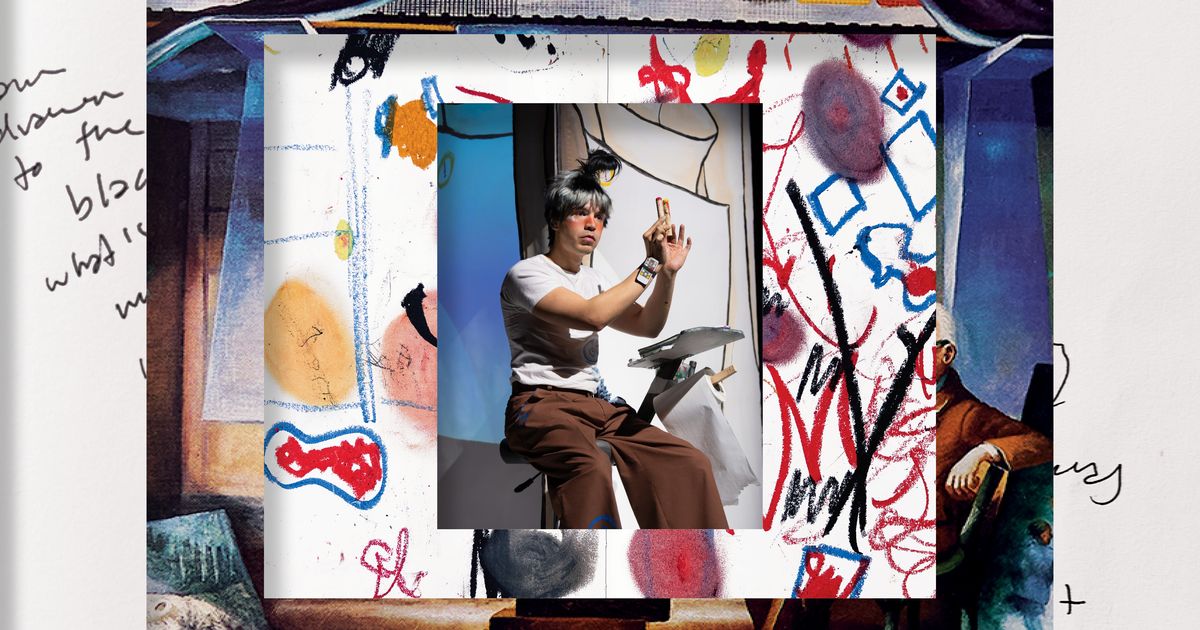

fromMetro Silicon Valley | Silicon Valley's Leading Weekly
6 days agoMiguel Novelo: Inframundo in San Jose | Metro Silicon Valley | Silicon Valley's Leading Weekly
Inframundo invites visitors to look inward and become a rock, drawing on the landscape shaped by cenotes, which are thought to be portals to the Maya underworld.
Silicon Valley
fromOregon ArtsWatch * Arts & Culture News
3 days agoTom Prochaska: Through the Open Door * Oregon ArtsWatch
Tom Prochaska distinguished himself in many mediums: He was a masterful printmaker, an intuitive painter, a builder of papier-mâché figures, a creator of fused glass panels, and graphite-on-paper drawings.
Arts
#photography

Photography
fromwww.theguardian.com
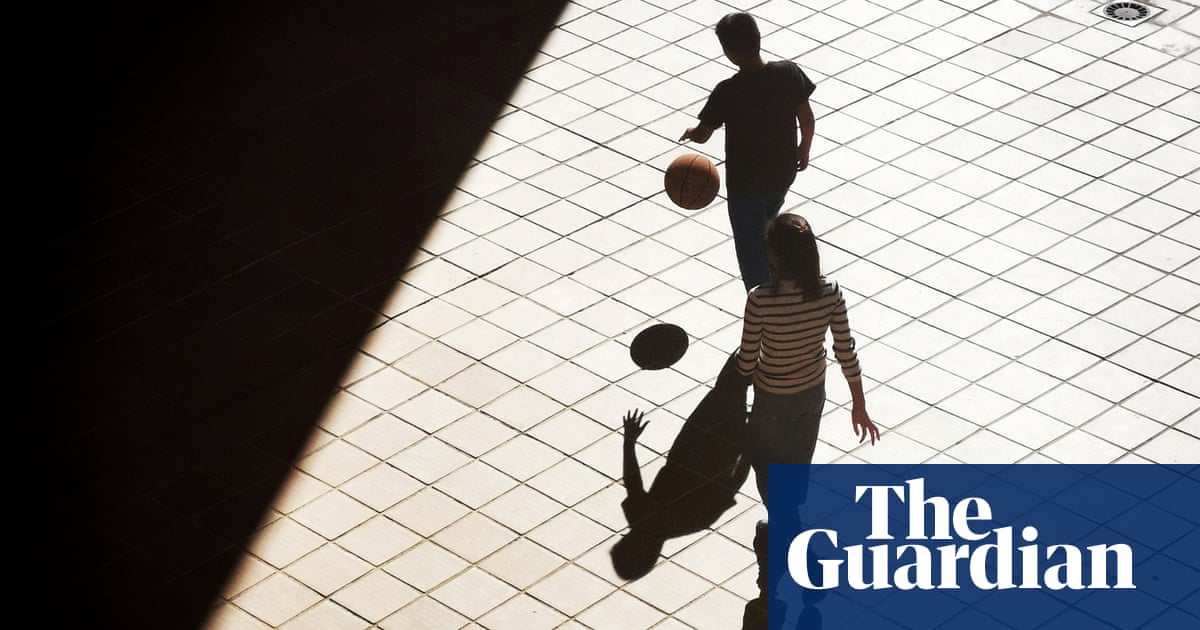
2 weeks agoThe shadows, the figures playing basketball I waited for the magic to appear then it did': Jose Luis Morales Martin's best phone picture
Jose Luis Morales Martin captures the interplay of architecture and photography, emphasizing the emotional connection and artistry in both fields.


fromenglish.elpais.com
1 month agoA Mariachi school persists, and thrives, amidst an immigration crackdown
It makes me feel proud, simply because of the specific time we're in right now. It definitely takes a lot of courage for kids my age to represent their culture. Anthony Benitez, an 18-year-old violin student born in the United States to Mexican immigrants, expressed how the academy provides a meaningful outlet for cultural expression amid punitive immigration enforcement affecting Latino and immigrant families across the country.
NYC music


fromItsnicethat
1 month agoBraulio Amado on why there is unlimited inspiration in the world, if only we become "crazy enough to look for it"
Braulio gives the crowd an incredible insight into a decade's worth of poster designs for Good Room, revealing how he finds inspiration in the most mundane things just by paying attention to what has 'already been designed' and remixing it into something new.
Design
Arts
fromThe Art Newspaper - International art news and events
2 weeks agoMexico's art community calls for greater transparency in management of treasured collection
The Gelman Collection's future is uncertain, prompting calls for transparency from cultural professionals regarding its management and adherence to heritage laws.
Music
fromwww.theguardian.com
1 month agoUruguay's candombe brings streets to life as the once-banned musical tradition roars back
Candombe, Uruguay's Afro-descendant music once banned and marginalized, is now experiencing peak popularity after spreading from Black neighborhoods throughout the country.
East Bay (California)
fromwww.mercurynews.com
1 month agoRevered Cuban pianist Omar Sosa back in Bay Area for week full of gigs
Cuban pianist Omar Sosa returns to the Bay Area as resident artistic director at SFJAZZ Center, presenting diverse projects spanning his three-decade career after arriving in 1995 with minimal resources.
World news
fromenglish.elpais.com
2 months agoThe discovery of Camilo Torres' body revives one of the most sensitive issues in Colombia's internal conflict
Forensic experts confirmed identification of Camilo Torres's remains, resolving a decades-long mystery about his 1966 death and closing a chapter in Latin American armed struggle.
Design
fromdesignboom | architecture & design magazine
1 month agoluis barragan's la cuadra san cristobal reopens to the public with two exhibitions in mexico
La Cuadra, Luis Barragán's 1968 equestrian complex, reopens as a public cultural campus under Fernando Romero's direction, launching with exhibitions dedicated to Barragán and Felix Gonzalez-Torres.


fromArtforum
1 month agoFoto Estudio Luisita
For the Escarrias-petite sisters of African descent born ten months apart in Cali, Colombia-commercial photography was in their family DNA. Their parents established a studio in their hometown that was overseen by their mother after their father's early demise. The siblings learned the family trade, and when they fled the country's civil war in 1958, they quickly reestablished the studio in Buenos Aires.
Photography
Arts
fromArtnet News
1 month agoThe Young Painter Curators Are Rushing to Work With | Artnet News
Taína H. Cruz, a young artist born in 1998, is featured prominently in both the Whitney Biennial and MoMA PS1's Greater New York, with her work serving as the face of the Whitney show through a billboard in the Meatpacking District.
fromJuxtapoz
2 months agoJuxtapoz Magazine - Oscar Murillo: "el pozo de agua" @ kurimanzutto, Mexico City
OSCAR MURILLO (b. 1986, La Paila, Colombia) has developed a multifaceted and challenging practice that spans painting, collaborative projects, video, sound and installation. Through each body of work, the artist probes ideas of collectivity and shared culture, demonstrating a commitment to the power of material presence alongside complex meditations on contemporary society. A focus on the social dimension that sits on the border between performance and events is also central to Murillo's practice.
Arts
Arts
fromMiami Herald
1 month agoCarlos Alfonzo and Belkis Ayon Unite in 'Odyssey' at Freedom Tower
Two significant 20th-century Cuban artists, Carlos Alfonzo and Belkis Ayón, are exhibited together for the first time at Freedom Tower, revealing shared interests in mythology and artistic influences despite their stylistic differences.
Arts
fromThe Art Newspaper - International art news and events
2 months agoMexico City's art scene gravitates to Santa Maria la Ribera neighbourhood
Santa María la Ribera has become a growing hub for contemporary Mexican artists, offering affordable studios, large Porfirian-era spaces, and new exhibition venues.
fromThe Art Newspaper - International art news and events
2 months agoAt Mexico City's Material and Salon Acme fairs, artists find hope in nature
"The new venue has allowed us to develop the experience of the fair-it lends itself to being more of a destination," Brett W. Schultz, the co-founder and director of Material, tells The Art Newspaper. The fair features over 70 exhibitors this year, with an especially strong contingent of Mexico City galleries that, like Material, have been around for a little over a decade.
Arts
fromThe Mercury News
2 months agoSan Jose artist brings wind, light to bear in her paintings
Artist Ayelet Gal-On does not just paint; she builds, layering oil, acrylic and plaster on canvas. Gal-On's signature subjects for "Taken by the Wind, Swept by the Light," her upcoming solo exhibition at Gallery 9 in Los Altos, are white dresses that appear to hang on a line, defying the stillness of the canvas. "I love the process of playing with color," says the artist.
Arts
Arts
fromThe Art Newspaper - International art news and events
2 months agoTarek Atoui-known for his innovative musical performances-will take over Tate Modern's Turbine Hall this autumn
Tarek Atoui will transform Tate Modern's Turbine Hall with a Hyundai Commission featuring multisensory, research-driven sound environments and experimental electro-instrumental performances.
fromJuxtapoz
2 months agoJuxtapoz Magazine - Zigzags and Curves: Sarah Crowner @ Galerie Nordenhake Mexico City
Galerie Nordenhake Mexico City is pleased to present Zigzags and Curves, an exhibition by Sarah Crowner that brings together her sustained research into geometry, abstraction, and the expanded language of painting. Presented across two sites - the gallery's Mexico City space and Casa Roja in Lomas de Chapultepec-the exhibition takes its title from the fundamental graphic elements that structure Crowner's visual vocabulary: the zigzag and the curve.
Arts
fromColossal
2 months agoRegina Silveira Pieces Together an Evolving Narrative of Latin America
Regina Silveira has spent the better part of three decades considering the relationship between media and meaning, particularly as it relates to Latin America. First presented in 1997, "To Be Continued..." features 100 black-and-white reproductions of photos, newspaper clippings, propaganda, advertisements, and more. Silveira nests each image into an oversized puzzle piece, which cuts off faces and scenes to leave fragments of pop culture icons, flora and fauna, and even the occasional mugshot spliced next to one another.
Arts
fromCurbed
2 months agoThe Cuban House of Spirits
The artists José Parlá and Claudia Hilda, his wife, live in a former fire station in Fort Greene surrounded by memories of Cuba, which Parlá's ­family fled in 1970 and where ­Hilda lived until recently. "There's a lot of magical realism here, a big mix of Cuban traditions and religion," says Parlá, pointing to an icon of la Caridad del Cobre, the island's patron saint, in the kitchen. "We cannot move her!"
Arts
Arts
fromThe Art Newspaper - International art news and events
1 month agoThe many faces and identities Frida Kahlo are explored in exhibition catalogue
Frida Kahlo evolved from obscurity to global icon through posthumous appropriation by diverse movements that identified with her multifaceted persona and art across social, political, and commercial sectors.
fromHyperallergic
2 months agoA Somali-American Artist Speaks Out
Amid the savagery of the Trump administration's crackdown on immigration - culminating in the killing of Renee Nicole MacklinGood - everyday Americans have shown incredible courage in pushing back against ICE's takeover of their cities. Joining them today are several Minnesotaart institutions that will close their doors to protest against the cruel treatment of their neighbors. You can read all about that today, plus a moving personal essay by Ifrah Mansour, a Somali-American artist based in Minnesota.
Arts
Arts
fromHi-Fructose Magazine - The New Contemporary Art Magazine
2 months agoIn Plain Site: Isaac Cordal Creates Tiny Worlds Which Mirror Our own - Hi-Fructose Magazine
Small sculpted businessmen embody social complacency and systemic contradictions, showing technological obsession, environmental neglect, and coerced conformity amid crisis.
fromJuxtapoz
2 months agoJuxtapoz Magazine - Misfits: Daniel Nunez Explores a New Freedom @ GR Gallery, New York
"The four large-scale canvases that constitute the core of ' Misfits' maintain the fundamental elements of the artist's visual lexicon while radically reconfiguring compositional structure and spatial organization. These works advance a design freedom that is simultaneously forceful and controlled, achieving a balance between expressive intensity and formal restraint. As such, the series marks a decisive moment in Nuñez artistic evolution and possibly an initial step toward a more profound and transformative reorientation of his practice."
Arts
fromCurbed
2 months agoThe Cuban House of Spirits
The artists José Parlá and Claudia Hilda, his wife, live in a former fire station in Fort Greene surrounded by memories of Cuba, which Parlá's family fled in 1970 and where Hilda lived until recently. "There's a lot of magical realism here, a big mix of Cuban traditions and religion," says Parlá, pointing to an icon of la Caridad del Cobre, the island's patron saint, in the kitchen. "We cannot move her!"
Arts
Arts
fromThe Art Newspaper - International art news and events
2 months agoMexico City's Zona Maco fair finds a 'balance between continuity and renewal'
Zona Maco anchors Mexico City Art Week 2026, showcasing over 220 galleries and introducing 40+ new exhibitors from Latin America, North America, Europe and Asia.
fromJuxtapoz
2 months agoJuxtapoz Magazine - Israel Campos "Echoes" @ Charlie James Gallery, Los Angeles
These paintings reveal the layers of history that undergird modern Los Angeles. Yaanga Lies Under the 101 imagines the city's earliest Tongva inhabitants as they made their home on the land that, in the modern day, runs beneath the Hollywood Freeway. Campos's process mimics this archaeological layering: each canvas begins with a screenprinted underlayer that is then painted over in acrylic, and then once again layered with screenprinted details.
Arts
Arts
fromSilicon Canals
2 months ago8 signs you appreciate art, music, and culture on a deeper level than most people - Silicon Canals
Some people experience art deeply, reacting emotionally and perceiving subtle artistic cues that reveal heightened sensitivity and meaningful connections to creative expression.
[ Load more ]