#pompidou-museum
#pompidou-museum
[ follow ]
#contemporary-art #architecture #paris #art-exhibition #emerging-artists #centre-pompidou #art #photography
fromdesignboom | architecture & design magazine
1 day agoglazed facade cuts through monolithic brick community center within paris park
The architectural approach emphasizes simplicity, durability, and contextual integration, with brick as the primary material for its structural capacity and long-term performance.
Renovation

fromThe Good Life France
3 days agoHector Guimard French Art Nouveau Pioneer - The Good Life France
Hector Guimard's distinctive designs are well known - even if his name isn't. His signature work, the Paris Métro entrances, are classic examples of Art Nouveau, characterized by their elegant flowing lines, floral ornamentation, geometric forms, and mythical symbolism, taking inspiration from nature.
Paris food
Arts
fromdesignboom | architecture & design magazine
4 days agowhat the readymade still asks: marcel duchamp returns to new york at MoMA and gagosian
Marcel Duchamp's readymades challenge traditional notions of art, emphasizing the role of displacement and designation in transforming ordinary objects into conceptual events.

fromHyperallergic
5 days agoMoMA PS1's "Greater New York" Is Gritty, Stunning, and Gutting
The curators of Greater New York really captured the energy of the city well - not the out-of-towner's New York with its glossy surfaces, brands, and trendy fare, but the gritty New York that's always in the process of formation, that rejects surface in favor of rawness.
Arts
fromArtnet News
6 days agoPainting Has Entered Its Performance Era | Artnet News
Much of Instagram's video content is organized around transformation-the virtual magic of the before-and-after and clips that show cause and effect. A person makes pasta from scratch in 20 seconds via edits that compress time-intensive labor.
Arts


fromdesignboom | architecture & design magazine
1 month agopulp galerie show revives radical 1990s CHIAT\DAY office furniture by gaetano pesce
When Jay Chiat commissioned Gaetano Pesce in 1994, he envisioned a workplace free from assigned desks and rigid partitions. The Italian designer responded with a space conceived as a flexible field of movement. The office functioned almost like a small city, where meeting areas and work zones formed an informal network of routes and gathering points.
Graphic design
France news
fromwww.thelocal.fr
1 month agoNo, the Pompidou Centre isn't being turned into migrant housing
French cybercrime authorities investigate a spoofed website spreading false claims that Paris mayoral candidate Pierre-Yves Bournazel plans to convert the Pompidou Centre into migrant housing, attributed to Russian-linked group Storm-1516.
Arts
fromThe Art Newspaper - International art news and events
2 weeks agoMilan's contemporary art credentials further bolstered by arrival of Paris Internationale
Milan's art scene is thriving, attracting international galleries and collectors, highlighted by the inaugural Paris Internationale art fair.

fromdesignboom | architecture & design magazine
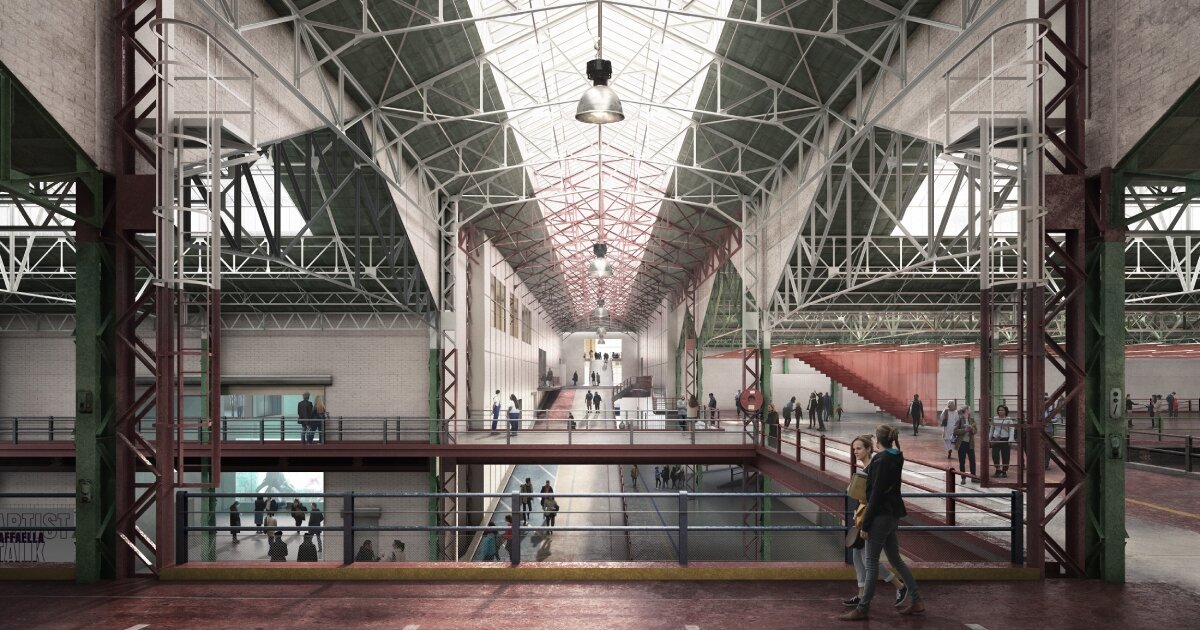
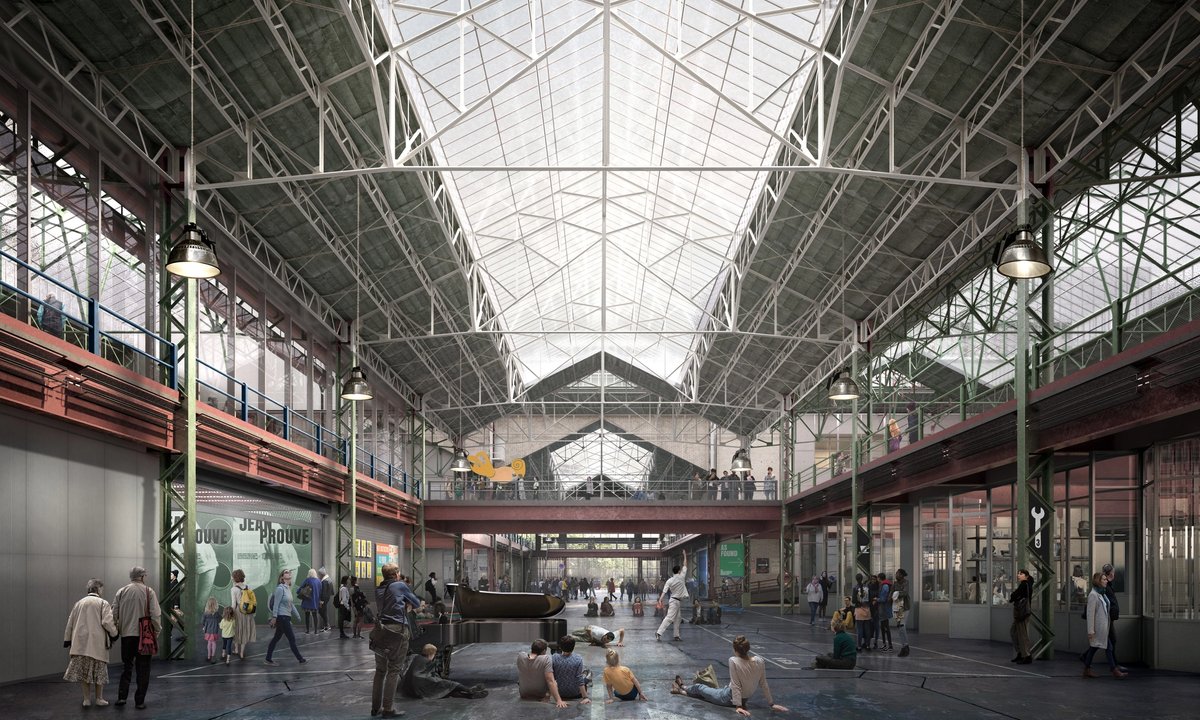
2 months agorenzo piano to open paris's montparnasse commercial center back to the city
Renzo Piano Building Workshop (RPBW) unveils a new vision for the Ensemble Immobilier Tour Maine-Montparnasse, a large-scale urban retrofit that transforms a closed 1970s retail complex into an open, pedestrian-focused piece of Paris. Commissioned by the co-owners of the Montparnasse Commercial Centre and the CIT Tower, the project unfolds in parallel with the ongoing redevelopment of the adjacent Montparnasse Tower, led by Nouvelle AOM. The two interventions aim to recalibrate one of the most contested sites of the city, shifting it from an inward-looking megastructure to a permeable urban district grounded in daily life, movement, and public space.
Remodel
fromwww.kaltblut-magazine.com
2 months agoUne Matinee Parisienne
Styling by Axelle using fashion by Nazarene Amictus, Victoria Amerson Design GmbH, Mossi, and Vintage pieces. The assistant stylist is Evan. The series explores the idea of haste and unintentional disorder in Paris, the moment when you rush downstairs, almost forgetting your trousers, because every minute counts. This sense of urgency, this I don't have time, becomes an aesthetic language. In Paris, style isn't calculated, and yet, nothing is ever left to chance.
Fashion & style
fromThe Local France
2 months agoFrance's Pompidou museum files complaint over camera in toilets
Famed Paris modern art museum the Pompidou Centre said Wednesday it had filed a legal complaint and suspended an employee after a hidden camera was found in the women's toilets of its offices. A statement from the famed modern art space, which closed its doors last year for renovations, said an employee had discovered "an image-recording device" on January 14th in offices housing building management and security staff near its main site.
France news
Remodel
fromArchDaily
2 months agoRenzo Piano Building Workshop Redesigns Montparnasse Commercial Centre as a Pedestrian District
Renzo Piano's plan transforms Montparnasse's 1970s retail slab and CIT Tower into a pedestrian-oriented, open, environmentally focused Parisian block reconnecting the neighborhood.
Renovation
fromArchDaily
2 months agoNeighborhood in Paris - Media Library and Family Flats, Student Residence, and Social Housing Units / La Architectures + Atelier Regis Roudil Architectes + Nicolas Hugoo Architecture
Urban renewal in Paris' Paul-Bourget neighborhood delivered new social housing, a media library, family flats, student residences, and restored greenery and biodiversity.
fromThe Art Newspaper - International art news and events
1 month agoThe year of Andre Malraux: France salutes its pioneering intellectual with exhibitions and more
At the official launch last November, the current culture minister Rachida Dati described the imperative behind the programme as not just celebrating an uncommon visionary but the "burning relevance" of his legacy: "a commitment to continuing to nurture this demanding idea of what culture is".
France news
Renovation
fromdesignboom | architecture & design magazine
2 months agoglass paste details tie together 1966 paris apartment renovation by cyrus ardalan
A 1966 Paris apartment is reframed with continuous plywood surfaces, glass-paste frames, and integrated storage to create a modernist, functional two-bedroom layout.
France news
fromwww.independent.co.uk
1 month agoWhat to know as the Louvre gets a new chief after a surprise resignation and a bruising year
The Louvre appointed Christophe Leribault as new director following the previous director's resignation amid multiple institutional crises including a crown jewels heist, security failures, and financial fraud.
Renovation
fromArchitectural Digest
3 months agoThis 323-Square-Foot Paris Apartment Is a "Cream-Colored Envelope" with Touch of Rock 'n' Roll
Irregular 323-sq-ft Paris apartment transformed by highlighting beams and skylights, reorganizing layout, contrasting textures, adding multifunctional kitchen and integrated storage.
fromFrenchly
2 months agoA Guide to Belleville, Paris's Bohemian Enclave - Frenchly
Belleville has always been a little bit rowdy, whether it meant to be or not. Long before it was folded into Paris in 1860, it existed as its own working-class wine village perched on a hill, slightly removed from the city both geographically and ideologically. In recent years, as Paris's 10th and 11th arrondissements have slid fully into hipster territory, and even the gritty Barbès neighborhood feels increasingly polished, Belleville has held onto its identity with surprising resolve.
France news
fromArchDaily
2 months agoLa Chapelle Renovation / PWA + AUMMA
The transformation of the chapel of the Saint-Joseph convent in Saint-Félicien is founded on a guiding principle: designing with what already exists. The intervention seeks neither to erase nor to stage the heritage, but rather to offer a precise and measured reinterpretation of its architectural qualities in service of new cultural uses.
Renovation
Arts
fromdesignboom | architecture & design magazine
1 month agopaola pivi imagines a living cosmos grown from lemon trees at perrotin paris exhibition
Paola Pivi's Live Again exhibition uses living lemon tree branches and playful language to create regenerative art that embeds ecological cycles and political critique into sculptural forms.
France news
fromOpen Culture
2 months agoHow This Skyscraper Ruined Paris, and Why They're Now Trying to Make It Invisible
Tour Montparnasse symbolizes Parisian modernity and commercialism but remains widely disliked as the city's lone central skyscraper, contrasting with celebrated landmarks like the Eiffel Tower.
Paris food
fromArchitectural Digest
1 month agoDividing a 300-Square-Foot Parisian Studio Into Four Parts? Lean On Low-Slung Furniture and Tons of Mirrors
A 300-square-foot Paris studio maximizes efficiency through open-plan design divided into four functional zones while preserving panoramic views and natural light.
Paris food
fromWWD
1 month agoParisian Designer Pauline Leprince to Make NYC Debut
French designer Pauline Leprince combines futuristic aesthetics with historical codes, creating radical minimalist pieces that explore tension between individual and society through sharp geometry and materials like burnt metal and glass.
Arts
fromThe Art Newspaper - International art news and events
1 month agoPretty in pink: how Toulouse is establishing itself as a top arts destination
Toulouse is transforming into a major European cultural destination through renovated museums, prestigious exhibitions, and strategic partnerships, positioning itself as France's third-largest city.
Paris food
fromwww.theguardian.com
1 month agoAn ugly year for the Louvre: where does the world's biggest museum go from here?
Laurence des Cars resigned as Louvre president after a year marked by staff strikes, infrastructure crises, a major heist, and ongoing operational challenges despite a €1 billion renovation plan.
Paris food
fromwww.theguardian.com
1 month agoZoning in on Menilmontant, Paris: bohemian, arty and off the tourist trail'
Menilmontant is an authentic, working-class Parisian neighbourhood with integrated North African culture, affordable multi-ethnic dining, and genuine local community despite recent international recognition.
Arts
fromdesignboom | architecture & design magazine
1 month agoart paris 2026 returns to grand palais exploring language and reparation in modern art
Art Paris 2026 returns to the Grand Palais from April 9-12, featuring 165 galleries exploring language, reparation, and contemporary art across two curated thematic programs.
fromThe Art Newspaper - International art news and events
1 month agoNew leaders of France's Louvre and Orsay museums announced
Léribault's first mission, according to Macron, will be the "appeasement" of a museum which has been badly hurt by the theft of France's crown jewels on 19 October and a string of scandals since then. He will need all his diplomatic talents to face the unions, who have led an unprecedented series of strikes, asking a rise in wages.
Paris food
fromThe Art Newspaper - International art news and events
1 month agoFormer Louvre president Pierre Rosenberg on his new Poussin catalogue-and forthcoming museum
Born in Paris in 1936 to German-Jewish parents who fled the Nazis, his family survived the war in hiding in south-western France. Rosenberg first arrived at the Louvre in 1962, at the invitation of Charles de Gaulle's minister of culture, later heading up the department of paintings during the museum's dramatic relaunch in the 1980s and early 90s, symbolised by the 1989 completion of I.M. Pei's sculptural entrance, the Louvre Pyramid.
Paris food
fromThe Art Newspaper - International art news and events
1 month agoParis to host first museum devoted to Alberto Giacometti with more than 10,000 artworks and objects
The foundation's collection is exceptionally large, encompassing more than 10,000 items-including thousands of drawings, over 400 sculptures, 100 paintings, a whole collection of decorative objets d'art, prints, everything that was in the studio, all the archives. Most of the collection has never been exhibited.
Paris food
Arts
fromwww.amny.com
2 months agoKing Paris shows the sovereignty of light through his contemporary masks on display in Manhattan | amNewYork
Embellished masks and reflective surfaces in West African traditions use radiance and material brilliance to convey authority, spiritual meaning, and social order through performance.
Arts
fromThe Art Newspaper - International art news and events
2 months agoShow unpacks legacy of polymath architect who restored Paris's Notre-Dame (the first time)
Eugène Viollet-le-Duc transformed architectural restoration, theory, and practice through prolific drawings and influential restorations, now highlighted in a major U.S. exhibition.
fromThe Good Life France
1 month agoStreet Art rules in France - The Good Life France
If you've walked around any of France's cosmopolitan cities in recent years, you're sure to have come across some stunning murals. Painted onto the side of buildings, in hidden corners, and just about anywhere an artist can paint, street art is booming. We're not talking old-school graffiti here, hastily sprayed names on walls, and anti-social stuff like that. Today's street art is commissioned by city or town councils and created by prominent street artists from around the globe says Suzanne Pearson.
Arts
[ Load more ]