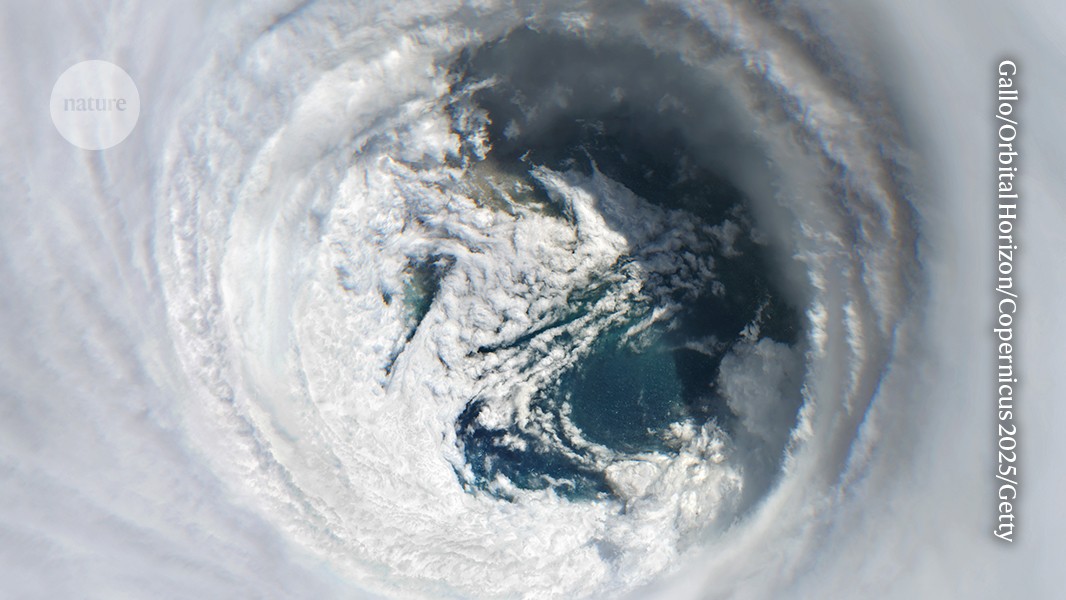
Nature's annual technologies-to-watch list highlights innovations reaching practical maturity and broad application. AI-powered meteorology is accelerating local forecasting, storm tracking and climate modelling; a DeepMind model anticipated Hurricane Melissa would become category-5 days in advance and accurately predicted its trajectory, while another model provided accurate forecasts up to ten days before events. Quantum computing appears again, with studies tackling qubit error correction and earlier progress manipulating individual atoms as qubits; investment has surged, with nearly US$10 billion pledged by the United States, United Kingdom, Germany and South Korea in 2023 and about $7 billion invested by Japan in 2025. The list also includes nuclear-energy technologies.
"Technological progress, like scientific progress, is often incremental, driven in part by stochastic bursts of problem-solving and hurdle-clearing. Occasionally, an innovation can reach sufficient maturity to make a real impact: by coming into practical use at scale or finding a broad range of applications. Since 2018, Nature has drawn up a list of emerging technologies to watch in the coming year. Our latest edition is published this week."
"Artificial intelligence makes an appearance, as it often has in the past few years. This year's main AI technology to watch is AI-powered meteorology, which is accelerating and improving local weather forecasting, storm tracking and global climate modelling. An AI model by researchers at Google DeepMind in London, for instance, anticipated that Hurricane Melissa, which wreaked havoc in the Caribbean last October, would become a category-5 event days in advance and also accurately predicted its trajectory."
"Quantum computing makes its second appearance on the list this year, following studies intended to improve the problem of error correction in quantum bits, or qubits, the fundamental units of quantum information. The first time, in 2022, our writer noted the early but tantalizing progress made in manipulating individual atoms as qubits for a quantum processor. Since then, investment in this area has surged."
Read at Nature
Unable to calculate read time
Collection
[
|
...
]