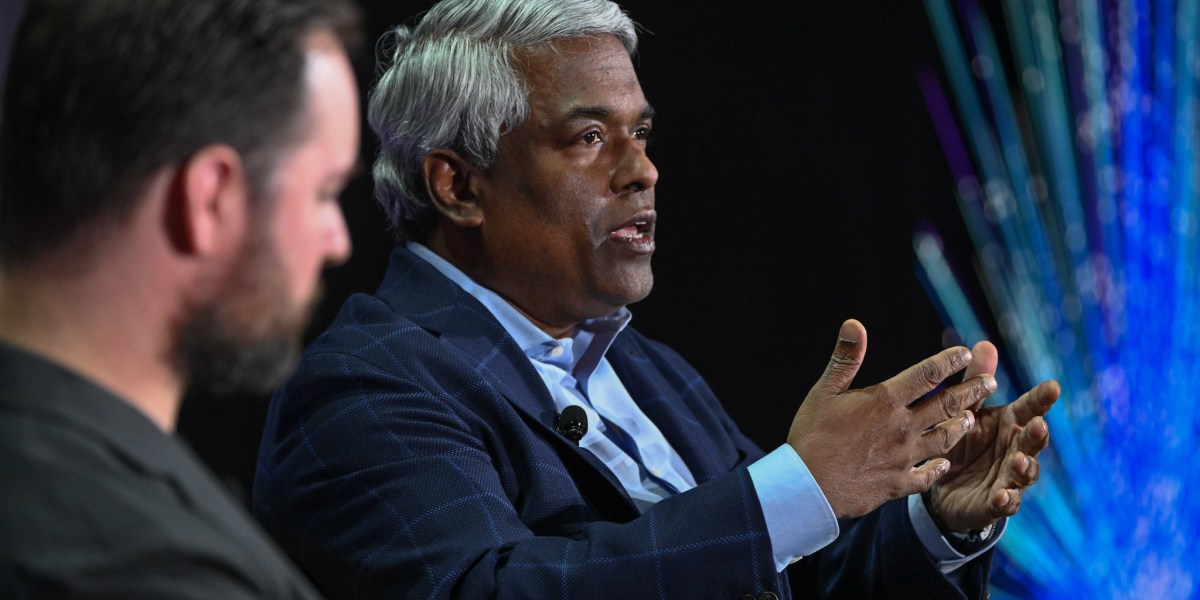
"While the world scrambles to adapt to the explosive demand for generative AI, Google Cloud CEO Thomas Kurian says his company isn't reacting to a trend, but rather executing a strategy set in motion 10 years ago. In a recent panel for Fortune Brainstorm AI, Kurian detailed how Google anticipated the two biggest bottlenecks facing the industry today: the need for specialized silicon, and the looming scarcity of power."
"This prediction influenced the design of their infrastructure. Kurian said Google designed its machines "to be super efficient in delivering the maximum number of flops per unit of energy." This efficiency is now a critical competitive advantage as AI adoption surges, placing unprecedented strain on global power grids. Kurian said the energy challenge is more complex than simply finding more power, noting that not all energy sources are compatible with the specific demands of AI training."
Google anticipated two major AI bottlenecks a decade ago: the need for specialized silicon and limited power availability. The company developed custom Tensor Processing Units (TPUs) beginning in 2014 to accelerate machine learning by redesigning chip architecture. Google engineered its infrastructure to maximize flops per unit of energy, prioritizing electrical efficiency alongside performance. The energy demands of AI training create spikes that some energy sources and grids cannot accommodate. Google is addressing these constraints through hardware efficiency, power-aware data center design, and strategies to align energy supply characteristics with the needs of large-scale training clusters.
Read at Fortune
Unable to calculate read time
Collection
[
|
...
]