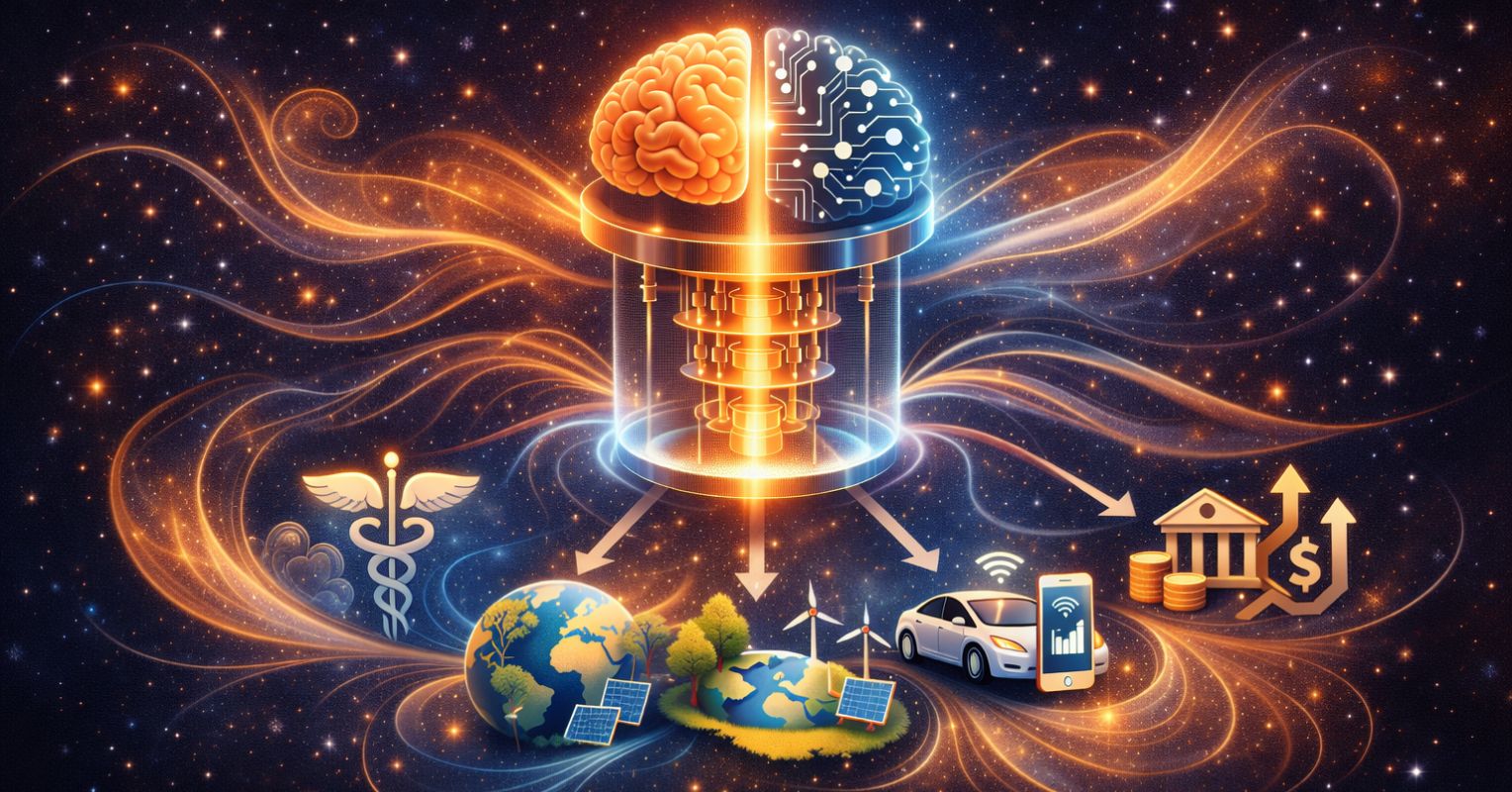
"Quantum AI refers to AI systems that use quantum computers for specific parts of the work, especially in situations when many possible combinations must be explored quickly. In plain English, it is AI paired with a new kind of computing machine that can be useful for certain hard problems."
"A conventional computer processes information in bits, which are either 0 or 1. A quantum computer uses qubits, which can represent more than one possibility at once and can be linked in ways that let some calculations be handled differently. That does not make quantum computers better at everything. It makes them promising for a narrower set of problems that involve huge numbers of possible combinations."
"When that kind of computing power is connected to AI, the result is Quantum AI, or AI supported by quantum computing for complex tasks such as drug discovery, materials design, logistics, energy modeling, fraud detection, and parts of financial risk analysis."
Quantum AI integrates quantum computing with artificial intelligence systems to address specific computational challenges. Unlike standard AI running on conventional computers or generative AI producing text and images, Quantum AI leverages quantum computers' unique capabilities. Quantum computers use qubits instead of traditional bits, allowing simultaneous representation of multiple possibilities and enabling different calculation approaches. This technology excels not universally but specifically for problems requiring exploration of enormous combinations. Applications include drug discovery, materials design, logistics optimization, energy modeling, fraud detection, and financial risk analysis. While conventional AI and generative AI are tangible technologies integrated into daily activities like searching and shopping, Quantum AI remains primarily confined to laboratory and corporate research environments, operating farther from everyday user experience.
Read at Psychology Today
Unable to calculate read time
Collection
[
|
...
]