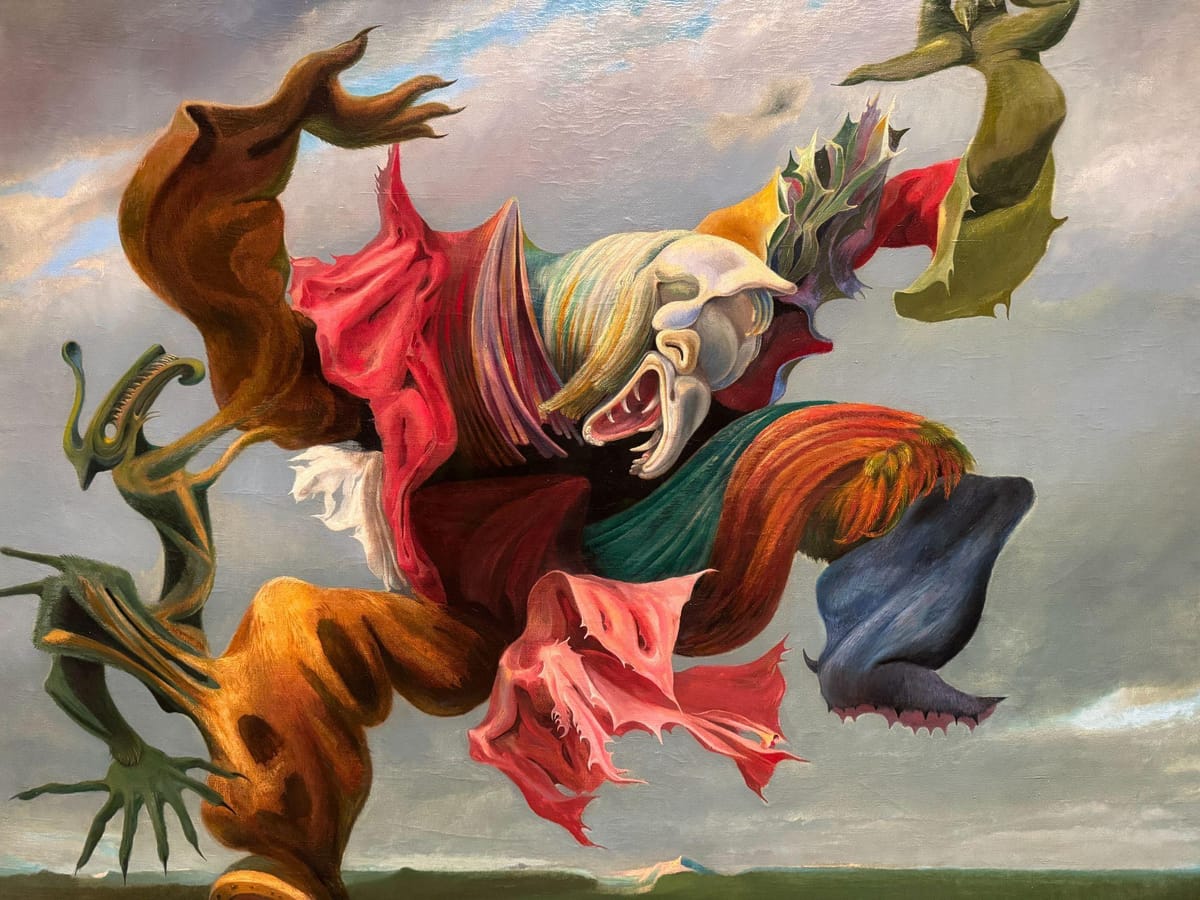
Dreamworlds at the Philadelphia Art Museum presents a wide-ranging centennial survey of Surrealist masterworks, from famous to overlooked. The show highlights Surrealism's antifascist and hopeful impulses yet largely omits critical historical and political framing, including World War I's traumas and the movement's origins. Salvador Dalí's abusive behavior, flirtations with fascism, and explicitly racist and violent statements receive minimal acknowledgement. The exhibition groups works into vague categories and uses platitudinous wall texts, offering visual riches while denying viewers contextual tools to understand moral complexities and historical resonance.
"The timing could not be better: We have much to learn in this moment from a movement that was both explicitly antifascist and radically hopeful - and from how the not-so-antifascist Dalí broke from it. But Dreamworlds presents precious little of the historical and political context - for example, the birth of the movement out of the grotesque terrors of World War I - that would help viewers grasp the relevance of what's in front of them."
"PHILADELPHIA - When he was five years old, Salvador Dalí pushed his friend off a bridge. At 29, he "" a woman after she told him he had beautiful feet. At 30, he was temporarily ousted from the Surrealist art movement because of his infatuation with Hitler. And at 35, after sending the movement's co-founder, André Breton, that described "feeling real pleasure and considerable sexual excitement in reading about" the lynchings of Black Americans, his expulsion was made permanent."
Read at Hyperallergic
Unable to calculate read time
Collection
[
|
...
]