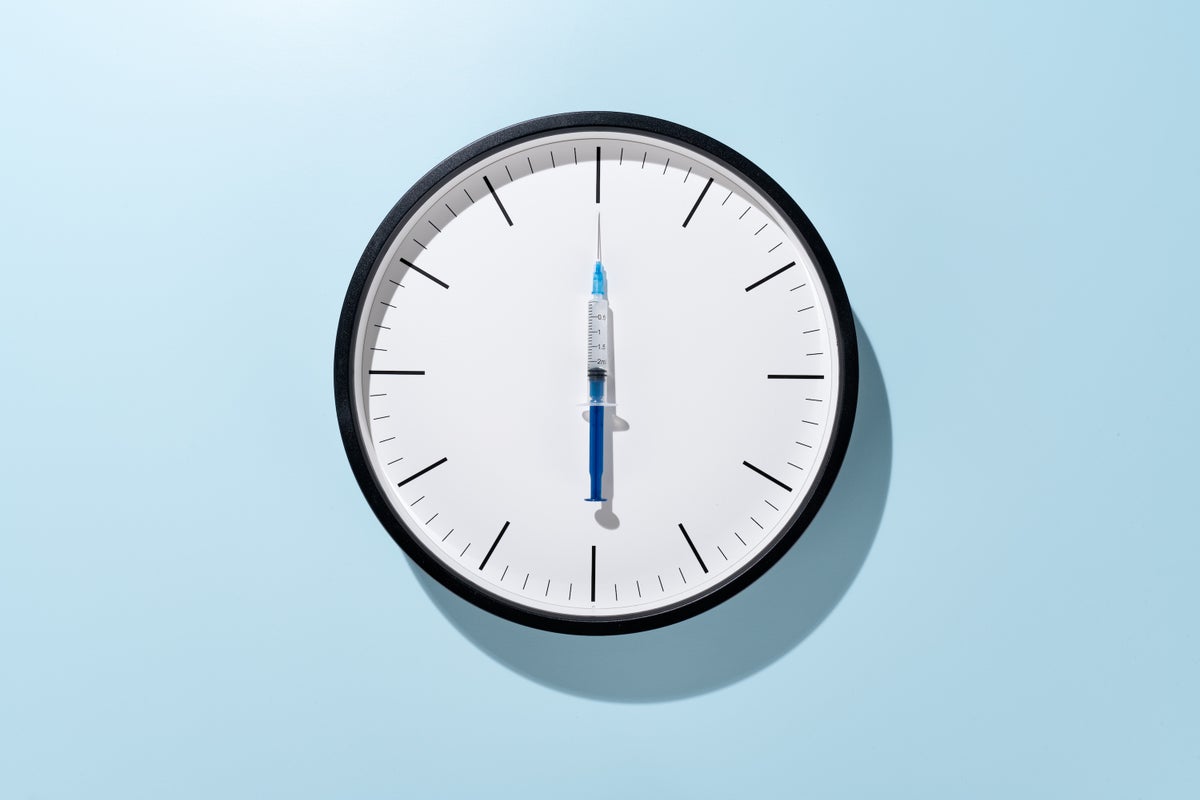
"A string of recent animal studies and early clinical trials have shown that certain medical interventions, from vaccines to immunotherapies, might be more effective when they are timed to a person's circadian rhythm, the body's internal clock that drives essential biological functions such as sleep, eating, metabolism and immune activity."
"Anything you look at is probably oscillating to one degree or another in your body, and almost every drug you can think of probably would benefit from some time-of-day analysis, says Zachary Buchwald, a radiation oncologist and physician-scientist at Emory University."
"He and others are trying to understand if there's solid biological evidence to make the case for personalizing therapies based on an individual's unique circadian rhythm or finding ways to alter their internal clock to ensure the treatment works effectively."
Recent animal studies and early clinical trials demonstrate that certain medical interventions, including vaccines and immunotherapies, show increased effectiveness when administered according to a person's circadian rhythm—the body's internal clock regulating sleep, eating, metabolism, and immune activity. Researchers are investigating chronotherapy, which leverages the connection between circadian rhythms and immune system function. Scientists believe nearly all biological processes oscillate throughout the day and most drugs could benefit from time-of-day analysis. Ongoing clinical trials, such as the TIME trial for skin cancer immunotherapy, are examining whether personalizing treatments based on individual circadian rhythms or modifying internal clocks can enhance therapeutic effectiveness. The field aims to establish solid biological evidence supporting circadian-based treatment timing.
Read at www.scientificamerican.com
Unable to calculate read time
Collection
[
|
...
]