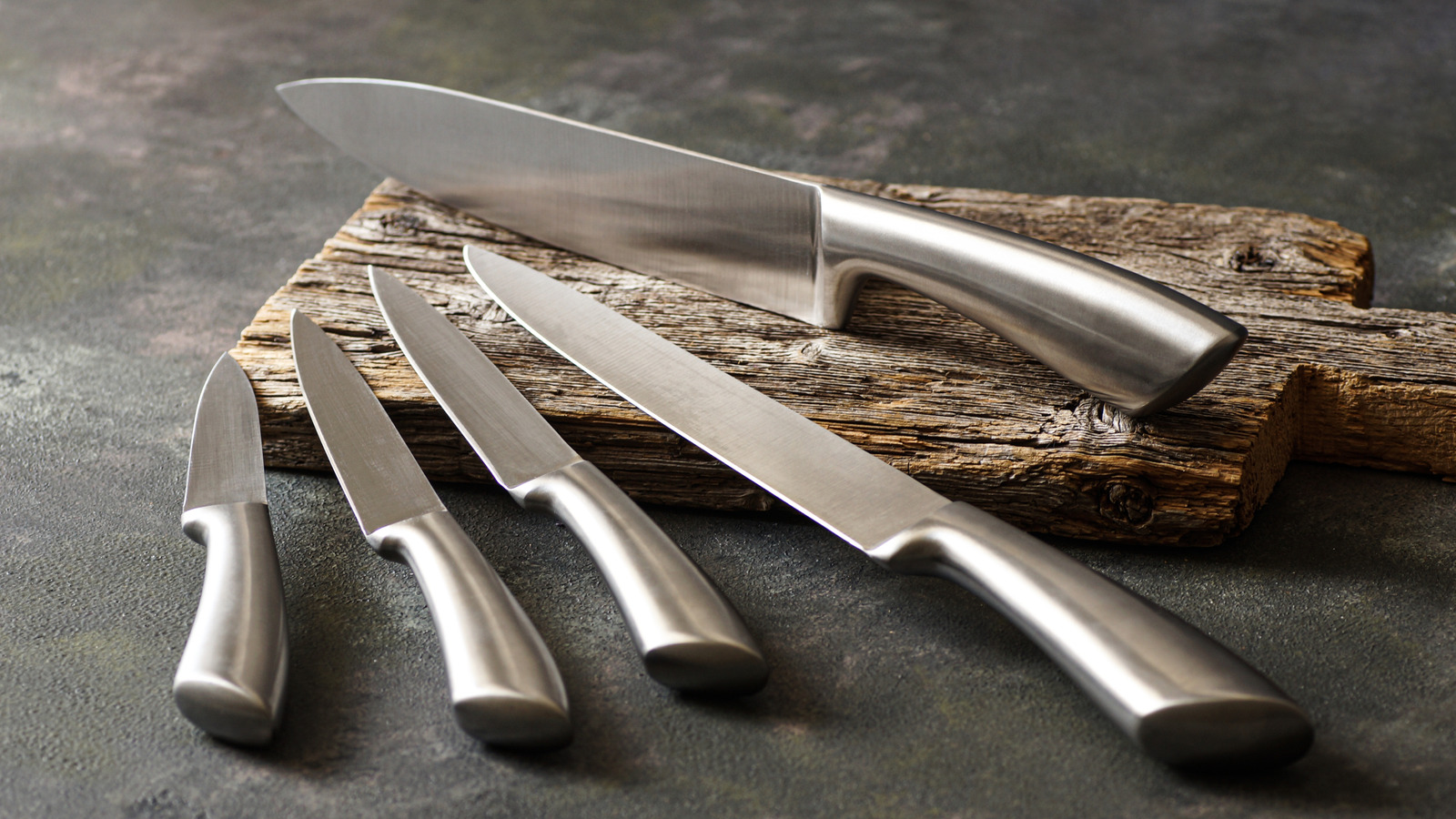
Maintaining a sharp edge on kitchen knives improves cutting efficiency and reduces the risk of slippage. Washing sharp knives in the dishwasher and soaking them in water both accelerate dulling, rust, and handle damage. Extended water exposure breaks down adhesives and can waterlog or crack wooden handles. Metal scrubbers abrade the cutting edge and remove sharpness. Knives should be hand-washed, rinsed promptly, and dried immediately to prevent rust, patina, and handle deterioration. Soaking knives in sudsy water also creates a safety hazard when hands are plunged into the sink. Single-piece metal knives can still be damaged by contact with other utensils while soaking.
"Maintaining a sharp edge on your kitchen knives isn't just about making life easier when you're cooking, it's also a matter of safety. Blunt knives require more force to use and are more prone to slippage when cutting. If you want to avoid reaching for the knife sharpener so often, consider the habits that might be making your knives dull in the first place."
"Leaving knives to soak might seem like the best way to remove stubborn food particles, but it can also cause rust on carbon-steel blades. Extended exposure to water will break down the adhesive that connects the blade and the handle, and wooden handles can become waterlogged and eventually crack. Some knives are made of a single piece of metal, but these can also be damaged during soaking, as the blade knocks against other metal utensils or ceramic dishes in the soapy water."
Read at Tasting Table
Unable to calculate read time
Collection
[
|
...
]