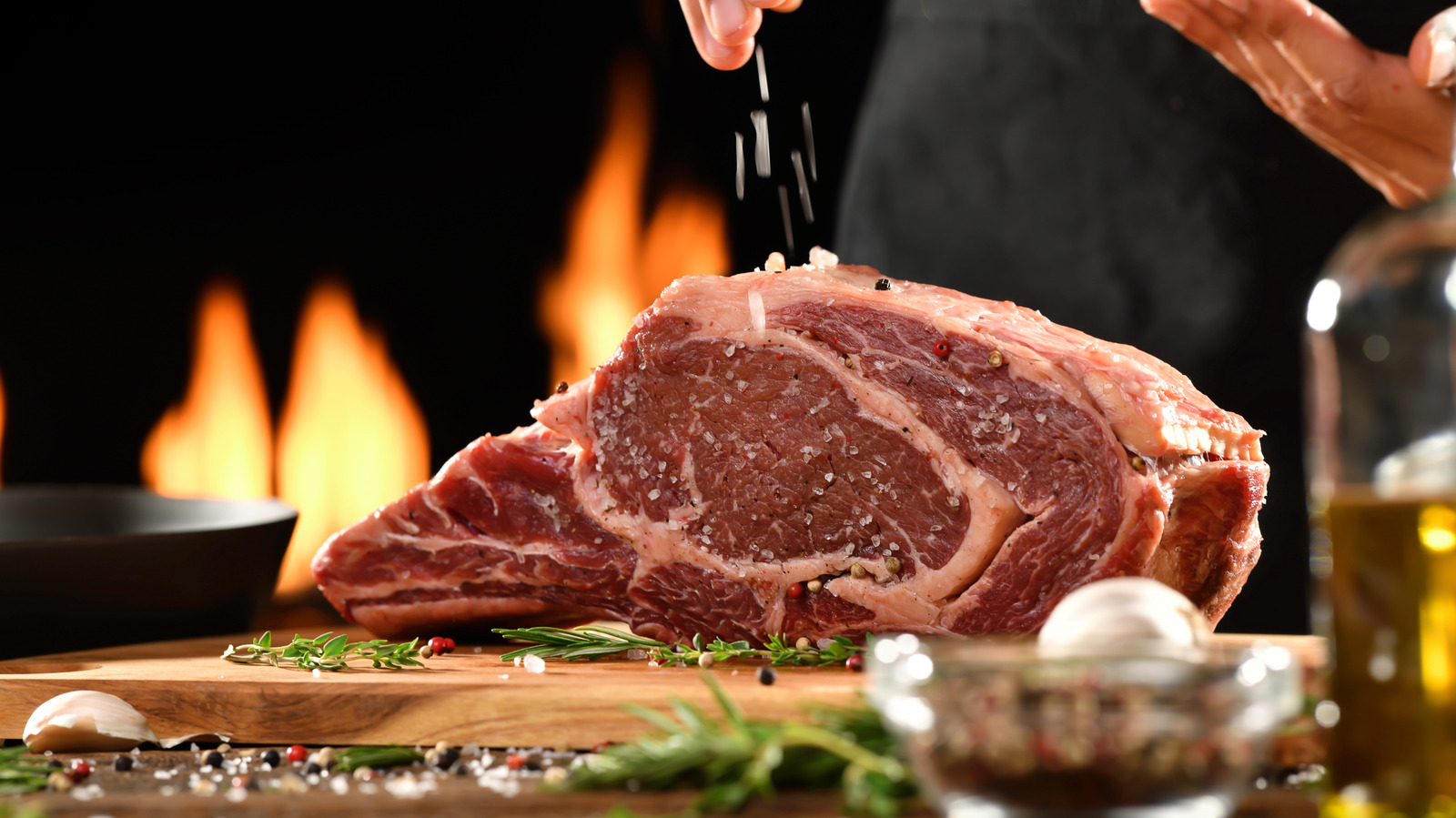
"You might be a minimalist who prefers a simple combination of salt and cracked black pepper, or maybe you prefer a lot of depth and flavor that comes from a complicated rub with several different herbs and spices. Turns out both work well. It just depends on what you're in the mood for. Several chefs were nice enough to share their opinions about which seasonings work best with prime rib's tender and juicy qualities. Now, you no longer need to wonder if the intense flavor of berbere spice is better than a hearty pastrami rub."
""When it comes to prime rib, I don't believe in overcomplicating things," says Andrew Cooper, an executive chef at La Quinta Resort & Club. "The meat already has incredible natural flavor - the goal is to enhance it, not cover it up," he explains. Most chefs we spoke to agree with Cooper, which is why several of them recommended a simple salt and cracked black pepper crust for their prime rib."
"But not any salt will do - chefs generally agree it has to be kosher salt. Sure, there are many types of salt, and in most cases, you want to use them for a specific purpose since each salt variety has a unique flavor and texture. But when it comes to most cooking, kosher almost always takes center stage. Though there are many kosher salt brands that are available nowadays,"
Prime rib is a luxurious, tender cut best suited for special occasions. Choosing the right cut and cooking method is important, but seasoning strongly influences the final result. Simple salt and cracked black pepper highlight the meat's natural flavor, while more complex rubs with herbs and spices add depth. Kosher salt is preferred for most cooking because its texture and flavor suit creating a crust. Different salt varieties serve specific purposes due to unique textures and flavors. Both minimalist and elaborate seasoning approaches can produce excellent prime rib depending on desired flavor profiles.
Read at Tasting Table
Unable to calculate read time
Collection
[
|
...
]