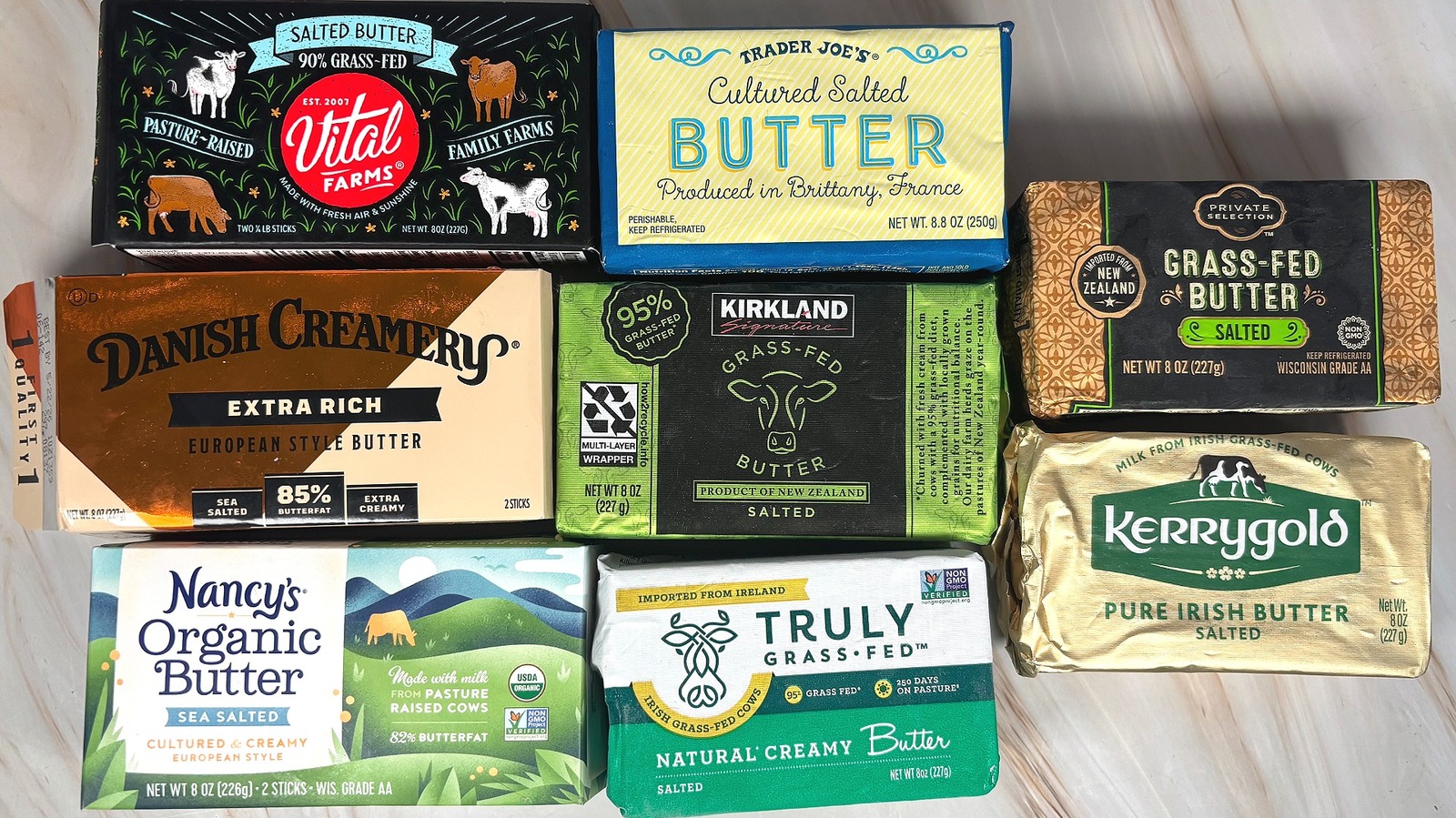
"It's time to talk about one of my all-time favorite subjects: butter. As a home baker, butter is an obvious staple in my house. Open my fridge, and in the door, you'll probably find no fewer than three types of butter at any given time, including unsalted butter for baking, salted sweet cream butter to sauté with, and a salted European butter to put on toast, make into terrine, or for any other use where I want butter to shine."
"Whether you buy butter indiscriminately or go through all your options with a fine-toothed comb, you're probably at least semi-aware of the hype around European butter. The biggest thing differentiating between European and American butter is the butterfat content of each. While American butter qualifies as butter at 80% butterfat, European-style butter has to have at least 82% butterfat. That 2% difference may seem negligible, but it's what leads most to consider European butter as higher quality than American butter."
Home bakers typically keep multiple butters for different uses: unsalted for baking, salted sweet cream for sautéing, and European butter for toast or terrines. European-style butter requires at least 82% butterfat, compared with 80% for American butter, which yields a richer mouthfeel and deeper flavor. Cultured cream in many European butters adds slight acidity, and butter from grass-fed cows often carries earthy, grassy notes. Not all European butters taste the same; brands vary in intensity and character. Butter selection should be based on the desired flavor profile and intended culinary use.
Read at Tasting Table
Unable to calculate read time
Collection
[
|
...
]