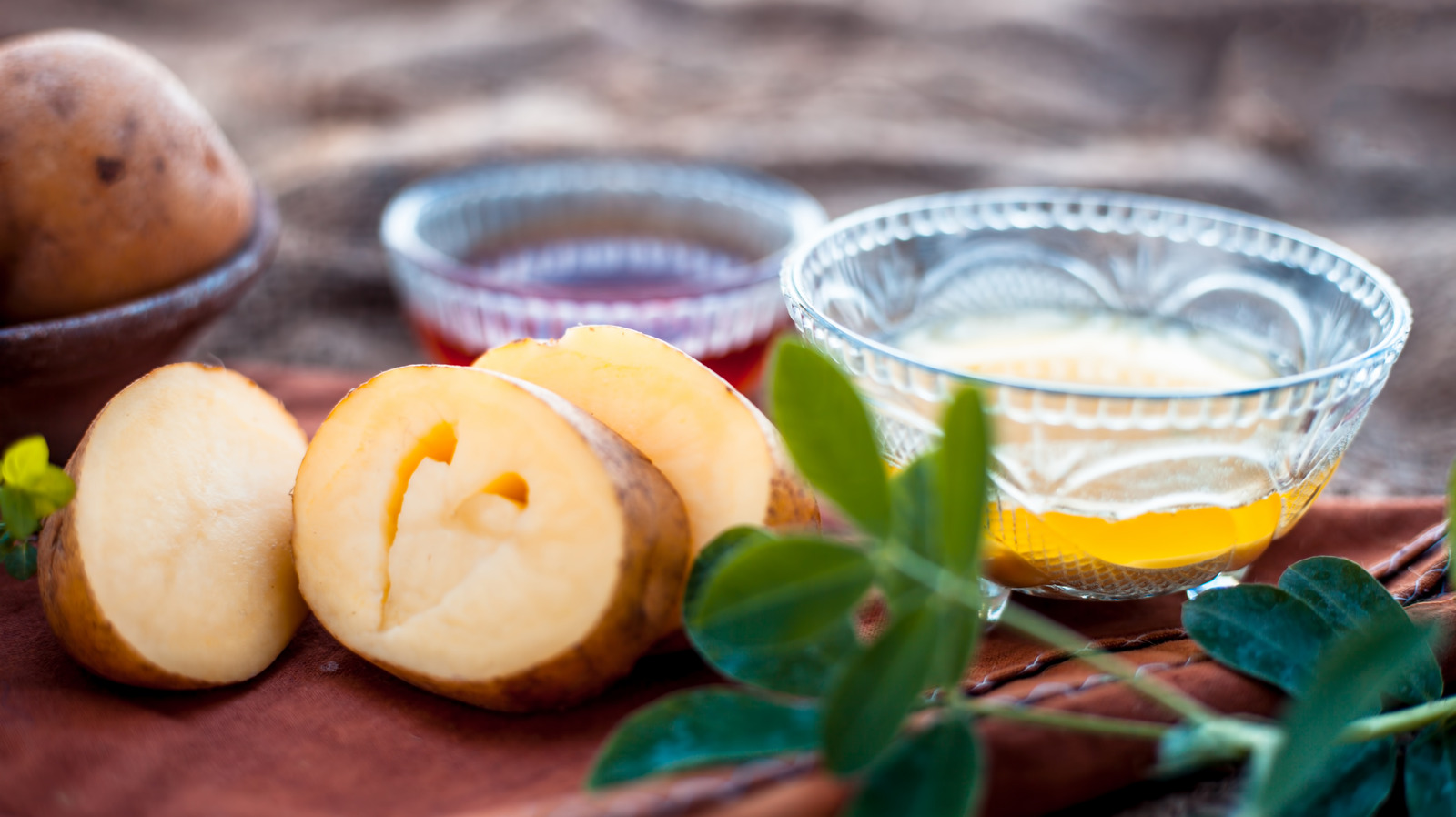
"Consuming a wide variety of vegetables is one of the best ways to eat healthy, and this includes potatoes, as they're a great source of vitamin C, vitamin B6, and potassium. While it's true that there are plenty of ways for produce to pick up bacteria between growing outdoors, handling, processing, and shipping, this shouldn't be enough to scare you off eating your spuds along with other veggies. All that's required is a good wash. But should that wash include vinegar?"
"Let's say you've got a lot of potatoes to deal with for company, or maybe you're making a recipe that calls for many small spuds, such as new potatoes or fingerlings. Washing them all individually can be a pain, so a vinegar-water soak might be just the trick. Or, maybe you want to eat the potatoes with their nutritious but rough skin, where bacteria can hide. Using vinegar can be a good way to get them extra clean if you're worried about lingering contaminants."
Potatoes provide vitamin C, vitamin B6, and potassium and count as a healthy vegetable choice. Produce can pick up bacteria during growing, handling, processing, and shipping, so potatoes require cleaning to remove dirt and contaminants. Washing with plain water is effective for most situations, but a vinegar-water soak can help when cleaning many small potatoes or removing bacteria from rough skins. A vinegar solution can also prevent cooked potatoes from oxidizing and turning brown during storage. Excessive vinegar consumption can erode tooth enamel, irritate the digestive tract, and trigger acid reflux, and insufficient rinsing can alter potato flavor. If using vinegar discourages potato consumption, it is better to skip it.
Read at Tasting Table
Unable to calculate read time
Collection
[
|
...
]