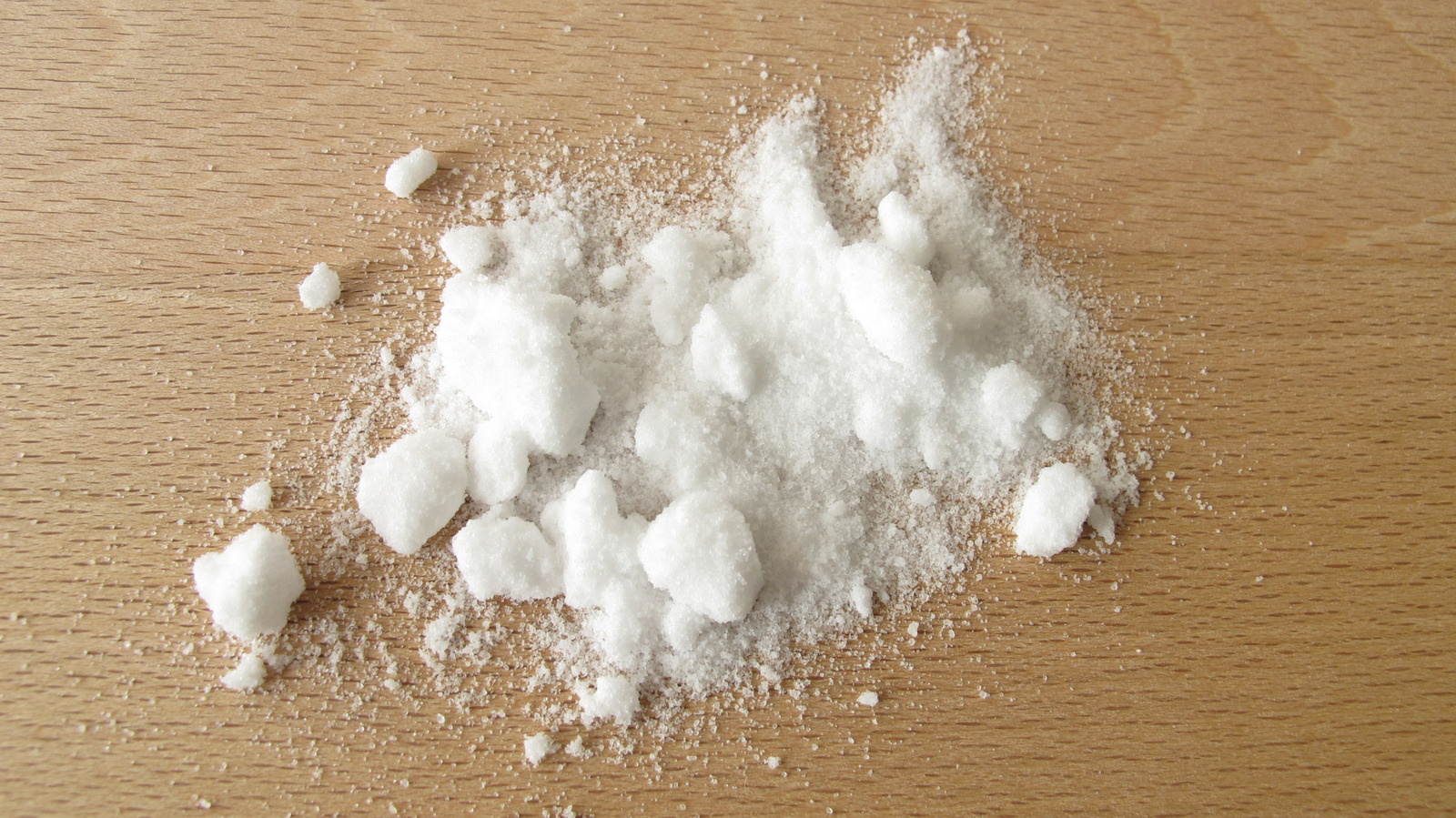
Baker's ammonia, also called hartshorn or ammonium carbonate, is a leavening agent used before baking soda and baking powder. It helps baked goods rise by releasing gas bubbles in the oven. It was originally made from deer horns and later produced chemically. Outside baking, it was used to revive fainted people because of its strong smell, which evaporates during baking. Its popularity declined after baking soda and baking powder were invented in the 1850s because those options work better and more consistently and are generally neutral. Baker's ammonia is still used for traditional dry, thin European cookies and crackers, including springerle and spice cookies, where its aroma disappears during baking and leaves a lighter crumb and distinctive crisp texture.
"Baker's ammonia, also known as hartshorn or ammonium carbonate, was popular in the early to mid-19th century, when it was used to help baked goods rise in the oven through the release of gas bubbles. At first, it was made from deer horns, but, over time, it was chemically produced (and it still is today, so there's no need to worry). Outside of the kitchen, baker's ammonia was useful for waking people up after they fainted. This is because it has a very strong smell that only disappears after it evaporates in the oven."
"This pungent aroma is one of the reasons why baker's ammonia fell out of favor over the years - the other is the invention of baking soda and baking powder in the 1850s. These two products worked better in baking. They are generally neutral and provide more consistent results, while baker's ammonia could affect the cake's flavor. However, baker's ammonia is still sometimes used today, and it can lead to some phenomenal results."
"Baker's ammonia is commonly used in traditional European baking, mainly for biscuits, cream puffs, and crackers. More specifically, you'll see it used for things like springerle, German spice cookies, and Swedish dream cookies. These are very dry, thin baked goods where the ammonia (and its aroma) tends to disappear during baking. What it leaves behind is a lighter crumb and a unique, crispy texture that's hard to recreate."
Read at Tasting Table
Unable to calculate read time
Collection
[
|
...
]