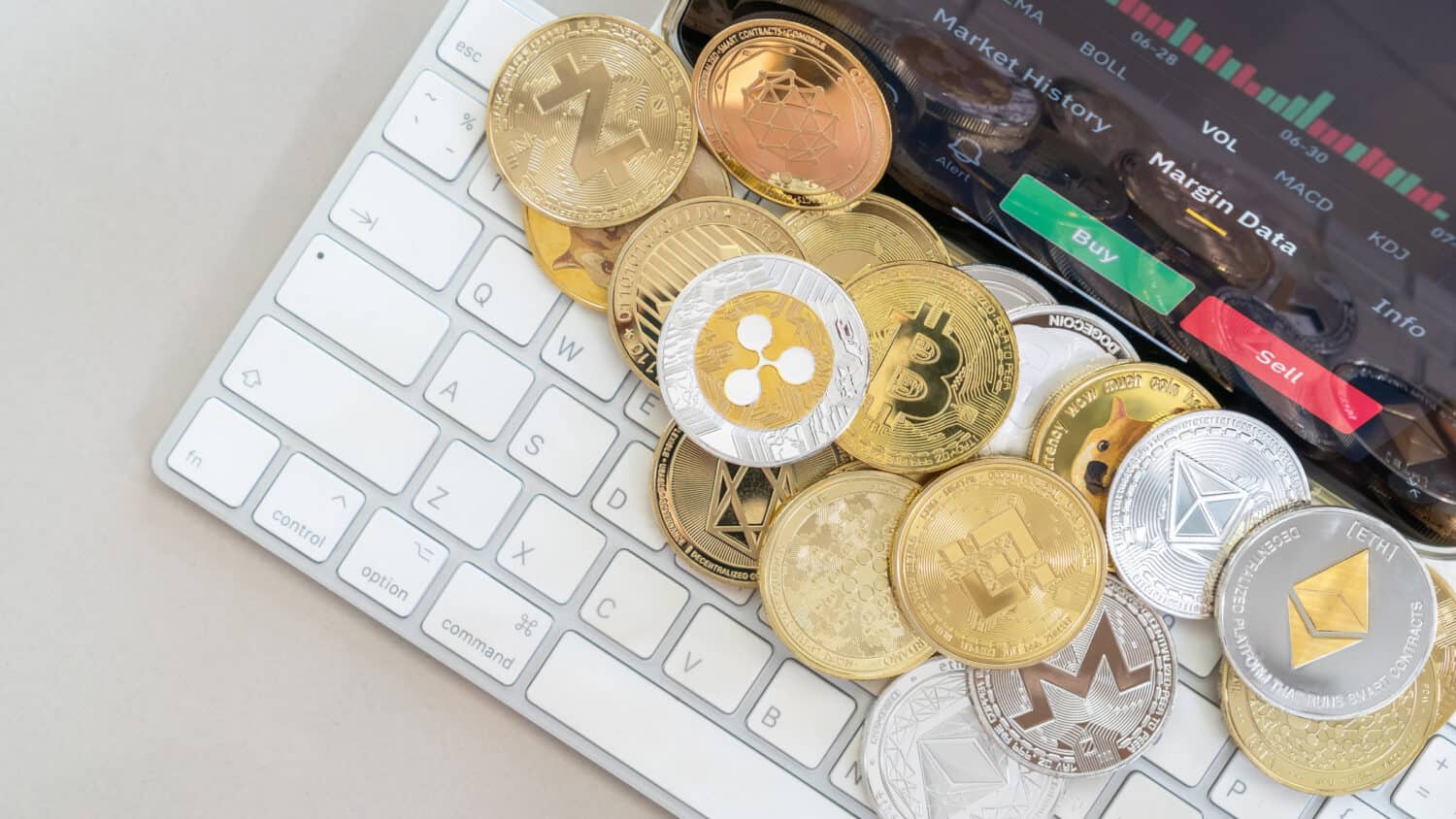
Bitcoin functions as a store of value and is treated by major financial institutions as a value-holding asset. It does not settle cross-border transactions, run smart contracts, or tokenize real estate, focusing instead on institutional-scale value retention. Ethereum operates as a tokenization and settlement layer for traditional assets, hosting a large share of the real-world asset market. Institutional adoption is driven by real-world assets, with major financial firms launching products on Ethereum and expanding tokenized offerings. XRP enables cross-border payments with working technology and bank usage, though legal constraints limit broader deployment. Solana is positioned as a high-throughput platform for on-chain use cases.
"Bitcoin's use case is the simplest of the four, and the only one that no longer needs defending. It exists to hold value, and the biggest names in finance now treat it that way. Bitcoin doesn't settle cross-border transactions, it doesn't run smart contracts, and it doesn't tokenize real estate. What it does is hold value at institutional scale. In 2026, that's enough-and the debate about whether it counts as a real use case is over."
"If Bitcoin's case is about holding value, Ethereum's is about moving it. Its use case is becoming the settlement layer where traditional assets get tokenized, and right now it owns that market. dominates institutional tokenization in 2026, with the real-world asset market having grown to $31-34 billion, and Ethereum hosts roughly 65% of it, led by BlackRock's BUIDL fund and Ondo Finance products."
"Thirty-five of the world's leading financial institutions have launched products directly on Ethereum this year. BlackRock filed to launch tokenized money market funds on Ethereum in May 2026. JPMorgan moved JPM Coin from its internal system to Base, an Ethereum Layer 2. For many of these users, RWAs are the reason institutions come on-chain in the first place, not just an advanced feature for existing crypto users."
"XRP's use case is the most real-world of the group on paper: moving money across borders in seconds. The technology works and banks are using it, but a legal question still caps how far it can go. In that pilot, transactions cleared through RLUSD, Ripple's dollar stablecoin, while XRP itself"
Read at 24/7 Wall St.
Unable to calculate read time
Collection
[
|
...
]