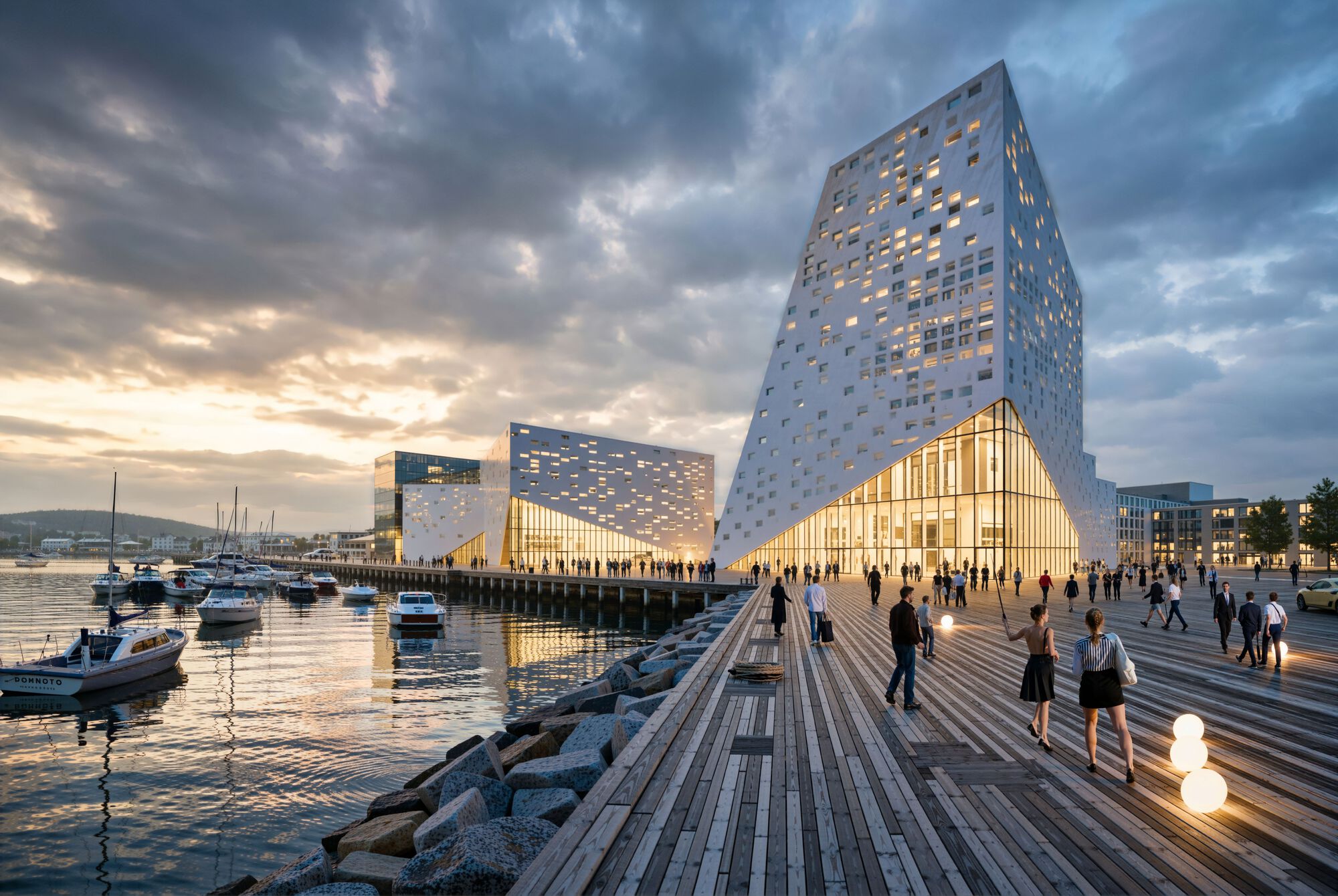
"Across design firms, respondents emphasized two immediate gains: speed and the ability to generate options. Alexandre Perrossier (LWK+P) framed the case strategically: "Architecture needs AI now to manage increasing complexity, accelerate decision-making, and explore design possibilities beyond human limits." Zhang Yi (Gensler) echoed the urgency, focusing on iteration: AI accelerates the cognitive loop, enabling us to explore more within the same time and shift repetitive work toward high-value decision-making."
"Speed matters, but authorship remains central. Several respondents emphasized that AI recombines patterns quickly but lacks the intentionality behind human creativity. Zhang Yi (Gensler) offered a constructive frame: authorship stems from "intention, definition, and narration." Fredy Fortich (MVRDV) put it plainly: "AI is a power tool rather than a magic wand." In practice, teams will need to become expert curators: prompt-crafters, critical editors, and translators of AI outputs into buildable proposals."
Design firms identify immediate AI benefits in speed and the generation of multiple design options, allowing faster exploration and earlier client alignment. AI accelerates the cognitive loop, enabling more exploration in the same time and shifting repetitive tasks toward high-value decision-making. Designers can instantly produce multiple options and reverse-engineer designs from selected images once a direction is approved. Authorship and intentionality remain central because AI recombines patterns without human narrative or definition. Teams must become expert curators—prompt-crafters, critical editors, and translators—so AI outputs translate into buildable proposals and preserve creative judgment.
Read at ArchDaily
Unable to calculate read time
Collection
[
|
...
]